To Targeted Parents: You Are the Warrior

I recently met with a targeted parent for a consultation.

Following our meeting, I wrote him a follow-up letter to emphasize a point that emerged within our discussion, and I think this broader point is of value for all targeted parents to hear and understand… I am your weapon, not your warrior.  You are the warrior.

So here is my follow-up letter to Tom (not his real name).


Hello Tom,

As a follow-up to our conversation, everything… everything, is within the flow of that-which-leads.  I am just fulfilling my role within a larger force that is guiding things.

One of the elements of this larger guiding force is that it wants to awaken targeted parents from their slumber of helplessness imposed by trauma (this is a trauma pathology moving through generations).

As a result, my role is not to solve things for them – for you.  I am your weapon, not your warrior.

If parents leave this to me to solve, my work, my path, will solve it in about five to seven years.  There are meme-structures I’ve put into play that will take a while to incubate into fruition.

It’s like pushing a boulder.  At first you push and push, and the boulder just sits there.  Then it starts to move an inch.  You continue to push and push, and it starts to slowly turn.  Keep pushing and it starts to roll over… and then it starts to turn and it starts to pick up momentum, and now your pushing starts to increase its speed, and then it starts to roll on its own momentum, and then it becomes an unstoppable force; an unstoppable rolling boulder sweeping away everything in its path.

The solution is moving along several simultaneous lines.  The AB-PA pilot program for the family courts is going to be a major part of the solution.  In addition, there’s the push to get the APA to change its position statement on Parental Alienation Syndrome, there’s licensing board complaints to create professional discomfort in the mental health system and provoke a risk-management response of eliminating ignorance, and there’s legislative efforts to change the child abuse reporting laws.  Movement forward in any one of these areas ripples across all the others.

About a year from now I’m going to open up another area, my writing for and publication in professional journals (I just don’t have the time for that yet – it’s a slower avenue for creating change).

Bear in mind, I only have about 4 to 8 hours a week to work on this.  I’m a psychologist who sees patients to pay for my kids’ college, my house payments, car payments, etc.  My work in “parental alienation” is after hours and on weekends.  I’m just a single lone psychologist in private practice here in Southern California trying to create change in major systems that have been massively broken for decades.

Fundamentally, though, this isn’t my fight.  I’m not a targeted parent.  My kids are fine, my family is fine.  This is your fight, these are your kids.  I am not your warrior, I am your weapon.

But if targeted parents don’t pick up the weapons I’ve forged for them, if targeted parents are waiting for someone to rescue them, that’s not a me issue.  I’m fine.  My life is fine.

The universe is limiting me so that targeted parents activate.  These are your children.  My Jack and Annie are fine.  I’m not an alienated dad.  The universe wants to awaken targeted parents from the slumber of their trauma – these are your children, this is your fight, you are the warriors for your children, not me.  I am merely your weapon.

In Foundations and AB-PA I am giving targeted parents the weapons you need to fight back against the profound ignorance, incompetence, and apathy in the mental health system and family courts that is stealing your children – the weapons that you need to fight back against the professional incompetence in mental health assessment, in diagnosis, and in treatment that is stealing your children from you, and to fight back against a legal system that is massively broken and that colludes with the pathology to maintain a corrupt status quo that financially eviscerates vulnerable families.

I am your weapon, I am not your warrior.  You are the warrior.

I can act as an expert consultant on a class action or Rico lawsuit, but I cannot file a class action or Rico lawsuit.

I can encourage targeted parents to write to and put pressure on the APA, but I cannot write the letters for them.

I can cite the specific APA ethics codes that incompetent mental health professionals are violating, but I cannot file the licensing board complaints holding mental health professionals accountable to basic standards of competency.

I can support the efforts of targeted parents to meet with their state legislators to change child abuse reporting laws to include a definition of child psychological abuse (consistent with the DSM diagnostic system), but I am not a constituent of these legislators.

Are you waiting for someone to rescue you?  No one is going to rescue you.  You are the warrior.  Your children are waiting for you to rescue them.  I am not your warrior, I am your weapon.

The other important thing that the universe wants from targeted parents is an end to their narcissistic self-focus.  Over-and-over again targeted parents seek my advice and help on their specific situations; and over-and-over I tell them that until we fix the broken systems there is NO solution.

There is no solution.  Let that fully sink in.  There is no solution.  In order to solve “parental alienation” for any one family, in any one situation, we must solve it for ALL families and ALL children.

To obtain solution in any single case, we must first fix the surrounding broken structures of the mental health system response, and then use the mental health solution to fix the legal system response, and when we do this then we will solve it for ALL children and ALL families.  Targeted parents need to stop being so self-focused on finding a solution only for their specific family.  I know how much you love your children, I know how heartbreaking it is for you each individually, but targeted parents need to begin working for each other, to solve this for all children and all families.

For example, what good will it do in your specific case to file a licensing board complaint?  Absolutely none.  But that particular therapist will then take it upon themselves to learn about AB-PA, and that particular therapist won’t be incompetent for the NEXT family.

Once mental health professionals understand that they will – with 100% certainty – face a licensing board complaint from targeted parents (under Standards 2.01a and 9.01a of the APA ethics code surrounding competence and competent assessment), then they will become competent (assess and document the child’s pathology using the Diagnostic Checklist for Pathogenic Parenting; their reading Foundations would be good).  As long as targeted parents – as a community of consumers – accepts professional ignorance and incompetence, then that’s exactly what they will get – ignorance and incompetence.

APA Ethics Code

2.01 Boundaries of Competence
(a) Psychologists provide services, teach, and conduct research with populations and in areas only within the boundaries of their competence, based on their education, training, supervised experience, consultation, study, or professional experience.

Psychologists are not allowed to be ignorant and incompetent.

9.01 Bases for Assessments
(a) Psychologists base the opinions contained in their recommendations, reports, and diagnostic or evaluative statements, including forensic testimony, on information and techniques sufficient to substantiate their findings.

If a psychologist has not even assessed for pathogenic parenting surrounding an attachment-related pathology (the Diagnostic Checklist for Pathogenic Parenting), then their diagnostic statements and forensic testimony cannot possibly be based on “information and techniques sufficient to substantiate their findings.”

2.03 Maintaining Competence
Psychologists undertake ongoing efforts to develop and maintain their competence.

It’s not up to targeted parents, or me, or anyone else to educate psychologists.  It is their responsibility to “undertake ongoing efforts” to remain educated and competent.

Professional Competence

Attachment System Competence:  Mental health professionals who are assessing, diagnosing, and treating attachment-related pathology need to be professionally knowledgeable and competent in the attachment system, what it is, how it functions, and how it characteristically dysfunctions.  Failure to possess professional-level knowledge regarding the attachment system when assessing, diagnosing, and treating attachment-related pathology would represent practice beyond the boundaries of professional competence in violation of professional standards of practice.

Personality Disorder Competence:  Mental health professionals who are assessing, diagnosing, and treating personality disorder pathology as it is affecting family relationships need to be professionally knowledgeable and competent in personality disorder pathology, what it is, how it functions, and how it characteristically affects family relationships following divorce.  Failure to possess professional-level knowledge regarding personality disorder pathology when assessing, diagnosing, and treating personality disorder pathology in the family would represent practice beyond the boundaries of professional competence in violation of professional standards of practice.

Family Systems Competence: Mental health professionals who are assessing, diagnosing, and treating families need to be professionally knowledgeable and competent in the functioning of family systems and the principles of family systems therapy.  Failure to possess professional-level knowledge regarding the functioning of family systems and the principles of family systems therapy when assessing, diagnosing, and treating family pathology would represent practice beyond the boundaries of professional competence in violation of professional standards of practice.

Complex Trauma Competence: Mental health professionals who are assessing, diagnosing, and treating the trans-generational transmission of complex trauma need to be professionally knowledgeable and competent in the nature of complex trauma, as expressed both individually and through family relationships.  Failure to possess professional-level knowledge regarding the trans-generational transmission and expression of complex trauma when assessing, diagnosing, and treating family pathology involving complex trauma would represent practice beyond the boundaries of professional competence in violation of professional standards of practice.

Notice I did not use the term “parental alienation.”  Not once.

In defining the pathology entirely from within standard and established constructs and principles of professional psychology, AB-PA activates Standards 2.01a, 9.01a, and 2.03 of the APA ethics code for targeted parents.  But if targeted parents do not pick up the weapon I have forged for them, if they just let it sit there because they expect me to be their warrior and they’re waiting for me to rescue them… then my path will solve this in about five to seven years.

The flow of the universe wants to limit me because it wants to awaken targeted parents from their trauma-induced slumber.  When a select group of warrior parents awoke and created a Petition to the APA, the boulder began to inch forward.  When warrior parents awoke and contacted their state legislators, the boulder began to turn.  As warrior parents pick up their sword and spear of AB-PA that I have forged for them, and awaken from their trauma-induced slumber to fight for each other and for each other’s children – to solve this for all children and all families – then the boulder of change will start to roll, and will become an unstoppable force for change.

I am not your warrior.   I am your weapon.  These are your kids.  You are their warrior.

Craig Childress, Psy.D.
Clinical Psychologist, PSY 18857

The Silence of the APA

“If I were to remain silent, I’d be guilty of complicity” – Albert Einstein

Standard 2.01a of the American Psychological Association’s ethics code requires – requires – professional competence.  Yet profound professional ignorance and incompetence is tolerated in the assessment, diagnosis, and treatment of parent-child attachment-related pathology surrounding divorce.

At what point does the silence of the American Psychological Association become complicity with professional ignorance and incompetence?

In their silence, the American Psychological Association is tacitly allowing rampant professional ignorance and incompetence in the assessment, diagnosis, and treatment of attachment-related pathology to go unchecked.

Silence is complicity.

Child Psychological Abuse

Pathogenic parenting: patho=pathology; genic=genesis, creation.  Pathogenic parenting is the creation of significant psychopathology in the child through aberrant and distorted parenting practices.

Pathogenic parenting is an established construct in both developmental and clinical psychology and is most often used in relation to attachment-related pathology, since the attachment system never spontaneously dysfunctions, but ONLY becomes dysfunctional in response to pathogenic parenting.

The attachment system is the brain system that governs all aspects of love and bonding throughout the lifespan, including grief and loss.  A child rejecting a parent is fundamentally an attachment-related pathology caused by pathogenic parenting, either by the targeted-rejected parent (through child abuse), or by the allied and supposedly “favored” parent (through a cross-generational coalition of the child with the allied parent against the targeted-rejected parent; Bowen, Haley, Minuchin).

Pathogenic parenting that is creating significant developmental pathology in the child (attachment system suppression), personality pathology in the child (five a-priori predicted narcissistic personality traits), and delusional-psychiatric pathology in the child (an encapsulated persecutory delusion) represents a DSM-5 diagnosis of V995.51 Child Psychological Abuse, Confirmed.

Many-many-many court-involved mental health professionals are NOT EVEN ASSESSING for the standard psychological symptoms of attachment-system suppression, personality disorder traits, and an encapsulated persecutory delusion that are created by one parent’s pathogenic parenting.  As a result, these mental health professionals are missing making the diagnosis of Child Psychological Abuse. They are allowing, through their ignorance and incompetence, the continued psychological abuse of the child.

And the APA remains silent.

The silence of the APA has become complicity in the ongoing psychological abuse of children.

Incompetent Assessment

Standard 9.01a of the APA’s ethics code requires – requires – that psychologists base their diagnostic statements and forensic testimony on “information and techniques sufficient to substantiate their findings,” yet many-many-many court-involved mental health professionals are NOT EVEN ASSESSING for the symptoms of attachment-system suppression, personality disorder traits, and an encapsulated persecutory delusion that are created by the pathogenic parenting of a narcissistic/(borderline) personality parent.

Not even assessing.  Yet the APA says nothing.

The silence of the APA is complicit in the ignorant and incompetent assessment of pathology.  The APA allows professional incompetence by remaining silent.

Professional Competence

Attachment-Related Pathology

Mental health professionals who are assessing, diagnosing, and treating attachment-related pathology need to be professionally knowledgeable and competent in the attachment system, what it is, how it functions, and how it characteristically dysfunctions.

Failure to possess professional-level knowledge regarding the attachment system when assessing, diagnosing, and treating attachment-related pathology would represent practice beyond the boundaries of professional competence in violation of professional standards of practice.

Many-many-many court-involved psychologists have no professional-level expertise in the attachment system, and yet they are nevertheless attempting to assess, diagnose, and treat attachment-related pathology despite their professional ignorance and incompetence regarding the characteristic functioning and dysfunctioning of the attachment system.

When the APA remains silent; their silence is complicity.

Personality Disorder Pathology

Mental health professionals who are assessing, diagnosing, and treating personality disorder related pathology as it is affecting family relationships need to be professionally knowledgeable and competent in personality disorder pathology, what it is, how it develops, how it functions, and how it characteristically affects family relationships following divorce.

Failure to possess professional-level knowledge regarding personality disorder pathology when assessing, diagnosing, and treating personality disorder related pathology in the family would represent practice beyond the boundaries of professional competence in violation of professional standards of practice.

Many-many-many court-involved psychologists lack professional-level expertise in personality disorder pathology, and yet despite their professional ignorance and incompetence these mental health professionals are nevertheless attempting to assess, diagnose, and treat family pathology that is being created by a parent’s personality disorder pathology, to the great and lasting harm and detriment of these families.

And the APA remains silent.

Silence is complicity.

Family Systems Pathology

Mental health professionals who are assessing, diagnosing, and treating families need to be professionally knowledgeable and competent in the functioning of family systems and the principles of family systems therapy.

Failure to possess professional-level knowledge regarding the functioning of family systems and the principles of family systems therapy when assessing, diagnosing, and treating family pathology would represent practice beyond the boundaries of professional competence in violation of professional standards of practice.

Many-many-many court-involved psychologists have no professional-level expertise in family systems therapy and family systems constructs, and yet despite their professional ignorance and incompetence regarding the nature of family interrelationships these mental health professionals are nevertheless attempting to assess, diagnose, and treat family pathology involving complex family dynamics.

And the APA remains silent.

Silence is complicity.

Complex Trauma

Mental health professionals who are assessing, diagnosing, and treating the trans-generational transmission of complex trauma within family relationships need to be professionally knowledgeable and competent in the nature of complex trauma, as expressed both individually and through family relationships.

Failure to possess professional-level knowledge regarding the trans-generational transmission and expression of complex trauma when assessing, diagnosing, and treating family pathology involving complex trauma would represent practice beyond the boundaries of professional competence in violation of professional standards of practice.

Many-many-many court-involved psychologists have no professional-level expertise in complex trauma pathology as it is transmitted across generations, yet despite their ignorance these mental health professionals are nevertheless attempting to assess, diagnose, and treat family pathology created by the trans-generational transmission of complex attachment-related trauma, despite their professional ignorance and incompetence.

And the APA remains silent.

Silence is complicity.

Complicity is Not Acceptable

The American Psychological Association needs to:

1.)  Acknowledge that the pathology exists.

The APA needs to formally acknowledge that the pathology of pathogenic parenting by a narcissistic/(borderline) personality parent (Beck, Kernberg, Linehan, Millon) forming a cross-generational coalition with the child against the other parent (Haley, Minuchin) following divorce can result in an emotional cutoff (Bowen) in the child’s relationship with the targeted parent.

They can call the pathology whatever they want.  Just acknowledge it exists.

2.)  Special Population Status

The APA needs to designate the children and families evidencing this form of attachment-related family pathology surrounding divorce as a special population requiring specialized professional knowledge and expertise to competently assess, diagnose, and treat.

Children are being psychologically abused by the activated narcissistic and borderline personality pathology of their parents surrounding divorce, yet the APA remains silent.

Mental health professionals are attempting to assess, diagnose, and treat complex attachment-related personality disorder family pathology that is outside of their knowledge and beyond the boundaries of their competence, yet the APA remains silent.

The time has come for the APA to speak up.  Their continued silence becomes complicity with the psychological abuse of children and becomes collusion with professional ignorance and incompetence.

“Silence becomes cowardice when occasion demands speaking out the whole truth and acting accordingly.” – Mohandas Gandhi

The APA is complicit in the psychological abuse of children. – C.A. Childress

To the APA:  You know the pathology exists.  Say something.  Continued silence becomes complicity.

Craig Childress, Psy.D.
Clinical Psychologist, PSY 18857

Assessment, Diagnosis, Treatment

An attachment-based model of “parental alienation” (AB-PA) – as described in Foundations – is not a “theory” – it is diagnosis.

Diagnosis is the application of standard and established constructs and principles to a set of symptoms.  Diagnosis.

A foundational principle of clinical psychology is that assessment leads to diagnosis, and diagnosis guides treatment. 

The pathology typically described as “parental alienation” in the popular culture is an attachment-related pathology called pathological mourning (Bowlby, 1980), involving a cross-generational coalition of the child with one parent against the other parent (Haley, 1977; Minuchin, 1974), resulting in an emotional cutoff in the child’s relationship with a normal-range and affectionally available parent (Bowen, 1978; Titelman, 2003).

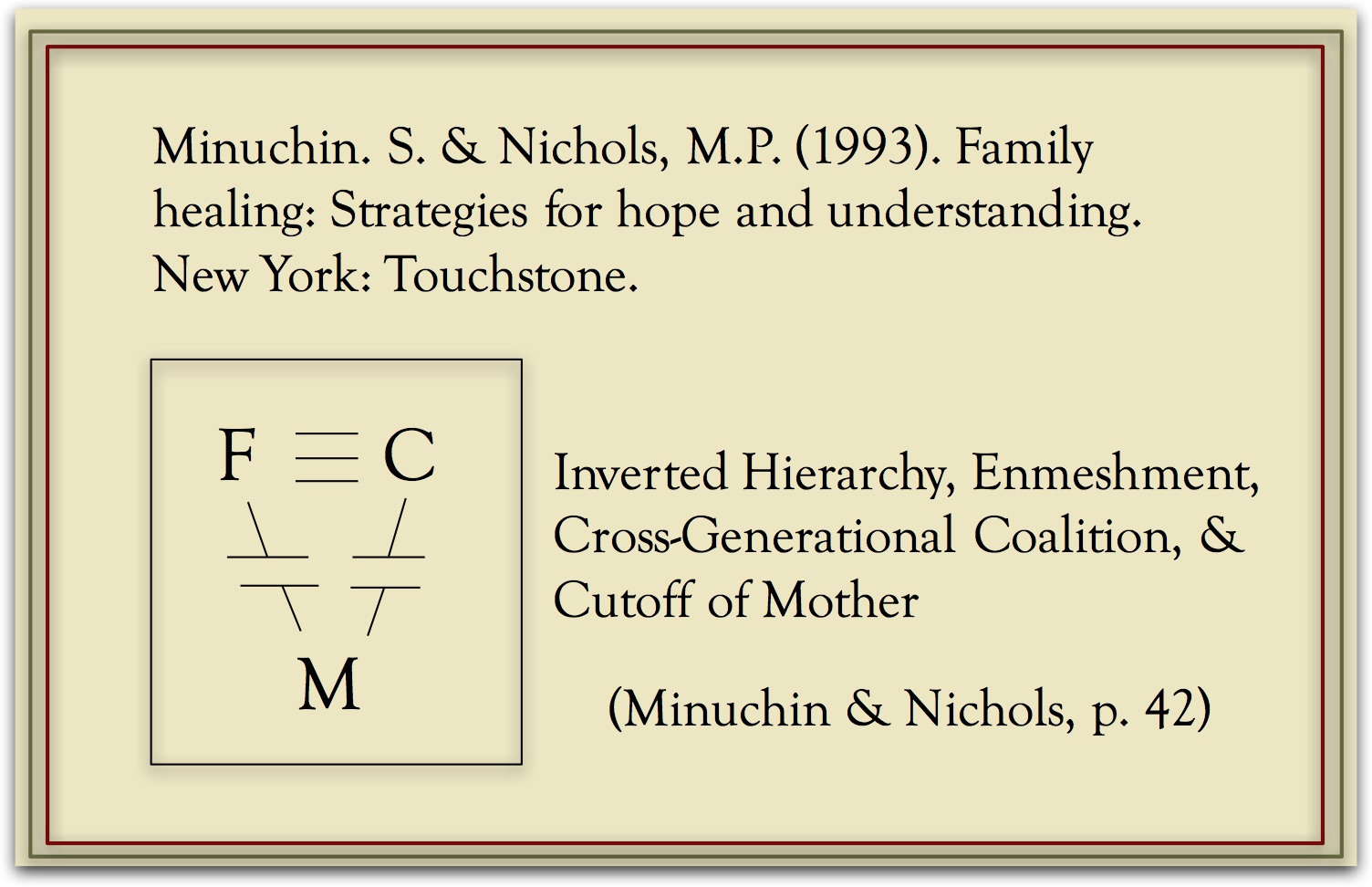
In 1993 (twenty five years ago), the preeminent family systems therapist, Salvador Minuchin and his co-author Michael Nichols provided a structural family diagram on page 42 of their book, Family Healing, for this type of family pathology. 

There it is.  There is the structural family systems diagram for what everyone is calling “parental alienation” – but what is actually called a cross-generational coalition of an allied parent with the child against the targeted parent that results in an emotional cutoff in a parent-child relationship in actual family systems therapy (Bowen, 1978; Haley, 1977; Minuchin, 1974; Minuchin & Nichols, 1993)

Note the triangular pattern of family relationships.  This is called the child’s “triangulation” into the spousal conflict.  Triangulation is the professional construct for the child being “placed in the middle” of the spousal conflict.

Note also, the “inverted hierarchy” created by the child’s elevation in the family hierarchy to a position above that of the targeted parent (the mother in this example) from which the child is empowered by the coalition with the father to judge the targeted parent.  An inverted family hierarchy is a highly characteristic symptom feature of a cross-generational coalition within the family. 

The three lines between the father and child indicate an “enmeshed,” over-involved psychological relationship of the father and child, which represents a psychological violation of boundaries across generations – leading the renowned family systems therapist, Jay Haley, to call this type of family pathology a “perverse triangle.”

The break in the connecting lines to the mother indicate the “emotional cutoff” of the mother from the father-son coalition.  This is the symptom feature everyone is calling “parental alienation” – the child’s rejection of the parent.  The child’s rejection of the parent is part of a much larger family systems pathology.

“Emotional stuck-together fusion and emotional cutoff are interrelated expressions of undifferentiation… The greater the degree of stuck-together fusion in a family, the greater the degree of cutoff that will follow.  This interlocking process continues to the multigenerational history of the family.” (Titelman, 2003, p. 21)

“When a pattern of fusion exists in one segment of a family, nuclear, family of origin, or extended, there is an equivalent degree of cutoff in the same or another segment of the family as a multigenerational system.” (Titelman, 2003, p. 21)

This is not some “new form of pathology” that requires unique new symptom identifiers.  We absolutely know what this pathology is.  Well, at least knowledgeable and competent mental health professionals know what it is.  The problem is that the field of professional psychology surrounding this attachment-related family pathology is rampant with profound professional ignorance and incompetence.

But the pathology typically called “parental alienation” in the popular culture is a well-understood and well-established form of attachment-related family pathology called “pathological mourning” which is being created by the personality disorder pathology of the allied narcissistic/(borderline) personality parent who has formed a cross-generational coalition with the child against the targeted parent.  We absolutely know what this pathology is.

So how did we reach this level of profound professional ignorance and incompetence?  Gardnerian PAS.  Back in the 1980s, a psychiatrist, Richard Gardner, proposed the existence of a new form of pathology – a “new syndrome” – which he called Parental Alienation Syndrome (PAS).  But in proposing a new form of pathology which was supposedly unique in all of mental health, Gardner skipped the step of professional diagnosis; the application of standard and established constructs and principles to a set of symptoms.

Gardner was correct in identifying a form of family pathology surrounding divorce, but he was incorrect that it represented a “new form of pathology” – a unique “new syndrome” in mental health.  It’s NOT a new form of pathology.  Gardner was simply a poor diagnostician.

The problem we’re facing is that when Gardner skipped the step of professional diagnosis he led professional psychology off into the wilderness of supposedly unique new forms of pathology that are supposedly identifiable by equally unique new forms of symptom identifiers.  By leading professional psychology into the wilderness, Gardner opened the door for professional ignorance and incompetence. 

We need to leave the wilderness of “new forms of pathology” and return to the established path of professional practice – assessment leads to diagnosis, and diagnosis guides treatment.  Diagnosis is the application of standard and established constructs and principles to a set of symptoms – no “new forms of pathology” unique in all of mental health.  Standard and established constructs and principles ONLY.

AB-PA is professional diagnosis; the application of standard and established constructs and principles to a set of symptoms.  In diagnosing the pathology from entirely within the standard and established professional constructs of the attachment system, personality disorder pathology, and family systems constructs (as fully described in Foundations), AB-PA returns us to the established path of professional psychology.

AB-PA is NOT a theory.  AB-PA is diagnosis.

We need to return to the established path of professional psychology.  The foundational principle of clinical psychology is that assessment leads to diagnosis, and diagnosis guides treatment.  Diagnosis is the application of standard and established constructs and principles to a set of symptoms.

Diagnosis:  The pathology everyone is calling “parental alienation” represents the trans-generational transmission of attachment trauma from the childhood of the allied narcissistic/(borderline) parent to the current family relationships, mediated by the personality disorder pathology of the narcissistic/(borderline) parent that is itself a product of this parent’s childhood attachment trauma.

Diagnosis:  The pathology everyone is calling “parental alienation” represents the child’s triangulation into the spousal conflict through the formation of a cross-generational coalition with an allied narcissistic/(borderline) parent that is resulting in the emotional cutoff of the child’s relationship with a normal-range and affectionally available targeted-rejected parent.

We absolutely know what this pathology is.  We simply need to accurately diagnosis it.  An accurate diagnosis begins with a proper assessment. 

Assessment leads to diagnosis, diagnosis guides treatment.

Assessment

A child rejecting a parent is fundamentally an attachment related pathology.

“The deactivation of attachment behavior is a key feature of certain common variants of pathological mourning.” (Bowlby, 1980, p. 70)

The attachment system is the brain system that governs all aspects of love and bonding throughout the lifespan, including grief and loss.  The attachment system is the brain system that governs a child’s bonding to a parent.  A child rejecting a parent is fundamentally an attachment-related pathology.

The attachment system never spontaneously dysfunctions.  The attachment system ONLY becomes dysfunctional in response to pathogenic parenting (patho-pathology; genic=genesis, creation).  Pathogenic parenting is the creation of significant psychopathology in the child through aberrant and distorted parenting practices. 

The construct of pathogenic parenting is an established construct in both clinical and developmental psychology and is most often used regarding attachment-related pathology since the attachment system never spontaneously dysfunctions, but ONLY becomes dysfunctional in response to pathogenic  parenting.

In ALL cases of attachment-related pathology surrounding divorce, ALL mental health professionals should assess for pathogenic parenting by an allied narcissistic/(borderline) parent who has formed a cross-generational coalition with the child against the other parent that is creating the child’s rejection of a normal-range and affectionally available targeted parent.

Assessment Leads to Diagnosis:  The American Psychological Association requires – REQUIRES – under Standard 9.01a of the APA ethics code that ALL mental health professional conduct an appropriate assessment.

9.01 Bases for Assessments
(a) Psychologists base the opinions contained in their recommendations, reports, and diagnostic or evaluative statements, including forensic testimony, on information and techniques sufficient to substantiate their findings.

If a mental health professional has not even assessed for pathogenic parenting surrounding an attachment-related pathology in the family, despite the fact that the attachment system ONLY becomes dysfunctional in response to pathogenic parenting, then that mental health professional’s “diagnostic statements” and “forensic testimony” CANNOT possibly be based on information “sufficient to substantiate their findings,” and this psychologist would therefore be in violation of Standard 9.01a of the APA ethics code.

Notice that NOWHERE in this am I talking about assessing for “parental alienation.”  We must return to standard and established professional constructs and principles for assessment, diagnosis, and treatment.

Assessment leads to diagnosis:

The Diagnostic Checklist for Pathogenic Parenting

The Parenting Practices Rating Scale

Just assess for the symptoms of pathogenic parenting by an allied narcissistic/(borderline) parent who has formed a cross-generational coalition with the child against the targeted-rejected parent.

We are NOT assessing for “parental alienation.”  We are returning to the path of established professional psychology.  We are leaving the wilderness of “new forms of pathology.”  We are basing our diagnosis on standard and established constructs and principles of professional psychology; the attachment system, personality disorder pathology, and family systems therapy.

Diagnosis is the application of standard and established constructs and principles to a set of symptoms.  Assessment leads to diagnosis, and diagnosis guides treatment.

DSM-5 Diagnosis

Pathogenic parenting that is creating significant developmental pathology in the child (diagnostic indicator 1), personality disorder pathology in the child (diagnostic indicator 2), and delusional-psychiatric pathology in the child (diagnostic indicator 3) is a DSM-5 diagnosis of V995.51 Child Psychological Abuse, Confirmed.

Don’t tell me this pathology is not in the DSM-5.  It is absolutely in the DSM-5.  Page 719: V995.51 Child Psychological Abuse Confirmed.

Assessment leads to diagnosis:  The Diagnostic Checklist for Pathogenic Parenting.  

Just assess for the symptoms of pathogenic parenting by an allied narcissistic/(borderline) parent who has formed a cross-generational coalition with the child against the targeted-rejected parent.

We must return to the path of established professional psychology in order to rid ourselves of the profound professional ignorance and incompetence that disables the mental health response to this attachment-related pathology, personality disorder pathology, and family systems pathology.

At the professional level, all mental health professionals MUST return to using the standard and established constructs and principles of professional psychology to diagnose pathology.

Assessment leads to diagnosis; diagnosis guides treatment.  Once we return to the established path of professional psychology, we absolutely know what this pathology is, and we can absolutely solve it.

AB-PA is NOT a theory.  It’s diagnosis; it’s the application of standard and established constructs and principles to a set of symptoms.

The Diagnostic Checklist for Pathogenic Parenting

Diagnosis:  Pathogenic parenting that is creating significant developmental pathology in the child (diagnostic indicator 1), personality disorder pathology in the child (diagnostic indicator 2), and delusional-psychiatric pathology in the child (diagnostic indicator 3) is a DSM-5 diagnosis of V995.51 Child Psychological Abuse, Confirmed.

Assessment leads to diagnosis; diagnosis guides treatment.

Craig Childress, Psy.D.
Clinical Psychologist, PSY 18857

Bowlby, J. (1980). Attachment and loss: Vol. 3. Loss: Sadness and depression. NY: Basic Books.

Bowen, M. (1978). Family Therapy in Clinical Practice. New York: Jason Aronson.

Haley, J. (1977). Toward a theory of pathological systems. In P. Watzlawick & J. Weakland (Eds.), The interactional view (pp. 31-48). New York: Norton.

Minuchin, S. (1974). Families and family therapy. Harvard University Press.

Minuchin. S. & Nichols, M.P. (1993). Family healing: Strategies for hope and understanding. New York: Touchstone.

Titelman, P. (2003). Emotional cutoff in Bowen family systems theory: An Overview.  In Emotional cutoff: Bowen family systems theory perspectives, P. Titelman (ed). New York: Haworth Press.
Pilot Program Proposal for the Family Courts: The Key Solution

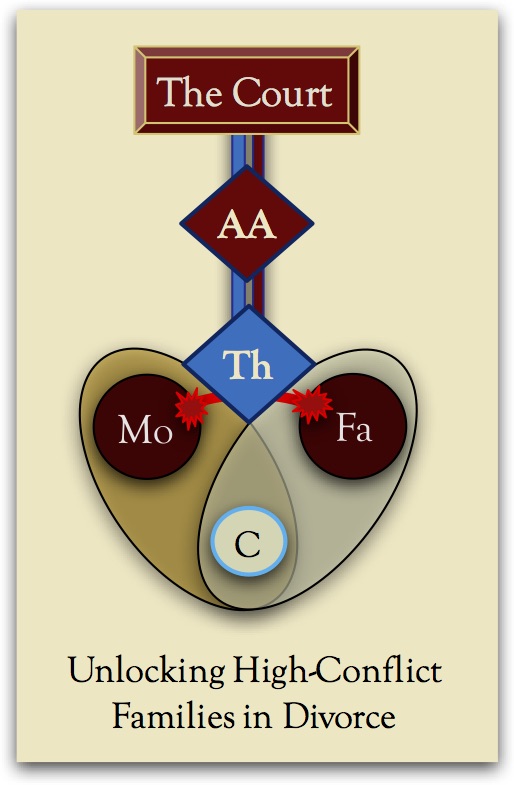
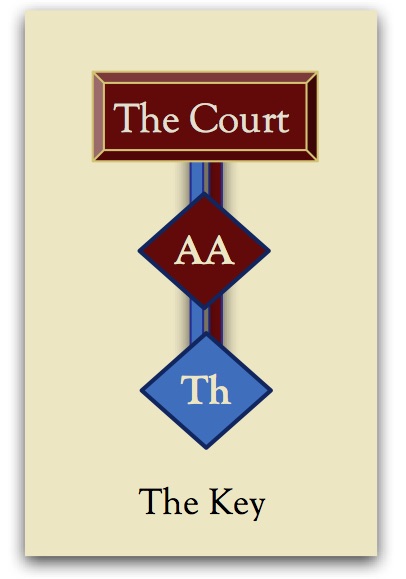
The Childress Institute is collaborating with Children 4 Tomorrow in Houston, Texas in developing a pilot program proposal to bring AB-PA training and Certification of mental health professionals and attorneys to the Houston area family courts to create the Key Solution to high-conflict divorce by teaming an AB-PA Certified mental health professional with an AB-PA Knowledgeable amicus attorney.

I have written a booklet to support the pilot program proposal that describes the background of AB-PA as the solution, and the Key teaming of an AB-PA Certified mental health professional with an AB-PA Knowledgeable amicus attorney to solve the attachment-related family pathology of “parental alienation” (AB-PA) in high-conflict divorce.

I have posted this pilot program proposal booklet to my website.

The Key to Solving High-Conflict Divorce in the Family Courts: 
Proposal for Pilot Program in the Family Law Courts

The Key to solving “parental alienation” in high-conflict divorce is knowledge.  This pilot program proposal will provide the Court with the necessary professional expertise needed to solve the attachment-related pathology of “parental alienation” in high-conflict divorce.

On October 20th, Children 4 Tomorrow will be sponsoring a one-day seminar event in Houston, Texas in support of the pilot program proposal:

Attachment-Based Parental Alienation (AB-PA): The Solution to High-Conflict Divorce

There will be five components to this seminar:

Foundations of AB-PA
Diagnosis of AB-PA
Assessment of AB-PA
Treatment of AB-PA
The Key Solution & Pilot Program Proposal

Step-by-step we will continue moving forward into the solution.

Our only adversary is ignorance, the solution is knowledge.

The current level of professional incompetence is profound.  We cannot solve “parental alienation” in any single case, for any single family, until we solve it for all children and all families.

The attachment-related family pathology of “parental alienation” represents a complex interrelated pathology that requires specialized professional knowledge and expertise in the following domains to competently assess, diagnose, and treat:

The Attachment System: A professional-level knowledge and expertise is required regarding the attachment system, what it is, how it functions, and how it characteristically dysfunctions; including grief and loss, internal working models of attachment (attachment schemas), and the trans-generational transmission of attachment trauma.

Personality Disorder Pathology:  A professional-level knowledge and expertise is required regarding narcissistic and borderline personality pathology, the origins of these types of personality pathology within childhood attachment trauma, the assessment and diagnosis of narcissistic and borderline personality traits, and the characteristic expression of narcissistic and borderline personality pathology within family relationships, including role-reversal parent-child relationships, use of the child as a “regulatory object” to stabilize the parent’s pathology, and the collapse of the narcissistic and borderline personality structure in response to divorce.

Family Systems Therapy:  A professional-level knowledge is required for family systems constructs, including homeostasis, triangulation, cross-generational coalitions, and emotional cutoffs, and regarding the principles of family systems therapy to restore normal-range and healthy family relationships.

Complex Trauma:  Complex trauma is the chronic exposure to relationship-based emotionally and psychologically traumatic experiences.  A professional-level of knowledge and expertise is required in recognizing and diagnosing the impact of complex trauma, the trans-generational transmission of complex trauma in reenactment narratives, and the differential symptoms of authentic current trauma versus trauma reenactment.

Because of the interrelated complexity of this pathology, the children and families affected by “parental alienation” warrant the professional designation as a special population who require specialized professional knowledge and expertise to competently assess, diagnose, and treat.

Currently we have plastic surgeons doing open heart surgery, and all the patients are dying.  They may be wonderful plastic surgeons, but they are not heart surgeons – and the patients are dying because of professional ignorance and incompetence.

Standard 2.01a of the APA ethics code requires that psychologists practice only within the domains of their professional competence. Mental health professionals are not allowed to be incompetent.  It is a violation of professional standards of practice.

Standard 9.01a of the APA ethics code requires that the diagnostic statements of psychologists, including their forensic testimony, be based on “information and techniques sufficient to substantiate their findings.”  If a mental health professional has not even assessed for the pathology of pathogenic parenting associated with an attachment-related pathology, then the diagnostic statements and forensic testimony of this mental health professional cannot possibly be based on “information and techniques sufficient to substantiate their findings.”

Pathogenic parenting that is creating significant developmental pathology in the child (diagnostic indicator 1), personality disorder pathology in the child (diagnostic indicator 2), and delusional-psychiatric pathology in the child (diagnostic indicator 3) represents a DSM-5 diagnosis of V995.51 Child Psychological Abuse, Confirmed.

It is simply a matter of ignorance and incompetence that is preventing an accurate DSM-5 diagnosis of the attachment-related pathology of AB-PA.

Mental health professionals are not allowed to be ignorant and incompetent (Standard 2.01a and 9.01a of the APA ethics code; Standards 3.10 and 3.1 of the ethics code for Marriage and Family Therapists; Standard C.2.a of the Code of Ethics for the American Counseling Association; Standard 1.04 of the Ethics Code of the National Association of Social Workers; Standard II.6 in Canada, Standard B.1.2 of the Australian Psychological Society Code of Ethics; Ethical Principle 2 of the British Psychological Society).

Mental health professionals are not allowed – by all of the professional standards of practice governing all mental health professionals – to be ignorant and incompetent.

The Attachment System:  Mental health professionals who are assessing, diagnosing, and treating attachment-related pathology need to be professionally knowledgeable and competent in the attachment system, what it is, how it functions, and how it characteristically dysfunctions.

Failure to possess professional-level knowledge regarding the attachment system when assessing, diagnosing, and treating attachment-related pathology would represent practice beyond the boundaries of professional competence in violation of professional standards of practice.

Personality Disorder Pathology: Mental health professionals who are assessing, diagnosing, and treating personality disorder related pathology as it is affecting family relationships need to be professionally knowledgeable and competent in personality disorder pathology, what it is, how it functions, and how it characteristically affects family relationships following divorce.

Failure to possess professional-level knowledge regarding personality disorder pathology when assessing, diagnosing, and treating personality disorder related pathology in the family would represent practice beyond the boundaries of professional competence in violation of professional standards of practice.

Family Systems Pathology: Mental health professionals who are assessing, diagnosing, and treating families need to be professionally knowledgeable and competent in the functioning of family systems and the principles of family systems therapy.

Failure to possess professional-level knowledge regarding the functioning of family systems and the principles of family systems therapy when assessing, diagnosing, and treating family pathology would represent practice beyond the boundaries of professional competence in violation of professional standards of practice.

The proposal of a family court pilot program in the Key solution of teaming an AB-PA Certified mental health professional with an AB-PA Knowledgeable amicus attorney will provide the Court with the necessary professional knowledge and the required professional expertise to solve the family pathology of “parental alienation” in high-conflict divorce.

The only barrier is ignorance.  The solution is knowledge.

Craig Childress, Psy.D.
Clinical Psychologist, PSY 18857

Collaboration

I wish to announce a partnership collaboration of The Childress Institute with Children 4 Tomorrow in Houston, Texas (CEO & Founder: Dwilene Lindsey) to jointly develop a proposal for an AB-PA Key Solution pilot program for the Houston area family law system.

The Key Solution offered by AB-PA (an attachment-based model of “parental alienation”) is to create a mental health/legal system partnership that teams an AB-PA Certified mental health professional with an AB-PA Knowledgeable amicus attorney to effectively resolve the attachment-related family pathology of AB-PA (attachment-based “parental alienation”).

This AB-PA Key Solution is designed to resolve the pathology contained in high-conflict families which is currently responsible for an overabundance of litigation in the family court system surrounding post-divorce custody and visitation conflict.

The teaming of an AB-PA Certified mental health professional with an AB-PA Knowledgeable amicus attorney provides the Key to unlocking the entrenched family conflict created as a result of parental personality pathology surrounding divorce.

Treatment-Focused Assessment

At the first indication of concern for possible attachment-related pathology within the family, the Court can order a Treatment-Focused Assessment from an AB-PA Certified mental health professional.

The proposed pilot program will provide the Court with a pool of available AB-PA Certified mental health professionals (i.e., with a pool of mental health professionals who possess the required professional expertise in attachment-related pathology, personality disorder pathology, family systems pathology, and complex trauma pathology) from which the Court and the represented parties can select for conducting the Treatment-Focused Assessment.

Following a six to eight week structured clinical assessment protocol (Treatment-Focused Assessment), the AB-PA Certified mental health professional will produce a targeted data-driven treatment-focused report for the Court regarding the treatment-related needs of the family required to resolve the family conflict.

Assembling the AB-PA Treatment Key

If the clinical data from the Treatment-Focused Assessment results in the recommendation for an AB-PA treatment Key, then the Court can assemble the treatment Key by teaming a new AB-PA Certified mental health professional (not the assessing mental health professional) with an AB-PA Knowledgeable amicus attorney.

The treatment-related goal is to effectively resolve the family conflict within a mental health context, with appropriate Court support, and to successfully facilitate the family’s transition from the pre-divorce intact family structure to a normal-range post-divorce separated family structure that allows for the child’s healthy emotional and psychological development.

Children have the right of childhood to love both parents, and children have the right to receive the love of both parents in return.  The AB-PA Key Solution seeks to ensure that right of childhood for all children.

The proposal for a pilot program will be to provide the training and Certification needed to create a pool of available AB-PA Certified mental health professionals on which the Court can rely for the professional mental health expertise in attachment-related pathology, personality disorder pathology, family systems pathology, and complex trauma pathology needed to conduct a Treatment-Focused Assessment, and to create for the Court the mental health and legal expertise needed to assemble an AB-PA treatment Key that teams an AB-PA Certified mental health professional with an AB-PA Knowledgeable amicus attorney.

The inherent adversarial structure of the legal system tends to support and feed any existing conflict in families rather than reduce it.  The teaming of an AB-PA Certified mental health professional with an AB-PA Knowledgeable amicus attorney creates a collaborative legal/mental health context that supports the resolution of family conflict rather than feeding it, while still allowing each party to retain separate legal counsel as desired to ensure protection of their legal rights.

The goal of The Childress Institute’s collaboration with Houston’s Children 4 Tomorrow is to provide the family law court system in the Houston area with the required professional expertise in attachment-related pathology, personality disorder pathology, family systems pathology, and complex trauma pathology necessary to create effective solutions for resolving the ongoing and intransigent family conflict surrounding parental personality pathology and child custody following divorce; family conflict that currently congests the family law courts with endless litigation.

Structure of the AB-PA Key Solution

The proposal for a pilot program in the Houston family law system will have four components:

Certification in AB-PA for Mental Health Professionals

The proposed pilot program will provide the family law court system in Houston with a select group of AB-PA trained and Certified mental health professionals who are skilled and competent in conducting high-quality, data driven, treatment-focused clinical assessments for the attachment-related family pathology of AB-PA, and who possess the professional mental health expertise required for the treatment resolution and long-term stabilization of the family pathology of AB-PA.

Training of Legal Professionals in AB-PA

The pilot program proposal will include training for a select group of legal professionals who will serve as AB-PA Knowledgeable amicus attorneys for the court.  These AB-PA Knowledgeable amicus attorneys will team with the AB-PA Certified mental health professionals in establishing the needed mental health/legal system collaboration required for the long-term stabilization of AB-PA in high-conflict families.

Training AB-PA Specialists in CPS

The proposed pilot program for the family law court system will also include training for a select set of Child Protective Services social workers in the assessment and diagnosis of AB-PA.  This select group of AB-PA Specialists in the CPS system will coordinate the CPS assessment and response to a confirmed DSM-5 diagnosis of V995.51 Child Psychological Abuse (pathogenic parenting; AB-PA) made by the AB-PA Certified mental health professional.

Program Evaluation Research

The final component of the pilot program proposal will be to establish and maintain a program evaluation data component that will ground the pilot program in empirically validated and data-driven professional practice.  Program evaluation research and data-driven decision-making will be incorporated into the structure of the pilot program, and additional collaboration with Houston area graduate psychology programs will be sought for long-term program efficacy and program evaluation studies.

The goal is to assist all families in making a healthy and successful transition from the pre-divorce intact family structure that was united by the marriage, to the new post-divorce separated family structure that is now united by the child, and by the shared bonds of affection between the child and both parents.

Collaboration

I am delighted to be working with Dwilene Lindsey and Children 4 Tomorrow  in our efforts to actualize the solution offered by an attachment-based model of “parental alienation” (AB-PA) to the psychological child abuse of “parental alienation.”  In October of 2017, Ms. Lindsey is looking to bring me out to Houston to present a seminar for mental health and legal professionals on the attachment-related pathology of AB-PA, culminating in a description of the pilot program proposal for the family law system.

The solution to “parental alienation” (AB-PA) is available today – right now.  The only barrier is ignorance.  The solution is knowledge.  Step-by-step we will roll back the ignorance that allows, and indeed colludes with the pathology of “parental alienation” (AB-PA).

We will not stop until all of your beloved and authentic children are back in your arms.  Step-by-step…

Craig Childress, Psy.D.
Psychologist, PSY 18857

The Childress Institute

My attorney is currently in the process of establishing The Childress Institute as a non-profit 501(c)(3) which has among its goals, providing professional-level training for mental health and legal professionals in the pathology of attachment-based “parental alienation” (AB-PA).

By providing training and education seminars to mental health and legal professionals, The Childress Institute will construct the two component parts of the KEY to the family law solution; a set of AB-PA Certified mental health professionals and a set of AB-PA Knowledgeable amicus attorneys that the Court can then draw on in constructing the team of mental health and legal expertise needed to address and resolve high-conflict divorce.

The Childress Institute:  MISSION STATEMENT

To use the latest scientific knowledge in the fields of child development and the healthy neuro-development of the brain during childhood to create solutions for the social, emotional, and psychological challenges facing children and their families.

The Current Focus of The Childress Institute

Training and Certification in AB-PA:  Fostering the highest level of professional expertise in the assessment, diagnosis, and treatment of the family pathology surrounding attachment-based “parental alienation” (AB-PA) through training, education, and research.

Beginning in the fall of 2017, The Childress Institute will begin offering Basic and Advanced training and Certification seminars for mental health professionals in the family pathology of AB-PA, with the goal of creating the professional expertise necessary to resolve the attachment-related family pathology of AB-PA surrounding high-conflict divorce.

Beginning in the spring of 2018, The Childress Institute will begin offering one-day training seminars for legal professionals in AB-PA with the goal of creating a pool of AB-PA Knowledgeable amicus attorneys for the Court.

The teaming of an AB-PA Certified mental health professional with an AB-PA Knowledgeable amicus attorney is the KEY to the family law resolution of high-conflict divorce.

The goal of The Childress Institute will be to provide the Court with the required professional expertise needed to construct the mental health and legal team necessary to foundationally resolve high-conflict divorce.

If a mental health or legal professional has been through the training Certification and education seminars offered by The Childress Institute, the Court can have confidence in the professional expertise of that mental health or legal professional, and the Court can act with confidence in assembling a KEY team from among the Certified mental health professionals and Knowledgeable legal professionals available.

For Mental Health Professionals:

Basic Certification:  A two-day Basic Seminar on the foundations, assessment, diagnosis, and treatment of the attachment-related family pathology of AB-PA.

Foundations of AB-PA:  A professional-level analysis and description of the attachment-related origins of the pathology, the personality disorder origins of the pathology, and the family systems origins of the pathology.

Diagnosis of AB-PA:  A professional-level description and analysis of the three diagnostic indicators of AB-PA and the 12 Associated Clinical Signs, as well as the diagnostic indicators of authentic versus inauthentic parent-child conflict and the symptom indicators of a cross-generational coalition creating the child’s symptoms.

Assessment of AB-PA:  Professional-level instruction in conducting a six- to eight-session Treatment-Focused Assessment protocol, with descriptions of key lines of clinical assessment inquiry during the three phases of the Treatment-Focused Assessment protocol.  Training in data-driven documentation and report writing for the Court, and data-driven diagnostic and treatment-related decision-making.

Treatment of AB-PA:  Professional-level description of treatment-related approaches to restoring the child’s normal-range attachment bonding motivations, including professional-level instruction in constructing and managing variations of a Strategic family systems intervention that can potentially release the child from the loyalty conflict without the need for a protective separation period.  Basic Certification also includes a professional-level discussion of data-driven decision-making in treatment, and the development of a Single-Case ABA design for assessment and remedy.  An introduction to collaborating with High Road augmented recovery will also be provided.

Professional Consultation:  Basic Certification in AB-PA through The Childress Institute programs provided in Southern California also include four hours of post-seminar professional case consultation with Dr. Childress.

Advanced Certification:  Advanced Certification in AB-PA includes an additional one-day Advanced Seminar for Expert Certification in AB-PA.  This advanced seminar more fully examines the damaged information structures of the attachment system that create the themes of AB-PA as manifesting in the expression of the personality and family systems pathology.  Prior completion of Basic AB-PA Certification is required.  An additional two hours of post-seminar professional case consultation with Dr. Childress is included with Advanced Certification.

For Legal Professionals

AB-PA for Legal Professionals is a one-day seminar designed to provide education training for legal professionals in working collaboratively with the AB-PA Certified mental health professional during both the initial phases of treatment and across the long-term stabilization of the high-conflict family.  The content of this one-day seminar will cover mental health constructs but will not assume a prior mental health background.  An additional focus of this one-day seminar is on the Court orders that may be needed at various phases of the family’s recovery and long-term stabilization.  This will include a description of the Strategic family systems intervention that may be enacted by the AB-PA Certified mental health professional and the required Court orders to support this family systems intervention.

Future Projects of The Childress Institute

While the primary current focus of The Childress Institute will be on solving the family pathology of AB-PA, the mission of The Childress Institute is broader and more encompassing.

The goal of The Childress Institute is to achieve the highest level of professional expertise in all aspects of supporting healthy child development and resolving the social and psychological problems created by childhood trauma.

Future anticipated directions for The Childress Institute include:

The Terrorist Mind:  Developing an attachment-based understanding of the terrorist mind, pathological hatred, and fanatical extremism, with the goal of developing primary and secondary treatment-related interventions to resolve the social and psychological trauma-related pathology of terrorism and the extremism of pathological anger.

Developmentally Supportive Parenting and ADHD:  Providing education and training in developmentally supportive parenting for all parents and all families, with a special focus on providing education and training in relationship-based parenting that can effectively resolve the symptoms of attention deficits, impulsivity, and hyperactive behavior in children through non-medication relationship-based parenting approaches.

Redeveloping Education Infrastructure:  Providing leadership in developing a model for foundationally reformulating the educational approach for children in the United States away from the current 12th Century “Cathedral School” model toward a 22nd Century education model based in the scientific research on child development, the scientific research on learning, and the available advances in the full range of supportive information technology and media.

Reduction of Prison Recidivism:  Intervention-development and research into catalytic intervention models for reducing the trauma-impacted mindset that leads to recidivism in released prisoners and juvenile offenders.

Solving AB-PA in High-Conflict Divorce

The first focus of The Childress Institute is on providing the necessary training and education to the mental health and legal systems that is required to solve the attachment-related family pathology of AB-PA surrounding high-conflict divorce.

In addition to the education and training seminars offered in Southern California, contract seminars in Basic Certification in AB-PA for mental health professionals, Advanced Certification in AB-PA for mental health professionals, and training seminars in AB-PA for Legal Professionals can be arranged for other locales, organizations, and groups in coordination with The Childress Institute.

Currently, steps are underway to provide AB-PA training and Certification for mental health professionals (and possibly attorneys) in Houston, Texas on July 13th & 14th.  I’ll have more information about this potential education and training opportunity in the coming days.

Down the road, there is the potential for establishing data-driven pilot programs in various legal jurisdictions for training and Certification of KEY teams of mental health and legal professionals in collaboration with The Childress Institute for addressing high-conflict divorce and custody-related family conflict.

There are also preliminary discussions for hosting training and Certification seminars across a European tour, to establish European professional expertise in AB-PA.

As these AB-PA training and Certification processes begin to develop and move forward, if additional training of High Road facilitators is engaged through Dorcy Pruter, then High Road augmented recovery of children in high-conflict families who are evidencing AB-PA will also become more extensively available, and a comprehensive solution can be implemented.

The Future

I have only about another decade of active shelf-life on my professional career, perhaps less depending on the will of that-which-leads in calling me home.  I have been studying and working out the nature of this pathology (AB-PA) for the past 10 years.  I know this pathology.

When I leave the planet and return home to that-which-leads, I hope to leave a legacy of expert mental health professionals who can ensure that all families make a successful transition to a healthy separated family structure following divorce, and that all children are ensured their fundamental right of childhood to love both parents, and to receive the love of both parents in return.

I will rely on these expert mental health professionals to train the next generation of experts, and to lead professional psychology into a future that solves the trans-generational impact of childhood trauma.

When I embarked upon this journey to solve the family pathology of “parental alienation” I was a lone psychologist in private practice in Southern California.  We now stand at the point of solving “parental alienation” in high-conflict divorce.  The only barrier is ignorance.  The solution is simply knowledge.

My hope is that through The Childress Institute, not only will we ensure the highest caliber of professional expertise in treating children and families surrounding divorce, but also that through understanding the impact of childhood trauma we will ultimately be able to unlock the trauma-related pathology of the terrorist mind and pathological anger and that this will ultimately lead to trauma-informed interventions that resolve terrorism and the extremism of pathological anger; that we will be able to resolve the psychological-behavioral regulatory disorder of ADHD through relationship-based (not behavioral) parenting approaches, alleviating the need to medicate tens of millions of our children; that we will develop a 10-year roadmap for fundamentally restructuring the foundational infrastructure and approach to educating our children (think Kennedy’s challenge to land a man on the moon), creating a 21st century approach to education; and that we recover our children lost in the criminal justice system by creating trauma-informed interventions that effectively resolve the impact of unresolved childhood trauma.

Audacious goals.  All achievable.  I see clearly the path toward achieving each of these goals.  It’s just a matter of enacting the solution, step-by-step.  This is the mission of The Childress Institute.

Craig Childress, Psy.D.
Clinical Psychologist, PSY 18857

AFCC Boston Powerpoint

I have posted the handout for the Powerpoint slides from my presentation with Dorcy Pruter at the AFCC Convention in Boston.  I have divided the handout for this Powerpoint presentation into three Parts to make the file sizes manageable for downloading.

Part 1The Part 1 slides cover the shift away from the professional wilderness of Gardnerian PAS and our return back to established constructs and principles of professional psychology, with a description of the key features of AB-PA.

Part 2The Part 2 slides contain a substantial core of information.  Part 2 covers issues of professional competence, the DSM-5 diagnosis of child psychological abuse, the protective separation, and the KEY to unlocking the family law solution to high-conflict divorce.

Part 3 The Part 3 slides cover a professional-level description of the High Road protocol of Dorcy Pruter, explaining at a professional-level of analysis how the High Road protocol achieves its success in gently restoring the normal-range functioning of the child’s attachment bonding motivations toward the targeted-rejected parent.  Some of these slides have been redacted for the handout to protect the intellectual property rights of Ms. Pruter.  If you have a legitimate reason for seeking the un-redacted copies of these slides, contact Dorcy: clientcare@coparentinginstitute.com

I want to highlight four extremely important points from this Boston presentation:

1. )  Gardnerian PAS is Dead

The Gardnerian PAS model is a dead paradigm.  In professional psychology, there is no such thing as “parental alienation.”  That is a term used in the general population – and it’s fine for general use, but it is not a professional-level construct appropriate for professional-level discussion.  Mental health professionals need to rely on standard and established professional constructs and principles in our professional-to-professional level discussion.

If a mental health professional uses the construct of “parental alienation” in a professional level discussion, they are essentially talking about unicorns.  Assessing, diagnosing, and treating unicorns is irrelevant, because there is no such thing as unicorns.

There are six slides in Part 2 that drive this point home, beginning with the slide that says:

There is no such thing in clinical psychology as “parental alienation.”  It is a made up form of “new pathology.”

Any mental health professional who continues to use the Gardnerian PAS model for defining a mythical new form of pathology called “parental alienation” is simply trying to maintain the status quo of no solution in order to maintain their status as an “expert” in diagnosing unicorns.

The general population of targeted parents and legal professionals can all continue to use the construct of “parental alienation” because they are not mental health professionals.  But at a professional level, all mental health professionals need to be… professional.  In professional-to-professional discussion at a professional level, we need to use standard and established constructs and principles to describe real forms of pathology –  no talk of unicorns and mermaids.

I know you’re an expert in unicorns and mermaids, I know you want to remain an expert in unicorns and mermaids.  But unfortunately, there is no such thing as unicorns and mermaids.

2.)  Professional Incompetence

Mental health professionals are not allowed to be ignorant and incompetent, and they do not have a choice about this.  Once we return to the professional path of standard and established constructs and principles mental health professionals can be held accountable, and they do not have a choice to be ignorant and incompetent.

Standard 2.01a of the APA ethics code requires professional competence.

APA Ethics Code
Standard 2.01 Boundaries of Competence
(a) Psychologists provide services, teach and conduct research with populations and in areas only within the boundaries of their competence,

Standard 2.03 of the APA ethics code requires that psychologists take proactive steps to maintain their professional competence.

APA Ethics Code
Standard 2.03 Maintaining Competence

Psychologists undertake ongoing efforts to develop and maintain their competence.

Standard 9.01a of the APA ethics code requires that their assessment of pathology is “sufficient to substantiate” their diagnostic statements and forensic testimony.

APA Ethics Code
Standard 9.01 Bases for Assessments
(a) Psychologists base the opinions contained in their recommendations, reports and diagnostic or evaluative statements, including forensic testimony, on information and techniques sufficient to substantiate their findings.

There are four slides in Part 2 of the Boston presentation that establish the domains of knowledge necessary for professional competence.

Attachment System Competence
Personality Disorder Competence
Family Systems Competence
Complex Trauma Competence

These are very important slides.  They put mental health professionals on notice that Standards 2.01a and 2.03 of the APA ethics code are active and apply.  I have put my professional colleagues on notice that they potentially face licensing board complaints for “violations of professional standards of practice” if they continue to remain ignorant and incompetent.

Notice I never used the term “parental alienation” in defining the domains of knowledge necessary for professional competence.  If we want to hold mental health professional accountable, it must be to the standard and established constructs and principles of professional psychology as laid out in these four slides.

Mental health professionals are NOT ALLOWED to be incompetent (Standard 2.01a of the APA ethics code).  These four slides are incredibly important.

3.)  The KEY

The KEY to the family law solution to “parental alienation” (AB-PA) in high conflict divorce is to team an AB-PA Knowledgeable amicus attorney with an AB-PA Certified mental health professional.

I will let this idea percolate a little, and then I will unpack it.  The last five slides of Part 2 are huge.  They represent the solution to the family law system surrounding high-conflict divorce.  I will discuss this more in my next blog post and in the upcoming days.

The last five slides of Part 2 are huge.  They will solve the family law system response to high-conflict divorce.

4.)  The High Road Protocol

The High Road protocol of Dorcy’s is unlike anything we do in psychotherapy.  By analogy, if the different forms of psychotherapy are considered to be the different types of carbon-based life forms (fish, plants, birds, reptiles, etc.), the High Road protocol would be analogous to a silicon-based life form – an entirely different foundation to life.  The change-agent used in the High Road protocol is entirely unlike anything we do in psychotherapy.  And this catalytic approach has implications in solving other social-psychological issues beyond the pathology of “parental alienation.”

In the days ahead, the catalytic approach used by the High Road protocol warrants reasoned professional discussion and exploration regarding the potential application of the catalytic approach employed by Dorcy to a number of other social-psychological issues.  While the content components of the protocol would change based on the social-psychological issue being addressed, the basic catalytic change-agent approach (the silicon-based life form) would provide the underlying structure for the intervention.

I know the implications of the catalytic change-agent approach used by Dorcy cannot be gleaned from the slide handout I’ve posted because the really good explanatory stuff is redacted.  This is because people will try to copy what Dorcy does, and Dorcy has a legitimate right to protect her intellectual property.  But everyone in the room in Boston now understands exactly how Dorcy accomplishes what she does, and professional articles regarding the catalytic approach to change will be on their way once we solve the pathology of “parental alienation” (AB-PA).

I’m going to let all this information percolate for a bit, and then I’ll return to unpack it.

Craig Childress, Psy.D.
Clinical Psychologist, PSY 18857

Boston

The world of “parental alienation” surrounding high-conflict divorce changes dramatically on June 1 in Boston.

I leave tomorrow for the East coast where I will visit my son in DC for his birthday, and then travel up to Boston for my AFCC presentation with Dorcy.  This Boston presentation is significant and will alter the landscape of how the attachment-related family pathology of “parental alienation” is addressed in both the mental health and legal systems.

My Powerpoint is in-hand.  It is powerful.

There are at least 5 major – major – fulcrums of change contained in my Boston presentation. Any one of these fulcrums of change would be significant just by itself, and there will be at least five of them in my talk.

Two of these fulcrums of change – the Key to the family law solution and the explanation of the High Road protocol’s effectiveness – are shattering fulcrums of change that will ripple for years with major impact.

Systems change is slow.  There is an inertia that prevents change within systems.  This is especially true when the inertia of the status quo is locked into place by the profound indolence and sloth of professional ignorance and incompetence.

But the solution to the attachment-related family pathology of “parental alienation” is available today – now – this instant.  The ONLY barriers are professional ignorance and the incompetence that this ignorance spawns.

On June 1 in Boston we put an end to ignorance and we return to the solid foundation of professional knowledge.

On June 1 in Boston we draw a line in the sand that defines professional standards of practice and that challenges all mental health professionals into professional competence.

On June 1 in Boston we present the solution.  Simple.  Clear.  Direct.

On June 1 in Boston we explain exactly how the High Road protocol gently and effectively achieves a 100% success rate of restoring the child’s normal-range attachment bonding motivations toward the formerly targeted-rejected parent.

On June 1 in Boston, everything changes.

When a pebble is thrown into a lake, it takes time for the ripples to expand to the shores on which we stand.  Changing the inertia created by ignorance takes time. But there is no barrier except ignorance.  The solution is available – now – today.

Following my Boston presentation I will make my Powerpoint slides available on my website, but I will extract the slides related to the High Road protocol that might compromise the intellectual property of Dorcy Pruter in explaining how the High Road protocol creates change.

Dorcy has the legitimate right to protect her intellectual property.  The professional community also has a legitimate interest in understanding the change-mechanisms used.  Our Boston presentation balances these interests.

What the High Road protocol does is unlike anything we do in psychotherapy, and the catalytic change-agent mechanisms used by the High Road protocol have potential implications far beyond the restoration of the attachment system in “parental alienation.”  I suspect that our Boston presentation will initiate a gradually emerging dialogue in professional psychology about adapting the catalytic change-agent approach used by Dorcy to a broad-range of issues beyond the restoration of attachment bonding motivations.

Once we solve “parental alienation” – because that is THE most pressing issue – then expect a series of professional-level articles.  We just don’t have time yet.  We’re too busy solving “parental alienation” as fast as is humanly possible.

Following our presentation, Dorcy will have the full series of my Powerpoint slides related to the High Road protocol and she can make these slides available to individuals and in circumstances as she sees fit.  With the exception of these High Road slides, the remainder of my Powerpoint slides from Boston will be available on my website following our presentation.

I leave tomorrow for Boston.  The world is about to change.

Craig Childress, Psy.D.
Clinical Psychologist, PSY 18857

Associated Clinical Signs: ACS-2 Empowering the Child

Empowering the child to reject the targeted parent is a key symptom feature of AB-PA because it is central to the underlying origins of the pathology in the narcissistic/(borderline) parent’s reprocessing of this parent’s own childhood trauma through its reenactment in current relationships.

The empowerment of the child represents a central – and indeed vital – “corrective change” to the original childhood trauma experience of the narcissistic/(borderline) parent-as-a-child that is key to the psychological reprocessing and working through of this childhood trauma experience for the narcissistic/(borderline) parent (which is the psychological function of the trauma reenactment).

In the original childhood trauma experience of the narcissistic/(borderline) parent-as-a-child, the narcissistic/(borderline) parent-as-a-child was helpless, vulnerable, and unable to stop the traumatizing psychological abuse of the experience.  Years later, when the divorce activates the attachment system of the narcissistic/(borderline) parent to mediate the loss of the spousal attachment relationship, the childhood trauma patterns contained within the narcissistic/(borderline) parent’s attachment networks also become reactivated.

This reactivation of the childhood trauma by the divorce (i.e., the rejection and abandonment by the attachment-figure) reactivates both the childhood trauma pattern (“abusive parent”/”victimized child”/”protective parent”) and also the immense childhood trauma anxiety of being a helpless, vulnerable, and “victimized child.”

The psychological identity of the narcissistic/(borderline) parent as the “victimized child” in the original childhood trauma experience fuses with the current child’s role as the supposedly “victimized child” in the trauma reenactment narrative.  In the fluid psychological disorganization the narcissistic/(borderline) mind, a psychological equivalency develops between the “victimized” narcissistic/(borderline) parent-as-a-child and the current child who occupies the role of the “victimized child” in the trauma reenactment narrative.  In the mind of the narcissistic/(borderline) parent, a diffusion of identity occurs that merges the parent’s childhood psychological experience of being the “victimized child” with the current role of the child as the “victimized child” in the trauma reenactment narrative.

The psychological function of the trauma reenactment is an unconscious repetition of the childhood trauma patterns in an effort to reprocess and work through the original trauma experience by altering certain key aspects of the original trauma experience in the current reenactment of the childhood trauma patterns.

In the original childhood trauma experience, the narcissistic/(borderline) parent was the helpless and vulnerable “victimized child.”

However, in the current reenactment of this childhood trauma experience, the current child is empowered by the supposedly “protective” narcissistic/(borderline) parent to be able to reject the allegedly “abusive parent.” This helps manage the narcissistic/(borderline) parent’s own reactivated trauma anxiety from their original childhood vulnerability.

In the current reenactment of this childhood attachment trauma of the narcissistic/(borderline) parent, the current child is not helpless, but is made to be powerful and empowered by the “protective” narcissistic/(borderline) parent in order to reject the “abusive parent” (the targeted parent’s role in the trauma reenactment narrative).

This empowerment of the child serves a critical function of reducing and regulating the re-activated and re-experienced trauma anxiety of the narcissistic/(borderline) parent that is embedded in the trauma networks of this parent’s attachment system by countering the helpless vulnerability of the “victimized child” (representing both the current child AND the narcissistic/(borderline) parent-as-a-child).

In the current trauma reenactment, the child is not helpless – the child is empowered.

The Empowered Child

The empowerment of the child to reject the supposedly “abusive” targeted parent in the kabuki theater display of the trauma reenactment narrative represents an important – and indeed vital – “corrective change” to the original childhood trauma experience of the narcissistic/(borderline) parent that is (unconsciously) designed to reprocess and work through the childhood trauma experience of the narcissistic/(borderline) parent.

Because of the key and central role that this empowerment symptom plays in the trauma reenactment narrative by providing the corrective change to the original childhood trauma experience of the narcissistic/(borderline) parent, and in reducing and regulating the reactivated trauma-related anxiety of the narcissistic/(borderline) parent, this symptom feature of empowering the child to reject the targeted parent is of central importance within the pathology and will therefore be present in all cases of AB-PA.

In all cases of AB-PA, the allied narcissistic/(borderline) parent will seek to empower the child to reject the targeted parent.

In juxtaposition to the child’s empowerment to reject the “abusive” targeted parent, is the equal requirement that the narcissistic/(borderline) parent supposedly becomes “helpless” (a false and feigned “helplessness”) to stop the child’s powerful rejection of the targeted parent.

This feigned helplessness on the part of the narcissistic/(borderline) parent to influence the supposedly “powerful child” is achieved in two themes:

First, the narcissistic/(borderline) parent claims parental incompetence (“What can I do?  I can’t force the child to…”), and

Second, the narcissistic/(borderline) parent presents as supposedly “respecting” the child’s “right” to make a supposedly “independent decision” to reject the targeted parent.

These two themes, feigned “helplessness” by the narcissistic/(borderline) parent and feigned “respect” for the child’s supposedly “independent decision” to reject the targeted parent, will be evident in the ACS-2 Empowering the Child symptom feature.

The three primary expressions of ACS-2 Empowering the Child are:

1.)  Child Deciding on Visitation.  Asserting that the child should be empowered to decide whether or not to go on visitation with the targeted parent (reflecting the “respect for the child” theme):

N/(B) Parent: “ The child should be allowed to decide on whether on not to visit the other parent.”

2.)  Listening to the Child.  The narcissistic/(borderline) parent will express variations of “listening to the child” (reflecting the “respect for the child” theme):

N/(B) Parent:  “We need to listen to the child” – “I’m just listening to the child” – “You should ask the child.  Just listen to the child.”

3.)  Child’s Testimony in Court.  The narcissistic/(borderline) parent will actively seek the child’s testimony in court to reject the targeted parent.

Child Testimony in Court

Seeking to have the child testify in court in order for the child to reject the other parent is so distinctive and pathology-specific a symptom, that when this particular sub-symptom of ACS-2 Empowering the Child by seeking the child’s testimony in court to reject the targeted parent is present, it is almost 100% characteristic of the corresponding presence of AB-PA.

NO normal-range parent who is capable of authentic empathy for the child would ever propose that the child testify in court in order to openly reject the other parent.  This sub-symptom of ACS-2 Empowering the Child is so significant and abhorrent that it will be addressed in a separate blog post.  But what should be noted here is that seeking the child’s testimony in court to reject the other parent is a sub-symptom of ACS-2 that is almost 100% characteristic of the absence of parental empathy in the allied narcissistic/(borderline) parent associated with the pathology of AB-PA.

All normal-range adults, legal professionals and mental health professionals alike, are extremely uncomfortable with putting the child in the position of testifying in court to openly reject a parent.  This is because normal-range adults have empathy for the child, and because of their empathy they realize the immense unconscious psychological stress and guilt this would create for the child.

In most cases, the child’s testimony is not allowed by the reasoned humanity of the judge because of this normal-range empathy for the stress and guilt such testimony would create for the child.  When testimony is allowed, the judge’s normal-range empathy and discomfort usually results in the child’s views being provided privately in the judges chambers.

A highly distinctive feature of the “seeking court testimony by the child”  sub-symptom of ACS-2 is that the narcissistic/(borderline) parent actually thinks the child being allowed to testify is a good thing.  While the idea of the child testifying in court to reject a parent makes all normal-range adults extraordinarily uncomfortable, the narcissistic/(borderline) parent cannot comprehend (because of the polarization of the splitting pathology) that the child could actually love the other parent.  That the child might actually love the targeted parent is a concept that simply does not perceptually register for the narcissistic/(borderline) parent.

This empathetic insensitivity of the narcissistic/(borderline) parent emerges from four factors:

1)  Within the context of the childhood trauma themes of this parent’s trauma reenactment narrative, the narcissistic/(borderline) parent sees the empowerment of the “victimized child” to reject the “abusive parent” as a righteous and justified act;

2)  The narcissistic/(borderline) parent is characterologically incapable of empathy;

3)  Manipulation and exploitation of others are central features of the narcissistic/(borderline) personality pathology;

4)  The polarized splitting pathology characteristic of both the narcissistic and borderline personality cannot (at a neuro-biological level) accommodate to ambiguity.  If the narcissistic-borderline parent rejects other spouse – then the child must ALSO reject the other spouse (parent).  Because of the nature of the splitting pathology, it is (neurologically) impossible for the narcissistic/(borderline) parent to conceptualize that the child might actually love the other parent.

Manipulation and Exploitation

The manipulation and exploitation of other people are highly characteristic features of both the narcissistic and borderline personality pathology.

In ACS-2: Empowering the Child, the narcissistic/(borderline) first manipulates the child into becoming a mirror for the narcissistic attitudes and beliefs of the parent, and then the narcissistic/(borderline) parent exploits the child’s reflection of the narcissistic/(borderline) parent’s attitudes to achieve the desire interests of the narcissistic/(borderline) parent by empowering the child’s reflection of the parent.

In a narcissistic relationship, there is ONLY one person. The other person disappears and only the narcissist exists.

“In a narcissistic encounter, there is, psychologically, only one person present. The co-narcissist disappears for both people, and only the narcissistic person’s experience is important.” (Rappoport, 2005, p.3)

Once the child surrenders to the psychological domination (psychological control; Barber, 2002) of the narcissistic/(borderline) parent, the child’s manipulated beliefs, wants, and feelings are then exploited by the narcissistic/(borderline) parent to achieve the desired interests of the narcissistic/(borderline) parent.

If the child wants to play baseball but the narcissistic/(borderline) parent wants the child to play saxophone in the school band because that’s the instrument the narcissistic/(borderline) parent played in the school band, then the child suddenly “decides” that baseball isn’t fun and wants to take up the saxophone instead.  The targeted parent who is authentically empathetic with the child may continue to advocate for the child to play baseball because this parent’s empathy for the child knows how much the child actually enjoys baseball.  But the narcissistic/(borderline) parent first manipulates the child through methods of psychological control into expressing a desire to quit baseball and play the saxophone, and then empowers this supposedly “independent decision” with phrases such as, “We need to listen to the child” when the child’s expressed desires have obviously been manipulated by the narcissistic/(borderline) parent.

“Psychological control refers to parental behaviors that are intrusive and manipulative of children’s thoughts, feelings, and attachment to parents.” (Barber & Harmon, 2002, p. 15)

“Specifically, psychological control has historically been defined as psychologically and emotionally manipulative techniques or parental behaviors that are not responsive to children’s psychological and emotional needs. Psychologically controlling parents create a coercive, unpredictable, or negative emotional climate of the family, which serves as one of the ways the family context influences children’s emotion regulation.” (Cui et al., 2014, p. 48)

Oftentimes, the manipulative exploitation of the child is combined with a role-reversal hiding behind the child’s (manipulated) “decision” (ACS 10: Role-Reversal Use of the Child).

N/(B) Parent: “It’s not me, it’s the child who…” (“…doesn’t want to go on visitations” – “…doesn’t want to talk to his mother on the phone” – “…doesn’t want her dad at at her graduation” – “…wants to play saxophone rather than play baseball”)…

Manipulation and exploitation are hallmarks of the narcissistic and borderline personality.  Both the narcissistic and borderline personality are masters at manipulation and exploitation.  There is none better.

Manipulating and the exploiting the child is highly characteristic of this type of parental personality pathology and will be evidenced in ACS-2 Empowering the Child and the feigned supposed powerlessness of the narcissistic/(borderline) parent to alter the “independent decision” of the “powerful child” to reject the other parent.

The classic tripartite sentence of the narcissistic/(borderline) parent combines ACS-10 Role-Reversal Use of the Child and ACS-1 Use of the Word Forced in the service of ACS-2 Empowering the Child:

N/(B) Parent:  “It’s not me, it’s the child (ACS-10) who doesn’t want to go on visitations with the other parent.  I encourage the child to go on visitations, but what can I do, I can’t force the child to go (ACS-1).  The child should be allowed to decide whether or not to go on visitations.  We need to listen to the child.” (ACS-2)

Knowledgeable clinical interviewing can then typically elicit ACS-11, that the  Targeted Parent “Deserves” to be Rejected, following the tripartite display of the ACS-10-1-2 series, resulting in an ACS 10-1-2-11 boxed set of Associated Clinical Signs in a linked succession.

That a model of pathology (AB-PA) can not only predict the use of specific words (ACS-1: Use of the Word “Forced”) but also specific sentences and specific combinations of sentences is remarkable, and represents strongly confirming evidence for the accuracy of AB-PA as an explanatory model for the pathology.

Craig Childress, Psy.D.
Clinical Psychologist, PSY 18857

Barber, B. K. (Ed.) (2002). Intrusive parenting: How psychological control affects children and adolescents. Washington, DC: American Psychological Association.

Barber, B. K. and Harmon, E. L. (2002). Violating the self: Parenting psychological control of children and adolescents. In B. K. Barber (Ed.), Intrusive parenting (p. 15-52). Washington, DC: American Psychological Association.

Cui, L., Morris, A.S., Criss, M.M., Houltberg, B.J., and Jennifer S. Silk, J.S. (2014). Parental Psychological Control and Adolescent Adjustment: The Role of Adolescent Emotion Regulation. Parenting: Science and Practice, 14, 47–67.

Rappoport, A. (2005). Co-narcissism: How we accommodate to narcissistic parents. The Therapist.


Boston and the High Road Protocol

On June 1 from 3:30 to 5:00 in Boston, Dorcy Pruter and I will be presenting on AB-PA and the High Road protocol.  In this presentation, we will unpack the High Road protocol at a professional level of analysis and we will explain exactly how the High Road protocol both gently and effectively restores the normal-range functioning of the child’s attachment system within a matter of days.

I just finished my Powerpoint slides for my professional-level description of the High Road protocol.  They are amazing.  I guarantee – guarantee – that by the end of our presentation everyone at that presentation will know exactly how the High Road protocol restores the child’s normal-range attachment bonding motivations toward the targeted parent within a matter of days.  Guaranteed.

I said Dallas was going to be powerful – and it was.  Boston is going to be equally amazing, but in a different way.  Boston is for the professional organization that unites family law professionals with psychology professionals, the Association of Family and Conciliation Courts (AFCC).  This is a high-level professional organization for legal professionals and court-involved mental health professionals.

In Dallas, Dorcy and I presented separately and our overarching agenda was to describe the framework for the solution to “parental alienation.”

In Boston, Dorcy and I are presenting collaboratively on a tight framework describing assessment, diagnosis, and treatment, with a particular focus on the catalytic psycho-educational intervention of the High Road protocol as an augmentation to traditional therapeutic approaches.

In Dallas, I described the general framework in which the High Road workshop fits within the overall recovery of the child.

In Boston, I’m going to unpack the protocol itself at a professional level of analysis, and I’ll describe exactly how it achieves the success it does.  If anyone wants to know exactly how the High Road protocol achieves the restoration of the child’s normal-range attachment bonding motivations toward the formerly targeted-rejected parent in a matter of days – come to Boston.

If you are a family law attorney who works with cases of “parental alienation” – you will want to hear this talk.  If you are a legal professional (judge, minor’s counsel, GAL) who wants to know how the High Road achieves the success it does – you’ll want to hear this talk.  If you are a child custody evaluator or court-involved therapist; you will most definitely want to hear this talk.  Guaranteed.  I’ve seen my Powerpoint slides describing the High Road protocol.  Guaranteed, you’ll want to hear this.

For legal and mental health professionals who can’t attend this talk… sucks for you.  I am not going to release my Powerpoint slides for this particular talk.  Dorcy’s protocol is hers.  It is her intellectual property.  In Boston I will provide a professional-level description of exactly how the High Road protocol restores the child’s normal-range attachment bonding motivations toward the targeted parent, and I will do so while also protecting the intellectual property rights of Dorcy.  Can I do both?  Absolutely.  I’ve already done it.  I’ve already created my Powerpoint slides for my description for how the High Road protocol achieves the success it does.

But following Boston, I am not going to release this professional-level analysis generally because I want to respect Dorcy and her rights.  It’s her protocol.  I am going to give my slides describing the High Road protocol to Dorcy and she can choose to use them as she sees fit.  It’s her protocol.

I’m anticipating speaking for about 45 minutes on AB-PA.  I’ll then present a professional-level analysis of the High Road protocol.  Then Dorcy and I will transition into her talk.

If you’re a legal or court-involved mental health professional who wants to know how the High Road protocol achieves its success… come to Boston.  If you’re not at Boston on June 1 from 3:30 to 5:00… sucks for you.  Or talk to Dorcy.

Will this be the only talk Dorcy and I give together?  Probably not.  We’ll probably submit joint presentation proposals to various organizations in the future.  Most likely she and I will submit to the Family Law division of the APA during the fall proposal submission period.  It’s up to the APA if they want to hear from us.  I’ll also likely be submitting to the APA for a solo convention presentation on just AB-PA.  But the submission period is in the fall for the presentations at the 2018 convention.  Long ways away.  And who knows if the APA will accept our presentation proposals.

So Boston’s it.  Nothing’s on the calendar after Boston.  And the information that’s on its way for Boston is guaranteed amazing.  Remember how I said there’s going to be a before Dallas and an after Dallas.  Well in terms of the family law and professional psychology interface, there’s going to be a before Boston and an after Boston.

If you have any interest in understanding how the High Road protocol achieves its success in restoring the child’s normal-range attachment bonding motivations toward the targeted parent in a matter of days, come to Boston.  If you’re not in Boston June 1… oh well, sucks for you.  Maybe later.

Craig Childress, Psy.D.
Clinical Psychologist, PSY 18857