AB-PA Training and Certification

On November 18th and 19th at the Westin Hotel in Pasadena, I will begin training and Certification in Attachment-Based “Parental Alienation” (AB-PA).

My goal is to establish a baseline standard for the required professional knowledge needed to appropriately assess, accurately diagnose, and effectively treat attachment-related pathology surrounding high-conflict divorce.

I will be offering two levels of Certification in AB-PA:

Two-Day Basic Certification Seminar:  The Basic Certification seminar provides all of the information needed to appropriately assess, accurately diagnose, and effectively treat attachment-related pathology surrounding high-conflict divorce.

After providing the content of these two seminar days, I will feel completely comfortable certifying that this mental health professional has been provided with all of the information necessary to appropriately assess, accurately diagnose, and effectively treat attachment-related pathology surrounding high-conflict divorce.

One-Day Advanced Certification Seminar:  Participation in the Advanced Certification seminar requires prior completion of the Basic Certification seminar.  The Advanced Certification seminar more fully elaborates on the deep features of the pathology.

I am putting a limit of 20 participants for the Basic Certification seminar and 10 for the Advanced seminar.  This will allow for responsive discussion during the seminars.

The content organization for the seminars is:

AB-PA Basic Certification Seminar: Day 1 Agenda

Day 1 is the substantive ground.

Morning:  The Attachment-Based Model of “Parental Alienation”

Much of this information is available through Foundations, and I will assume that participants have a basic familiarity with the structure of an attachment-based model.

In the morning segments of the seminar I will cover the basic structure of AB-PA with a special focus on emphasizing the integration of the three levels of pathology and providing the origin-context for the emergence of the three diagnostic indicators of AB-PA and the 12 Associated Clinical Signs.

Afternoon:  The Diagnostic Indicators of AB-PA

The afternoon session of Day 1 begins with describing the origins for each of the 3 diagnostic indicators of AB-PA, with elaboration of the surrounding pathology context for each symptom’s emergence.   This is followed by a description of the 12 Associated Clinical Signs of the pathology, the origin of each within the pathology, and an elaboration of the surrounding pathology context for each symptom’s emergence.

By the end of Day 1, participants will know exactly what the pathology is and exactly how to 100% identify it when it is present (and to equally determine when it is not present).

The first seminar day ends at 4:00.  From 4:30 to 6:00 on November 18th, Dr. Childress will be available for an appetizer cocktail hour discussion with seminar participants.

AB-PA Basic Certification Seminar: Day 2 Agenda

Day 2 is packed full with practical information.

Morning:  Assessment of AB-PA

The morning section of Day 2 will train participants in conducting the structured Treatment-Focused Assessment protocol, including the purpose and information generated from each of the six assessment sessions.

The morning section of Day 2 will also describe the integrated use of the protocol documentation instruments (the Diagnostic Checklist for Pathogenic Parenting, the Parenting Practices Rating Scale, and the Parent-Child Conflict Coding System to document the pathology for written treatment plan report writing.  Practical guidance on writing the treatment plan report for the Court will be provided.

The training in the Treatment-Focused Assessment protocol will include descriptions of the behavior-chain interview technique and assessing for stimulus control features that can reliably and definitively identify authentic versus inauthentic parent-child conflict.

Afternoon:  The Treatment of AB-PA

The afternoon section of Day 2 will describe the Strategic family systems foundations to the Contingent Visitation Schedule, how to construct it, modify it, and implement it as a Response-to-Intervention trial and to provide long-term stabilization for the family.

The afternoon section of Day 2 will describe psychotherapy approaches to restoring the child’s normal-range attachment bonding motivations through processing sadness (grief), and methods for acquiring and stabilizing the child’s self-authenticity.

The afternoon section of Day 2 will also describe the High Road protocol’s role and approach to restoring normal-range functioning of the child’s attachment system in a matter of a days.  In High-Road augmented recovery, the role of the treating mental health professional changes from healing the damage to stabilizing the recovery.  The afternoon’s material of Day 2 will describe the integration of mental health treatment with the child’s High-Road mediated recovery.

Post-Seminar Consultation:  Certification is more than receiving content, it includes ensuring accurate direct application of the material to complex family situations.  Basic Certification in AB-PA through The Childress Institute includes an additional four hours of optional post-seminar individual Skype consultation for each seminar participant in the 12 months following the seminar, regarding the application of AB-PA to specific cases encountered by the mental health professional.

Certification in AB-PA has meaning.

The mental health professional who is Certified in AB-PA by The Childress Institute knows exactly how to assess, diagnose, treat and resolve attachment-related family pathology surrounding high-conflict divorce.

The AB-PA Certified mental health professional will be able to effectively and efficiently integrate mental health treatment with the requirements of the Court for documentation and evidenced-based decision-making.

The AB-PA Certified mental health professional will have a level of professional knowledge and expertise that can be relied on.

AB-PA Advanced Certification Seminar: Agenda

The Advanced seminar has four content sections:

Morning (9:00 – 10:30):  The Pathogen, Trauma, and Damaged Information Structures.

Morning (10:45 – 12:00): The Intersubjective System (psychological connection)

Afternoon (1:00 – 2:30): Dark Variations: Malignant Narcissism, Sadistic Impulse, the Dark Triad

Afternoon (2:45 – 4:00): Advanced Treatment Techniques

The Advanced seminar contains the truly remarkable material.

Post-Seminar Consultation: Advanced Certification in AB-PA through The Childress Institute includes an additional two hours of optional post-seminar individual Skype consultation for each seminar participant in the 12 months following the seminar, regarding the application of AB-PA to specific cases encountered by the mental health professional.

Registration for the November seminars is through The Childress Institute website:

Registration: The Childress Institute

Craig Childress, Psy.D.
Clinical Psychologist, PSY 18857

The Group-Mind

When I refer to the pathogen, I am talking about a characteristic set of damaged information structures in the brain networks of the attachment system; the love-and-bonding system of the brain.

When the pathogenic agent (a particular set of damaged information structures) is contained within an attachment system, it acts in characteristic ways.

The Group Mind

A highly characteristic feature of this pathogen (this particular set of damaged information structures in the attachment system), is the social motivation to form the group-mind of the collective experience.  In the early literature on “parental alienation,” this group-mind feature of the pathogen led to associations to brain-washing and to the pathology of cult formation.

The pathogen surrounding narcissistic pathology creates a group-mind phenomenon that has cult-like characteristics, and this group-mind quality has actually generated a cultural label; Flying Monkeys.

From Wikipedia.  “Flying monkeys is a phrase used in popular psychology mainly in the context of narcissistic abuse. They are people who act on behalf of a narcissist to a third party, usually for an abusive purpose.  The phrase has also been used to refer to people who act on behalf of a psychopath for a similar purpose.  Abuse by proxy (or proxy abuse) is a closely related concept.  Flying monkeys are distinct from enablers.  Enablers just allow or cover for the narcissist’s (abuser’s) own bad behavior.”

The professional-scientific construct for the formation of a shared psychological state is called “intersubjectivity,” and the psychology of the shared-mind process is mediated by a set of brain cells called “mirror neurons” that are designed to register the intent of other people (PBS Nova: Mirror Neurons).

If you want to learn more about the intersubjective (shared-mind) brain system, Daniel Stern (1985/2004) provides the structural-neurological core for intersubjectivity (drawing on the collateral work of Tronick, Trevarthan, Beebe, and Shore).  Stern describes the central role of empathy (attunement) and empathic failures (misattunement) within the intersubjective system of a shared psychological state.  The scientific literature in this area has also been described in an accessible way by Daniel Siegel (1999), and Louis Cozolino’s (2006) book in the area of the social brain is also worth the read in this “shared-mind” domain.  Fonagy’s work in this area is truly remarkable.

Stern, D.N. (1985). The interpersonal world of the infant: A view from psychoanalysis and developmental psychology. New York: Basic Books.

Stern, D. (2004). The Present Moment in Psychotherapy and Everyday Life. New York: W.W. Norton & Co.

Siegel, D.J. (1999). The developing mind: Toward a neurobiology of interpersonal experience. NewYork: Guilford.

Cozolino, L. (2006): The Neuroscience of Human Relationships: Attachment and the Developing Social Brain. WW Norton & Company, New York.

Fonagy, P., Luyten, P., and Strathearn, L. (2011). Borderline personality disorder, mentalization, and the neurobiology of attachment. Infant Mental Health Journal, 32, 47-69.

Fonagy P. & Target M. (2005). Bridging the transmission gap: An end to an important mystery in attachment research? Attachment and Human Development, 7, 333-343.

In my work with clients, I call this brain system of the shared-mind the “psychological connection” system.  This intersubjective brain system is the brain system that allows us to feel what the actors feel in the movies just as if we were having the experience ourselves.

The intersubjectivity brain system – the brain system governing “psychological connection” – has received extensive scientific study because it is incredibly important in early childhood mental health for a variety of reasons, including its role in language acquisition, it’s role in autism-spectrum pathology, and its foundational role in identity development and self-structure formation.

From Stern: “Our nervous systems are constructed to be captured by the nervous systems of others.  Our intentions are modified or born in a shifting dialogue with the felt intentions of others.  Our feelings are shaped by the intentions, thoughts, and feelings of others.  And our thoughts are cocreated in dialogue, even when it is only with ourselves.  In short, our mental life is correlated.  This continuous cocreative dialogue with other minds is what I am calling the intersubjective matrix.” (Stern, 2004, p. 76)

From Stern: “The intersubjective system can be considered separate from and complementary to the attachment motivational system.” (p. 100)

From Stern: “Intersubjectivity is a condition of humanness.  I will suggest that it is also an innate, primary system of motivation, essential for species survival, and has a status like sex or attachment. “(p. 97)

From Stern: “The discovery of mirror neurons has been crucial.  Mirror neurons provide possible neurobiological mechanisms for understanding the following phenomena: reading other people’s states of mind, especially intentions; resonating with another’s emotion; experiencing what someone else is experiencing; and capturing an observed action so that one can imitate it — in short, empathizing with another and establishing intersubjective contact.” (Stern, 2004; p. 78)

The group-mind formation of the AB-PA pathogen represents the continuous over-activation of the shared-mind intersubjective system of the brain (a psychological connection system of the brain that is “complementary to the attachment motivational system”).

We see the malignancy of shared-mind pathology in the group-mind of the Nazis in the 1930s, in the group-mind extremism of al-Qaeda, and in the pathological group-mind of racist ideology.  We see a more benign version of this group-mind feature in sports fans and social fads.  What turns a benign socially bonded group-mind into a pathological expression of anger and vengeance?  A: Trauma.  If there is a specific set of damaged information structures in the attachment system, this set of damaged information structures will hijack the brain’s shared-mind system of intersubjectivity and turn it toward the regulation of the trauma-pain; loneliness and psychological isolation.

In two-person relationships and families, the pathological shared-mind is called “enmeshment” (Minuchin). When the pathogen forms a larger group-mind, the pathological shared-mind is called a cult.  In extremely malevolent strains, the pathogen’s cult becomes the extremist pathological anger of the Nazis and al-Qaeda.

In the pathology of “parental alienation” (AB-PA), the trauma pathogen in the attachment networks is hijacking the intersubjective system of the brain (the shared-mind psychological connection system of the brain) and is creating a pathology of group-mind in the child’s relationship with the narcissistic/(borderline) parent.  The child psychologically disappears in the shared-mind with the allied narcissistic/(borderline) parent.

Identity Disturbance

The intersubjective system is also linked to identity formation and identity stability.

From Stern: “A second felt need for intersubjective orientation is to define, maintain, or reestablish self identity and self cohesion – to make contact with ourselves.   We need the eyes of others to make contact with ourselves.  We need the eyes of others to form and hold ourselves together.” (Stern, 2004, p. 107)

From Stern: “Without some continual input from an intersubjective matrix, human identity dissolves or veers off in odd ways.” (Stern, 2004)

The pathology of AB-PA is a distortion to the child’s identity formation.  The pathological “eyes of the other” contained in the parenting of the narcissistic/(borderline) parent cause identity disorientation and confusion in the child.  Into this identity confusion and disorientation are inserted the feelings, needs, motivations, and desires of the narcissistic/(borderline) parent.  The child’s identity is taken over by the allied parent.  The child’s self-authenticity is lost as the identity of the parent becomes the identity of the child in the shared group-mind of the intersubjective system.

Scientifically Grounded

Notice what happens when we return to using the standard and established constructs and principles of professional psychology to describe the pathology.  A child’s rejection of a parent is an attachment-related pathology (a pathology in the love and bonding system of the brain).  We then gain access to all of the scientific research on the attachment system.

The attachment system is a “complementary” brain system to the intersubjective brain system of the shared-mind (mediated by a set of brain cells called mirror neurons – PBS Nova: Mirror Neurons).  The pathogen in the attachment networks has captured the “complementary” intersubjective system and distorted it into an over-activated state of continual psychological fusion.

We acquire access to all of the scientific research on intersubjectivity and the shared-mind (Stern, Tronick, Trevarthan, Siegel, Shore, Fonagy).

From Tronick: “When mutual regulation is particularly successful, that is when the age-appropriate forms of meaning (e.g., affects, relational intentions, representations) from one individual’s state of consciousness are coordinated with the meanings of another’s state of consciousness — I have hypothesized that a dyadic state of consciousness emerges.” (Tronick, 2003, p. 475)

Once we apply the scientifically established constructs and principles of professional psychology to the attachment-related family pathology of a child rejecting a normal-range parent surrounding divorce (“parental alienation”; AB-PA), a truly immense bounty of amazing insights are revealed about how trauma impacts these brain systems – across generations.

Once we return to using standard and established constructs and principles to describe the pathology, a wealth of scientific information becomes available.

Craig Childress, Psy.D.
Clinical Psychologist, PSY 18857
Tronick, E.Z. (2003). Of course all relationships are unique: How co-creative processes generate unique mother-infant and patient-therapist relationships and change other relationships. Psychoanalytic Inquiry, 23, 473-491.

Assessment: This is what you’re looking for…

This is what you’re looking for…

If you see that, then this is what you’re looking at…

If that is what you’re looking at, then this is what you do…


I want to carry this theme for a bit.  Like a spiral, we’ll be drilling down in a circle of three sentences to expose the rock-solid core of the issues.

Assessment:  This is what you’re looking for…

Diagnosis:  If you see that, then this is what you’re looking at:

Treatment:  If that is what you’re looking at, then this is what you do:

Assessment leads to diagnosis, and diagnosis guides treatment.

Assessment

Assessment is the set of procedures used to identify the symptom patterns of various pathologies.

In assessment, the clinician is looking for the symptom patterns of known pathologies.  The more patterns one is familiar with as a mental health professional, the more the symptoms tell you about the origins of the pathology.

Assessment begins by knowing what symptoms you’re looking for from various pathologies.  That’s why we earn advanced degrees in psychology, we’re learning the patterns of symptoms for various pathologies from differing organizing systems.  What is the pattern of symptoms for autism?  What is the pattern of symptoms surrounding ADHD?  Is the child displaying the pattern of symptoms associated with an anxiety disorder?

Now here’s a very specific question:

What is the pattern of symptoms displayed in a family containing a spouse/parent who has prominent narcissistic and/or borderline personality pathology, in response to the inherent rejection and perceived abandonment surrounding divorce?

We know that the narcissistic personality is vulnerable to rejection and that the borderline personality is vulnerable to abandonment fears.  Neither of these personalities is going to respond well to the inherent rejection and the triggering of abandonment fears associated with divorce.  So what is the pattern of symptoms we’re going to see in the family as a result of the psychological collapse of a narcissistic/(borderline) parent surrounding divorce?

This is the key to the assessment of “parental alienation”:

Q:  What is the pattern of symptoms associated with the collapse of a narcissistic/(borderline) personality parent in response to the inherent rejection and perceived abandonment surrounding divorce?

A:  AB-PA answers that question by identifying three specific child symptoms that are evidence of the psychological collapse of a narcissistic/(borderline) personality spouse/parent in response to divorce:

Attachment system suppression toward a normal-range parent (diagnostic indicator 1)

Personality disorder traits in the child’s symptom display (diagnostic indicator 2)

Delusional belief in the child’s supposed “victimization” (diagnostic indicator 3)

This is the symptom pattern described by AB-PA (Foundations) to answer the question of what pattern of symptoms is displayed in a family with a narcissistic/(borderline) spouse/parent who is psychologically collapsing in response to the divorce.

Foundations describes exactly and fully where these three symptoms come from in the pathology of the narcissistic/(borderline) personality.

The ONLY pathology in all of mental health that will create this specific pattern of three child symptoms (attachment system suppression, personality disorder traits, an encapsulated persecutory delusion) is the psychological collapse of a narcissistic/(borderline) personality spouse/parent in response to divorce (as described in Foundations).

No other pathology in all of mental health will produce this specific set of three child symptoms other than the collapse of a narcissistic/(borderline) personality spouse/parent in response to divorce.

This is what you’re looking for:

Attachment system suppression (diagnostic indicator 1)

Specific personality disorder pathology in the child’s symptom display (diagnostic indicator 2)

An encapsulated persecutory delusion in the child’s symptom display (diagnostic indicator 3)

This is what you’re looking for (this is what you’re assessing for): those three symptoms of AB-PA, attachment system suppression, personality disorder traits, an encapsulated persecutory delusion.

This is what you’re looking at:

If you see those three symptoms (assessment), then this is what you’re looking at… (diagnosis)

This is what you’re looking for (assessment):  The three diagnostic indicators of AB-PA.

This is what you’re looking at (diagnosis):  The collapse of a narcissistic/(borderline) parent surrounding divorce.

Do we need to prove that the allied parent has narcissistic and/or borderline personalty pathology?  No.  Why?  Because those three child symptoms are the symptom pattern for the collapse of a narcissistic/(borderline) personality parent surrounding divorce.  No other pathology in all of mental health will produce that specific pattern of symptoms in the child other than pathogenic parenting by a narcissistic/(borderline) parent.

This is what you’re looking for:  The three diagnostic symptoms of AB-PA.

If you see that, this is what you’re looking at:  Severe Parental Psychopathology.

Narcissistic and borderline personalty pathology is severely distorting to interpersonal relationships and is unlikely to ever change.  This parent will, with almost 100% certainty, triangulate the child into the spousal conflict.

Because narcissistic and borderline personality pathology is so severely pathological and highly resistant to change, it is highly likely that this family will require at least five years (maybe more) of active mental health stabilization following the divorce.

This is what you’re looking at:  Child Psychological Abuse.

Parental narcissistic/(borderline) personality pathology that is creating:

1.)  Severe developmental psychopathology in the child (diagnostic indicator 1: attachment system suppression),

2.)  Severe personality disorder psychopathology in the child (diagnostic indicator 2: five specific narcissistic personality disorder traits displayed by the child),

3.)  Severe delusional-psychotic psychopathology in the child (diagnostic indicator 3: an encapsulated persecutory delusion),

is a DSM-5 diagnosis of V995.51 Child Psychological Abuse, Confirmed.

This is what you do:

If this is what you’re looking at (diagnosis), then this is what you do (treatment):

Assessment:  This is what you’re looking for:  The three diagnostic indicators of AB-PA.

Diagnosis:  If you see that (the three diagnostic indicators), then this is what you’re looking at:

1.)  The collapse of a narcissistic/(borderline) personality parent surrounding divorce,

2.)  Severe parental psychopathology,

3.)  A DSM-5 diagnosis of V995.51 Child Psychological Abuse (the creation of severe psychopathology in the child by pathogenic parenting practices).

Treatment:  If that is what you’re looking at, then this is what you do:

Protective Separation:  In all cases of child abuse (physical child abuse, sexual child abuse, and psychological child abuse) the professional standard of practice and duty to protect requires the child’s protective separation from the abusive parent.

High Road Protocol:  If needed, Dorcy Pruter’s High Road workshop will gently and effectively restore the normal-range functioning of the child’s attachment bonding motivations within a matter of days.

The Contingent Visitation Schedule:  A Strategic family systems intervention that offers a Response to Intervention (RTI) alternative to a complete protective separation, and that can help stabilize family functioning following a protective separation and the reintroduction of the pathogenic parenting of the psychologically abusive parent.

AB-PA Key Solution:  The teaming of an AB-PA Certified mental health professional with an AB-PA Knowledgeable amicus attorney to provide long-term stabilization of family functioning.

The professional rationale for the protective separation is the confirmed DSM-5 diagnosis of V995.51 Child Psychological Abuse.

The AB-PA Key teaming of an AB-PA Certified mental health professional with an AB-PA Knowledgeable amicus attorney is the treatment-oriented solution response to the severity and chronicity of the parental personality pathology within the family.

The High Road protocol and the Contingent Visitation Schedule are additional options that can be applied as warranted in individual cases.

If the High Road protocol is used to quickly and gently restore the child’s normal-range attachment bonding motivations within a matter of days, then the AB-PA Certified mental health professional serves as the follow-up recovery stabilization and “maintenance care” therapist for the family.

If the Contingent Visitation Schedule is used, then the AB-PA Certified therapist serves as the Organizing Family Therapist to develop and implement the court-ordered Contingent Visitation Schedule.

Assessment leads to diagnosis, and diagnosis guides treatment.

Assessment:  This is what you’re looking for…

The three diagnostic indicators of AB-PA: attachment system suppression toward a normal-range parent (diagnostic indicator 1), five specific narcissistic personality traits in the child’s symptom display (diagnostic indicator 2), an encapsulated persecutory delusion regarding the child’s supposed “victimization” by the normal-range parenting of the targeted parent.

Diagnosis: If you see that, then this is what you’re looking at…

The psychological collapse of a narcissistic/(borderline) parent surrounding the divorce (and/or surrounding the remarriage of the other spouse following divorce).

A DSM-5 diagnosis of V995.51 Child Psychological Abuse, Confirmed based on the severity of the child’s pathology created by the pathogenic parenting of the allied narcissistic/(borderline) personality parent.

Treatment: If that is what you’re looking at, then this is what you do…

Protective Separation

The High Road Protocol

The Contingent Visitation Schedule

AB-PA Key Solution

This linkage series is not a matter of opinion.  This is a rock solid fact.

There is no other pathology in all of mental health that will produce that specific set of three child symptoms other than the collapse of a narcissistic/(borderline) parent surrounding divorce. (Assessment)

The collapse of a narcissistic/(borderline) personality is a severe form of psychopathology within the family, and the creation of severe psychopathology in the child is a DSM-5 diagnosis of V995.51 Child Psychological Abuse, Confirmed. (Diagnosis)

The confirmed DSM-5 diagnosis of V995.51 provides the professional rationale for the protective separation, and the severity of the parental personality pathology warrants the insertion of an AB-PA Key team to stabilize the family’s post-divorce functioning and transition to a healthy separated family structure. (Treatment)

This linked series is not a matter of opinion.  It is a rock-solid locked-in fact.

Assessment leads to diagnosis, and diagnosis guides treatment.

Craig Childress, Psy.D.
Clinical Psychologist, PSY 18857
Karen, I have a gift for you.

Karen, I have a present for you.

I know that you’re all concerned about the different “hybrid” variants of “alienation,” and I know that you’re a parental alienation expert and all, but when you enter the world of general parent-child conflict, what you’re calling “hybrid cases” – well you’re spot-on in my domain of expertise now.

I’m an ADHD expert.  Because of that, I’m also an oppositional-defiant expert, with a particular focus in angry, grumpy, fighting families, and I’m an expert in high-functioning autism, along with learning disabilities, problematic parenting, sensory-motor dysregulation, school failure, post-divorce, delinquency, step-families – all the possible things that are creating family conflict and are co-morbid factors to ADHD.

So when you’re in the world of not “pure alienation” parent-child conflict as you characterize it, that’s my professional home as a child and family clinical psychologist.

Since I know you have an interest in what you’re calling “hybrid” cases of “alienation” that are caused by “many factors,” I’d like to offer you a gift that you might find helpful.  It’s something I started in 2014, I then did some additional work with it in 2015, and I’m hoping I’ll be getting back to it once we solve “parental alienation.”

It’s a coding system for all forms of parent-child conflict.  Everything.  Every type – every causal factor – of parent-child conflict can be captured with a unique number sequence by this coding system.

Parent-Child Conflict Coding System

I want you to have it.  It might help you keep track of all the different “hybrid” variants of parent-child conflict there are.

On the first page is the coding form for AB-PA.  Since AB-PA has two variants, there are two coding variants for the AB-PA “Syndrome Category” (SC), the narcissistic variant (SC-01: 01) and the borderline variant (SC-01: 02).  Notice that the Primary Origin code and the first of the Secondary Factors codes are the same for both variants.  The narcissistic variant differs from the borderline variant due to the influence of differing Parent Vulnerability factors.

Also notice all the Modifiers at the bottom (listed as the same for both variants).  While all of these modifiers may not be present in any specific case, I’d say that at least the first two, Narcissistic Parent (NP) and Terminal Course (TC), must be present for it to be AB-PA.

So the pathology that I am working on solving is categorized on the first page by the two variant codes:

SC-01: 01: AB-PA Pathology; Narcissistic Variant
PCC-05: 02 PCC-00: 02 PCC-04: 01: 01

SC-01: 02: AB-PA Pathology, Borderline Variant
PCC-05: 02 PCC-00:  02 PCC-04: 03

I highlighted the first two category codes to indicate the common core features of the pathology, and to also emphasize the differing feature for the two variants.  This is not a diagnostic system, it’s a coding system that gives a unique code to all the different types of parent-child conflict – all of them.

If the Parent-Child Conflict codes for the family do not match the codes on that coding sheet describing the category codes for AB-PA, then it’s not AB-PA.

What is it – if it’s not AB-PA?  What is the type of conflict if the family’s category codes are NOT the category codes for AB-PA?

I don’t know… let’s find out…

Start by identifying the primary category of conflict.  Is the parent-child conflict primarily resulting from the child’s inherent vulnerabilities (something like impulsivity problems from ADHD), or is it coming from problematic parenting, goodness-of-fit issues, situational factors…? What is the primary cause?  Assign a Primary Origin category.

Now if we’re talking about a hybrid of “alienation,” then I’d say we’re likely talking about a Primary Origin category of PCC-05:02 Family Systems Strain; Child Triangulation – Parent-Child Coalition Against a Parent.

If you want to call a parent-child conflict that is not primarily a cross-generational coalition of the child with an allied parent a “hybrid” case of “alienation,” you can do that if you want.  Just specify what the Primary Origin category is for the cause of the parent-child conflict.

But if you want to start labeling parent-child conflicts that are primarily caused by factors other than a cross-generational coalition as still being “hybrid cases” of “alienation,” I’m likely to suggest that you’re using an over-broad definition of what “alienation” is, and that we’d do better to use a more restricted coding definition for that form of  pathology.  From where I sit, I think the construct of “hybrid cases” of “alienation” should be restricted to parent-child conflicts with the Primary Origin of PCC-05:02; Family Systems Strain; Child Triangulation – Parent-Child Coalition Against a Parent.

Once you determine the Primary Origin code for the parent-child conflict, then you can add Secondary Factors, child vulnerability factors, parent vulnerability factors, all the different variant influences on creating parent-child conflict.

This will result in a set of code numbers for your variant – for your “hybrid” type of “alienation.”  If you want to get really fancy, rank order the importance of the Secondary Factors from most important to least.

Try it.  You will be able to give any type of parent-child conflict a unique code.  Pick one of your favorite “hybrid” variants and start applying the coding system.  I’ve given you a blank coding sheet in the Appendix.  Start with the Primary Origin code, then add relevant Secondary codes, and look at what you wind up with… a code that uniquely captures the features of that type of parent-child conflict.

Notice the Organizing Headers:

00 Empathic Failure
01 Situational Factors
02 Child Vulnerability Strains
03 Child/Parent Vulnerability Strains
04 Parent Vulnerability Strains
05 Family Systems Strains

Try it for conflicts other than “alienation.” Anything.  Pick a parent-child conflict situation – anything you’d like.  Then assign a Primary Origin code and start developing a (hierarchy) of Secondary Factors, and then look at the completed code you wind up with.

I think it’s a pretty darn good coding system for a very complex issue.  People are going to be hard-pressed to come up with a better coding system that covers ALL types of parent-child conflict any better than the Parent-Child Conflict Coding System.  Every causal factor for every type of parent-child conflict will yield a unique code specifically for that type of conflict.

The key for the coding system is to capture all the possible types of things that go into creating parent-child conflict – normal conflict, abnormal conflict, pathological conflict – everything.  What are all the possible things that contribute to parent-child conflict?

I think I’ve got them all in the Parent-Child Conflict Coding System.  I may have missed one or two, but once it gets rolled out in a couple of years, any gaps in the coding system will become clear, and we just add a feature or two that I may have missed.

I developed the categories in 2014 and I began my work on describing the features of each of the different categories and sub-categories in 2015, describing all the nuances of each factor.  Then I got all busy with “parental alienation” (AB-PA), and I haven’t been able to get back to the expanded descriptions of each category and subcategory of parent-child conflict.  But I’m hoping to have some time to work on this soon.  Once it’s completed, it’s going to be a pretty interesting categorical system for capturing all forms of parent-child conflict.

And you know what, it’s really useful if you want to propose a “syndrome.”  See what I did using the coding system?  I assigned a code number for my proposed “syndrome” (SC-01) and I gave this proposed “syndrome” a name; Attachment-Based Parental Alienation.  Now because there are two variants to AB-PA, I have a second-level code number for each of the variant forms of the AB-PA pathology, the Narcissistic Variant (01) and the Borderline Variant (02).

We then have the category codes for defining each variant of the proposed “syndrome.”  When offering a “syndrome” proposal, I’d recommend for the author to also present a comprehensive description for why that set of conflict categories hold together in an associated group, like Foundations.

Then, you know how we can test whether there is actually a syndrome?  We can collect lots and lots of data in which parent-child conflicts surrounding high-conflict divorce are categorized using the Parent-Child Conflict Coding System and we look to see (do a factor analysis) if we get various coherent groupings that would amount to a “syndrome” – to a particular constellation of causal factors.

Back in 2014 I did a brief workup of the attributions of causality for the parent-child conflict of “parental alienation” (AB-PA) from each person’s perspective.

The Domains of Parent-Child Conflict and the Causal Attributions for “Parental Alienation”

I start off with the list of code categories, and I then provide a category workup for the attributions of causality offered by each person in the “parental alienation” family conflict.

The characteristic attribution of causality codes offered by the allied parent and child are:

PCC-04-01-01
PCC-04-02
PCC-04-04
PCC-00-02
PCC-04-05
PCC-04-XX

These are all attributions of causality to the (targeted) parent.

The category codes for the targeted parent’s attributions of causality for the parent-child conflict are:

PCC-05-02
PCC-05-03

Notice the pattern here.  The child and allied parent are attributing the cause of the parent-child conflict to Category 04; the parenting failures of the targeted parent, while the allied parent is attributing the cause to Category 05; family factors.

When we see this Category constellation of attributions for family conflict (a parent-child attribution to Category 4 and a parent attribution to Category 05), we should at least be thinking about the possibility of SC-01: AB-PA.

I’m still working on the descriptions for each of the category factors… but I know that you’re interested in what you call the various “hybrid” cases of “alienation” that have “many causes,” so I thought I’d provide you with the Parent-Child Conflict Coding System.  You might find it helpful in organizing all the different variants of parent-child conflict.

I assigned the Syndrome Category of SC-01 to AB-PA because… well because I’m the first person using it, so I might as well take the first slot.  If you want to propose some “syndrome” constellation of causal factors, go ahead and take SC-02, give your proposed “syndrome” a name, describe why you expect this grouping of causal categories to hold together into a pattern, and then, when we ultimately collect lots and lots of data, we’ll do a factor analysis on the data and see if the proposed groupings do indeed show up.

But for now, just try out the Parent-Child Conflict Coding System.  Pick a few different types of parent-child conflict, from a kid wanting candy at the supermarket to the most complex type of conflict you can imagine.

To possibly anticipate a question you might have, I’m not sure what you mean by the supposed “split state of mind” for the child that you talk about, so I’m going to hold off commenting on that, but from what I suspect you’re reaching for, the child’s psychological stress from a “split state of mind” that you’re proposing would fall under the category of:

PCC-01:    Situational Factors
07  Child – Stress-Related Emotionality/Behavioral Dysregulation

So I suspect the category code for what you’re calling a “split state of mind” would be: PCC-01: 07

But notice something, if you want to identify the specific type of stress the child is experiencing that is causing the emotional/behavioral dysregulation, we just add another sub-level to this sub-category that lists all the various sources of stress, homework, social issues, a death in the family, changes in residence, probably numbering in the hundreds.  And if you wanted to give “split state of mind” a category number as a source of situational stress, that’s do-able.  We’d have to develop the entire sub-sub-category list of all possible sources of stress, and then embed your “split state of mind” proposal into the list.  But I don’t think that level of specificity adds much of value.  However, if anyone wants to get that specific, the Parent-Child Conflict Coding System can adapt to handle it.  We can get incredibly fine-grained on coding the cause of the parent-child conflict.

And Karen, if I can suggest something,

If you’re not taking and using my stuff… you should be.

The three diagnostic indicators of AB-PA, the trauma reenactment narrative, the Diagnostic Checklist for Pathogenic Parenting, the Parenting Practices Rating Scale, and now the Parent-Child Conflict Coding System are all really good stuff.

If you’re not taking and using the systems of information I’m developing, you should be.

Craig Childress, Psy.D.
Clinical Psychologist, PSY 18857
Just to be Clear Karen

Karen Woodall is concerned.  She wants to make it clear that nothing in her proposed model for the pathology of “parental alienation” was derived from AB-PA.  I haven’t read her book yet.  I’m still on vacation in Oregon.  I’m sure her book will be waiting for me on my doorstep when I get home.

So Karen, I just wanna be clear on this, you’re saying that there is nothing in your current book that you derived from AB-PA?  That’s what you saying, right?  That you incorporated nothing from AB-PA into the model for the pathology that you are proposing we use, right?

It is entirely 100% you – that’s what you’re saying, right?

This is the model you’ve been using and developing and proposing for the past 25 years, right?  Nothing from AB-PA.

Okay, so lean in here a little closer Karen, because this is really-really important for you to hear…

Your model for the pathology… the one you’ve been using for 25 years… the one with the dimensional diagnostic framework (mild-moderate-severe) rather than a categorical (present-absent) diagnostic structure, and the one that uses the 8 symptom indicators initially proposed by Gardner that are made up uniquely for the pathology alone in all of mental health… you know that model for the pathology that you’ve been proposing and using for 25 years…

It’s a failure.  It doesn’t solve the pathology.

Want proof?  Look around you.  We’ve been using your model for 25 years.  The current situation is exactly what using your model leads to.  That’s reality.  That is the truth.

I know you wish that truth and reality were different.  But they’re not.  Your proposed diagnostic model for the pathology is a failure in actually providing a solution for the pathology.

It doesn’t work, it doesn’t solve the pathology.  It may be wonderful for you to hold on to and to pontificate about, and to describe in your new books, and to talk about at conferences with all your friends, and to be such a wonderful and magnificent expert in…

That’s all great…

But it doesn’t solve the pathology.  That’s the truth.

Want proof?  Look around you.  We’ve been using your model for 25 years – for 25 years.  That’s a long time, Karen.  Enough already with your Gardnerian PAS model.  The trial run period for the Gardnerian PAS model is over.  Twenty-five years.  That’s long enough to reach a conclusion – it doesn’t solve the pathology.  Your model – as wonderful as you may believe it to be – does not solve the pathology.

I’m proposing that it’s time to change to a new model for diagnosing the pathology that will actually solve the pathology.  I don’t care how many angels can dance on the head of a pin.  The only thing I care about is the solution.

I don’t care if you like your model for describing the pathology. I don’t care if it makes you feel all warm and comfortable.  If it doesn’t solve the pathology, it is a failure.

Your model is a failure.

Okay, let me frame it for you this way, Karen.  We’ve been using the Gardnerian PAS model (and its derivatives) for 25 years now.  Can you honestly look around you at the current situation and claim that your proposed model for diagnosing the pathology is a success?  Because if it is not a success after 25 years, then it’s a failure.

There is a drop-dead final argument to resolve post-game woulda-coulda-shounda arguments among sports fans – Scoreboard.  This means that no matter what would have been, or could have been, or should have been during the game – look up at the final score; who won and who lost.  Scoreboard.  It settles all post-game woulda-coulda-shoulda arguments.

We’ve tried your model for diagnosing the pathology for 25 years now.

We’ve tried your model for the pathology.

I’m calling Scoreboard.  It does not solve the pathology.  I don’t care how much you like your proposed model for the pathology.  It is an abject failure in actually solving the pathology.

It is time for a change.  We need a solution.

I am proposing an entirely different model for the pathology – AB-PA.  You admit that you incorporate none of AB-PA into your model for the pathology.  They are entirely different models for the pathology.  You admit that.  Your model for the pathology incorporates NONE of AB-PA, they are two entirely different models for the pathology, right?

We’ve tried your model for 25 years now, Karen – and your model has been an abject failure in solving the pathology.  That is the truth.  Why would we want to continue doing exactly the same thing that produces absolutely no solution?

Scoreboard.

Let’s give a different diagnostic approach a try, let’s give the AB-PA diagnostic model a try.

So for those of you who are asking for unity, there are two diagnostic models for the pathology, with each one having hugely different approaches as to how mental health professionals diagnose the pathology.

The diagnostic model and approach proposed by Karen Woodall is to do exactly what we’ve been doing for the past 25 years.  Exactly the same approach to diagnosis, we’ll just keep doing what we’re currently doing.  She incorporated NONE of AB-PA and NONE of Foundations into her proposed model for the pathology.  For those of you who’ve read Foundations, let that sink in a bit – Karen Woodall’s model for the pathology incorporates NONE of Foundations – none of it.  Why not?  I honestly don’t know.  Foundations integrates the work of Beck and Kernberg and Bowlby and Millon and Minuchin.  Yet she incorporates none of it.  She incorporates none of Foundations or AB-PA into her model for the pathology.  They are entirely separate models for the pathology.

Karen Woodall is proposing that we keep doing exactly the same thing she’s been using and proposing for the past 25 years.  No change.  We just keep using exactly the same failed model for the pathology.

I am proposing that we switch to a new way for mental health professionals to diagnose the pathology.  Not the failed Gardnerian 8 dimensional (mild-moderate-severe) symptom identifiers, but three clear and categorical diagnostic indicators (present-absent).

The moment we switch to the new set of three diagnostic indicators provided by AB-PA, these diagnostic indicators lead directly to a DSM-5 diagnosis of V995.51 Child Psychological Abuse for the pathology, which then provides the professional rationale for the child’s protective separation from the allied narcissistic/(borderline) parent.

But I guess obtaining a DSM-5 diagnosis of V995.51 Child Psychological Abuse isn’t important to Karen, because she incorporates none of AB-PA into her model.  She’s willing to leave that DSM-5 diagnosis just sitting there unused, because she prefers her proposed description of the pathology, the one she’s been using for 25 years without success in solving the pathology.  But she likes it.  It makes her feel warm and comfy.

And about that protective separation, you know what I find intriguing?  That Karen Woodall isn’t an advocate for a protective separation.  In what she calls “hybrid cases” – cases that involve “many factors” (presumably including situations when the supposed problematic parenting of the targeted parent is alleged to be a contributing factor in the “alienation”), Karen Woodall asserts that separating the child from the favored parent could be damaging.

In a recent blog post she states:

From Karen Woodall: “It is the case that not all children will respond to a transfer of residence and separation from a parent for example. In hybrid cases, where there are dynamics which do not involve personality disorder, transfer of residence will simply transfer the problem of psychological splitting with the child, leaving no resolution and continued alienated behaviour, this time as a counter rejection of the parent the child was previously aligned to.”

I guess that means that under Karen Woodall’s proposed model for the pathology, in order to obtain a protective separation change in custody order from the Court, targeted parents will have to prove – in court – that the allied parent has a personality disorder before they can obtain a protective separation order from the court.

Wow.  High bar.  This requirement of Karen Woodall’s that targeted parents must prove in court that the other parent has a personality disorder before a protective separation order could be achieved would seemingly present an essentially prohibitive requirement to ever obtaining a court order for a protective separation, even when the allied parent has personality disorder pathology, because proving the personality disorder of the allied parent to the court’s standard of proof is nearly impossible to ever realistically achieve.

So under Karen’s proposed model for the pathology, a protective separation of the child from the allied narcissistic/(borderline) parent will likely be impossible to ever achieve.  According to Karen Woodall, a protective separation is only warranted if you can prove – in court – that the allied and supposedly favored parent has a personality disorder.  Good luck with that.

AB-PA on the other hand, relies on three diagnostic indicators in the child’s symptom display – this is important: in the CHILD’s symptom display – that will then lead directly to a confirmed DSM-5 diagnosis of V995.51 Child Psychological Abuse for the pathology.  The confirmed DSM-5 diagnosis of Child Psychological Abuse then provides the professional rationale for the child’s protective separation from the allied narcissistic/(borderline) parent.  There is no need for the targeted parent to prove in court that the other parent has a personality disorder.

Three diagnostic indicators in the child’s symptom display = Child Psychological Abuse = protective separation.

Assessment leads to diagnosis, and diagnosis guides treatment.

And you know, one more thing as long as we’re here… Karen Woodall made an unsupported assertion in the statement I just quoted, all that stuff about a separation “will simply transfer the problem of psychological splitting with the child” and “counter rejection” – all that stuff.  I’m a clinical psychologist, and that sounds like a whole lotta nonsense to me.  I’ve read a lot of research, and I’ve never run across anything that would support that assertion.  Nothing in Kernberg, nothing in Beck, nothing in Bowlby, no research anywhere… nothing.

So I’m really not sure where Karen gets that belief she’s talking about, and I’m going to challenge the truth of that assertion she’s making.

I don’t believe what she’s saying is true.  I’ve never run across any research that would support what Karen is saying.  So Karen, I think you’re just making that up because you’re searching for some sort of justification for denying a protective separation.  Would you please cite for me the research supporting that assertion?  Citation please.  Because you’re not allowed to just make stuff up because it sounds good to you.  You actually need to have some research to back up what you’re saying.

So can I get the citation to the article that supports the assertion you make about the supposedly harmful effects of a protective separation in cases that don’t involved personality disorder pathology in the parent?  (Personality disorder pathology exists along a spectrum – so people can have narcissistic or borderline personality traits without having a personality “disorder”).  I’d like to read that article that supports your claim.  You can send the article to my email address: drcraigchildress@gmail.com – or just post it in your next blog and I’m sure someone will forward the citation to me.

Because this is important.  If you are going to be a barrier to our achieving a protective separation of the child from the pathogenic psychologically abusive parent, then you really need to provide the research support behind your assertions that a protective separation is not warranted except in cases of a diagnosed personality disorder, so we can look at the research and interpret it for ourselves.

And if you have no research support for your assertion, then you’re just making stuff up, and I’m calling cow-pucky on what you’re saying regarding the supposed negative impact of the protective separation.  Unless you have scientific support for your claim, then you’re just making stuff up.

Why would Karen Woodall want to just make up justifications for denying targeted parents and their children a protective separation from the pathogenic parenting of a psychologically abusive parent?   That seems so odd.

With AB-PA, we’re not talking about “alienation,” we’re talking about psychological child abuse.

What’s also really important for everyone to understand is that the diagnostic model proposed by Karen Woodall does NOT lead to a DSM-5 diagnosis of V995.51 Child Psychological Abuse.

AB-PA does.

But then the question emerges, why wouldn’t Karen want to incorporate that component of AB-PA, the three diagnostic indicators, into her model of the pathology?  That seems really odd.

Karen indicates that she incorporates nothing from AB-PA into her proposed model for the pathology, that her model for the pathology is completely different from AB-PA.  So there are two different models for diagnosing the pathology

1.) The Gardnerian PAS model: a dimensional diagnostic structure (a continuum of mild/moderate/severe forms); and 8 symptom indicators that are unique to the pathology.

2.) AB-PA: a categorical diagnostic structure (present/absent); using three diagnostic indicators that are standard symptom indicators in professional psychology.

Karen Woodall indicates that she incorporates nothing from the AB-PA model for the pathology into her proposed version of the Gardnerian PAS model for the pathology.  According to Karen, they are completely separate models for the pathology.

We’ve been using Karen’s model for the past 25 years.  She hasn’t changed it by incorporating any of AB-PA into it, not even adding the three diagnostic indicators that give a direct DSM-5 diagnosis of Child Psychological Abuse.  It’s fundamentally the same exact model she’s been using for the past 25 years, and that has NOT solved the pathology during 25 years of use.

Exactly the same failed model for diagnosing the pathology.

While a completely different diagnostic model – AB-PA – provides an immediate DSM-5 diagnosis of V995.51 Child Psychological Abuse, Confirmed.

I’m calling Scoreboard. Time for a change.

Craig Childress, Psy.D.
Clinical Psychologist, PSY 18857

You know, curious thing though… if the three diagnostic indicators of AB-PA lead directly to a DSM-5 diagnosis of V995.51 Child Psychological Abuse, Confirmed… why didn’t Karen Woodall incorporate this feature from AB-PA into her model for the pathology?

She couldn’t possibly want to deny targeted parents a confirmed DSM-5 diagnosis of V995.51 Child Psychological Abuse.  That would be abhorrent and reprehensible to deny targeted parents access to this diagnosis in order simply to promote a preferred model of the pathology that has failed to solve the pathology in 25 years.  She wouldn’t place her personal preferences ahead of actually solving the pathology, would she?  If there was a way to provide a confirmed DSM-5 diagnosis of V995.51 Child Psychological Abuse for the pathology, she’d want that, wouldn’t she?

Apparently not, because she incorporated nothing from AB-PA into her beloved model for the pathology, the one she’s been using for 25 years, the one that has failed to solve the pathology in 25 years.

Yet, even through the three diagnostic indicators provide a confirmed DSM-5 diagnosis of the pathology as Child Psychological Abuse, Karen didn’t incorporate the three diagnostic indicators of AB-PA into her proposed model for the pathology, and we know this because she assures us that she did not incorporate anything from AB-PA into her proposed model for the pathology.  Entirely separate models.

Then she is essentially proposing a model for the pathology that withholds from targeted parents and their families a confirmed DSM-5 diagnosis of Child Psychological Abuse for the pathology, because she prefers a model for the pathology that does not lead to a DSM-5 diagnosis of Child Psychological Abuse and that has not solved the pathology in 25 years of use.

Why would she do that?  It makes no sense, to deny targeted parents a confirmed DSM-5 diagnosis of child psychological abuse?  That seems so odd.

And why would she argue against a protective separation unless the targeted parent first proves – in court, since it requires a court order – that the favored parent has a personality disorder?  That seems so odd to put such an impossibly prohibitive burden onto the targeted parent.

Karen Woodall is Concerned

Karen Woodall is concerned.
 
 
My goodness Karen, I was simply saying that I was confident that you had properly cited my work.  I haven’t even read your book yet.  I’m on vacation and ordered it.  It’ll probably be waiting for me on my doorstep when I get home.
 
I’m not accusing you of plagiarism.  I’m simply saying that if you derived any of the constructs you discussed in your book from my work, then I’m confident that you gave me proper professional citation.  If you’re asserting that all of the ideas put forward in your new book are original to you and that none of them are derivative of my work, that’s fine.
 
But when I read in the Chapter snapshot you provided in a recent blog, your references to the attachment system, and specifically your reference to the “trans-generational transmission of trauma,” the parallels to my work in Foundations seems striking.
 
Prior to my work, I am not aware of any other mental health professional ever linking the pathology of “parental alienation” to the trans-generational transmission of attachment trauma, yet the trans-generational transmission of attachment trauma is a central and primary construct of Foundations as representing the source origin of the pathology.  Chapter 7 of Foundations is entitled: The Trauma Reenactment Narrative.
 
This construct of the trans-generational transmission of attachment trauma through the parallel concurrent activation of two sets of representational networks in the attachment system, one for the current family members and one for the internal working models from the past childhood attachment trauma, was also elaborated in my 2014 online Masters Series Lectures through California Southern University:
 
 
The Powerpoint handout for the Treatment lecture from November of 2014 is up on my website:
 
 
In the Treatment Powerpoint handout from 2014 that’s up on my website, I’d call your attention to pages 6-8 where I discuss in detail the trans-generational transmission of attachment trauma.
 
I am not aware of any prior reference to “parental alienation” being the trans-generational transmission of attachment trauma.
 
I didn’t accuse you of plagiarism, Karen, I simply expressed confidence that you would provide the proper citation credit for my insights into the attachment-related pathology of “parental alienation” for material you derived from my work.  If you assert that all the ideas put forward in your book, including the trans-generational transmission of trauma, are original to you, that you developed these linkages entirely on your own, fine.
 
I haven’t even gotten your book yet, Karen.  I’m on vacation in Oregon, we took my daughter back to college, watched the eclipse (amazing), and now we’re headed over to the Oregon coast.  I anticipate your book will be waiting for me on my doorstep when I get home.  At that point we’ll see what’s up.
 
But to be clear, in my prior Facebook post I did not accuse Karen Woodall of plagiarism, I simply asserted confidence that Karen would provide proper citation credit to my work when discussing constructs first put forward by me in 2014 and 2015.
 
Apparently Karen Woodall is asserting that all the constructs she put forward in her book are original to her.  Okay.  Haven’t read your book yet.  Curious though… the trans-generational transmission of trauma is original to you?  I’ll have to wait until I get home from vacation and read your book to see how that’s an original construct you independently developed and without deriving the idea from my prior work.
 
But apparently, judging from Karen’s response, she did not provide any citation credit to my work.  Well, that’s unfortunate.  She is apparently maintaining that the trans-generational transmission of trauma (and other constructs surrounding personality disorder pathology and delusional belief systems) is original to her.  It will be interesting to see her reference to her prior discussions of the trans-generational transmission of trauma that predate 2014 or to hear her explanation of how she came up with linking the pathology of “parental alienation” to the trans-generational transmission of trauma.
 

As a side note, Karen also cites Bill Bernet’s 2015 Commentary on Foundations: Old Wine in Old Skins.  Unfortunately she didn’t also cite my response to Bill Bernet’s commentary published in the same newsletter edition:

Of Wine and Elephants: Response by C.A. Childress to Drs. Bernet and Reay Commentary on Foundations.  Both Dr. Bernet’s commentary and my response are on my website:

PASG Newsletter Articles

But for now, my wife and I are headed over the Oregon coast for a couple of days, then down through the California Redwoods.  When I get home, I’ll look through Karen Woodall’s book and see what’s up.

Karen Woodall is absolutely correct in identifying that appropriating ideas that were first introduced by another and then claiming these ideas as original to oneself without proper citation credit to the original author of these ideas is an extremely serious action within the scientific-professional community.  It essentially destroys one’s credibility.
 
As for allegations?  I’m not making allegations of plagiarism.  I haven’t even read her book yet.  I simply asserted confidence that if she derived any of the ideas put forward in her book from my work surrounding an attachment-based formulation for the pathology, then I’m sure she provided me with proper professional citation credit.
 
Apparently she’s asserting that all of the ideas she put forward in her book, including the trans-generational transmission of trauma, are original to her.  Okay.  I’m eagerly looking forward to reading her book to understand how her ideas differ so substantially from mine surrounding the trans-generational transmission of trauma that citation credit to Foundations is not appropriate, and how Karen independently developed the linkage between the pathology of “parental alienation” and the trans-generational transmission of trauma.
 
In the meantime, I’m not going to worry about it all that much.  I’ll let people look at my work, look at Karen Woodall’s work, and people can reach their own conclusions.
 
If you look over to my posts on the Alliance to Solve Parental Alienation page, and my recent booklets:


I’m way too busy solving the pathology of “parental alienation” (AB-PA) for all children and all families to worry too much about Karen Woodall.
 
Craig Childress, Psy.D.
Clinical Psychologist, PSY 18857

Announcement 3: Family Court Pilot Program Proposal

I’m up in Oregon today taking my daughter back to college and helping her move into her apartment, and just coincidentally we’re here for the eclipse.  Also coincidentally, but I think auspiciously, I am making the third in a series of three announcements.

The first announcement was for The Childress Institute which will be offering Training and Certification in AB-PA.

The second announcement was for the Contingent Visitation Schedule, a Strategic family systems intervention that makes the child’s custody visitation time with the allied narcissistic/(borderline) parent contingent on the child being symptom-free.

Within the structure of the Contingent Visitation Schedule, if the child begins to show elevated symptoms of concern as documented on the Parent-Child Rating Scale, then the child’s custody visitation time with the allied narcissistic/(borderline) will be reduced in order to reduce the pathogenic influence of this parent’s problematic parenting on the child, and the child’s time with the targeted parent will be increased in order to repair the parent-child relationship that is being damaged by the pathogenic parenting of the allied narcissistic/(borderline) parent.

The Contingent Visitation Schedule requires a court order as a structured treatment modality, and it is directed by an Organizing Family Therapist (an AB-PA Certified mental health professional who is trained in AB-PA and in the management of the Contingent Visitation Schedule)

Announcement 3 is the availability of a booklet on Amazon.com that briefly describes a proposal for a pilot program in the family courts to solve high-conflict divorce:

The Key to Solving High-Conflict Divorce in the Family Courts: Proposal for a Pilot Program in the Family Law Courts

Cumbersome title, but it’s not for you.  It’s a support booklet.  Fifteen pages of text, short and to the point.  Twenty-five pages of appendices – 7 Appendices.

In seven pages this booklet describes the nature of the pathology.

In eight pages this booklet describes a proposal for a pilot program in the family courts of teaming an AB-PA Certified mental health professional with an AB-PA Knowledgeable amicus attorney and inserting this team of high-caliber professional expertise into families evidencing attachment-related pathology surrounding divorce.

The Key Solution

When the Court is presented with a case of attachment-related pathology surrounding divorce, it first orders a Treatment-Focused Assessment Protocol (Appendix 1) from an assessing AB-PA Certified mental health professional.

This structured six- to eight-session Treatment Focused Assessment protocol produces a report to the Court documenting the family’s treatment-related needs with recommendations (Sample Reports; Appendix 2).

If the assessing AB-PA Certified mental health professional finds evidence for the attachment-related family pathology of AB-PA, as documented on the Diagnostic Checklist for Pathogenic Parenting (Appendix 3) and supported by the Parenting Practices Rating Scale (Appendix 4), then the assessing AB-PA Certified mental health professional will recommend the creation of a Key teaming of a treating AB-PA Certified mental health professional and an AB-PA Knowledgeable amicus attorney.

If the assessing AB-PA Certified mental health professional finds that the pathology in the family does not meet symptom criteria for AB-PA, then alternative recommendations will be made based on the treatment-related needs of the family, which may include a recommendation for a six-month Response-to-Intervention (RTI) trial with a Contingent Visitation Schedule to clarify diagnostic considerations and the treatment-related needs of the family.

If the recommendation from the Treatment-Focused Assessment Protocol is for the Court to assemble a Key team of an AB-PA Certified mental health professional and an AB-PA Knowledgeable amicus attorney, then the Court and the parties will select a new AB-PA Certified mental health professional (not the assessing mental health professional) to be the treating AB-PA Certified mental health professional.

If the recommendation from The Treatment-Focused Assessment Protocol is for a 90-day protective separation, then the treating AB-PA Certified mental health professional will treat and recover the child’s healthy development, and will then coordinate the reintroduction of the child’s contact with the psychologically abusive allied narcissistic/(borderline) parent.  If practical, the targeted parent and children will begin the 90-day protective separation period with the High Road protocol to restore the children’s normal-range attachment bonding motivations within the first few days of the protective separation period, and the treating AB-PA Certified mental health professional will then provide follow-up recovery stabilization therapeutic support.

If the recommendation from The Treatment-Focused Assessment Protocol is for a six-month Response-to-Intervention trial with the Contingent Visitation Schedule, then the treating AB-PA Certified mental health professional will become the Organizing Family Therapist for the Contingent Visitation Schedule.  If the six-month RTI trial with the Contingent Visitation Schedule does not succeed in resolving and stabilizing the family’s pathology, then a 9-month protective separation with a High Road augmented recovery response is warranted, and the treating AB-PA Certified mental health professional becomes the treating family therapist for the family.

During all interventions, either a protective separation period, a Contingent Visitation Schedule, and follow-up recovery stabilization, the narcissistic/(borderline) parent should be court ordered into collateral individual therapy (and possibly conjoint co-parenting therapy) with the treating AB-PA Certified mental health professional.

Working as a team, the AB-PA Certified mental health professional and the AB-PA Knowledgeable amicus attorney will ensure all Court orders necessary for effective treatment.

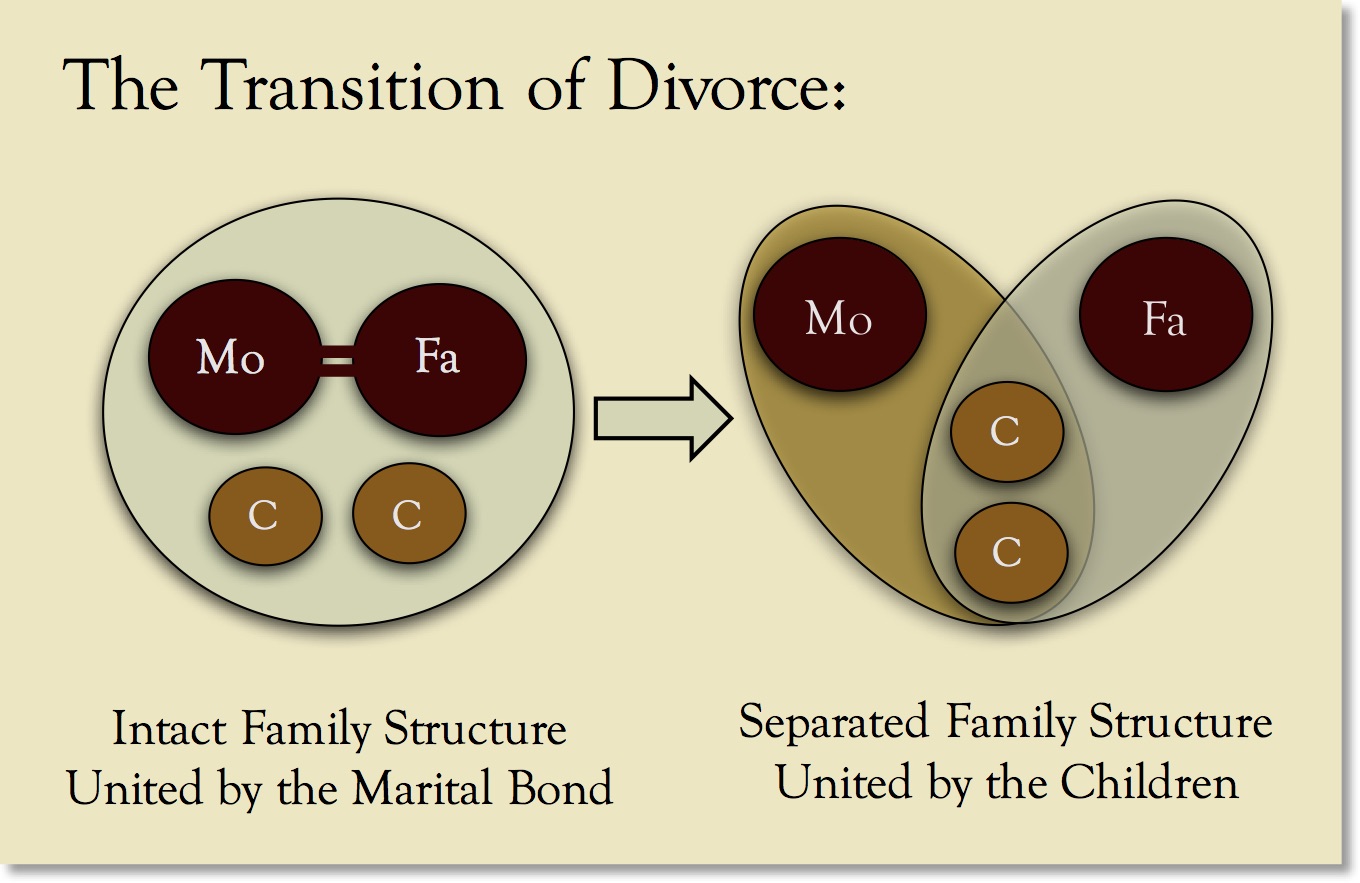
The Key team of an AB-PA Certified mental health professional and the AB-PA Knowledgeable amicus attorney will continue their active involvement with the family over at least a five-year period (possibly longer, depending on the psychological needs in the family) of stabilizing the family’s ability to make a successful transition to a functional and successful separated family structure of effective and nurturing co-parenting.

All family conflicts regarding co-parenting will be resolved through the mediating treatment-related influence of the AB-PA Certified mental health professional, with legal interface and support from the AB-PA Knowledgeable amicus attorney.  The goal is to foster effective and successful co-parenting and conflict resolution skills, and the family’s successful transition to a relatively healthy separated family structure that does NOT triangulate the child into the spousal conflicts, and that will substantially limit the family’s reliance on litigation as a problem-solving approach.

The Three Pieces of the Solution

Announcement 1 establishes the foundation for creating the AB-PA Certified mental health professionals and AB-PA Knowledgeable amicus attorneys for the Key Solution Pilot Program for the Family Courts.

Announcement 2 provides a potential compromise solution to a protective separation period, the Strategic family systems intervention of the Contingent Visitation Schedule, as a Court-ordered intervention that will be directed by an AB-PA Certified mental health professional.

Announcement 3 is a pilot program proposal for the family law courts that brings all of these component pieces into an organized and replicable framework for successfully resolving all cases of attachment-related pathology surrounding high-conflict divorce.

On October 20th in Houston, Texas, I will be presenting a 4-hour seminar hosted by Children4Tomorrow regarding AB-PA and the Pilot Program Proposal for the Family Courts.  The booklet now available on Amazon is a support booklet for the October 20th seminar in Houston.

The Key to Solving High-Conflict Divorce in the Family Courts: Proposal for a Pilot Program in the Family Law Courts

Appendix 6 of the booklet describes the program evaluation data component of the pilot program, and Appendix 7 provides copies of program Outcome Questionnaires.  If the pilot program proposal is accepted in the Houston area family courts, the collaboration of The Childress Institute and Children4Tomorrow will implement the pilot program and will be seeking local university involvement to support program evaluation research and additional research activities as appropriate.

Registration for the October 20th seminar on the Pilot Program Proposal for the Family Courts is being managed by Children4Tomorrow in Houston.

If any legal professionals and court-involved mental health professionals in other geographic jurisdictions are interested in learning more about a comprehensive integrated family law/mental health solution to attachment-related family pathology surrounding high-conflict divorce, a solution that is replicable across the country (and internationally), I would urge you to attend the October 20th seminar in Houston if you possibly can.

The booklet, The Key to Solving High-Conflict Divorce in the Family Courts, is a support booklet for the October 20th seminar, but it will provide a brief overview for the structure of the program, and might be useful in generating interest in other parts of the country (and internationally).

The Childress Institute is currently collaborating with Children4Tomorrow in Houston, Texas.  The Childress Institute will also collaborate with any agency in any other jurisdiction in their efforts to bring a Key Solution to High Conflict Divorce pilot program to their family court system.  The Key Solution pilot program has a data-driven program evaluation component integrated into the pilot program.  Once the pilot program is implemented and its effectiveness is demonstrated, then it is a replicable model for the solution across jurisdictions.

The first step to solving the attachment-related family pathology of “parental alienation” (AB-PA) is to restore an appropriate mental health system response to the pathology from within the required domains of professional expertise.  The appropriate mental health system response can then be leveraged to restore an appropriate legal system response of clear and effective action.  Working in an effective collaboration, the expertise of professional psychology and the effective support of the legal system can successfully resolve the attachment-related pathology of AB-PA for all children and all families in all cases, everywhere.

That is the goal, and it is now an achievable goal.  We just need approval to set up a pilot program within the court system.

Step-by-step.

Craig Childress, Psy.D.
Clinical Psychologist, PSY 18857

The Contingent Visitation Schedule

Announcement 2

A new booklet is now available through Amazon that will become an integral part of the solution:

The Contingent Visitation Schedule

This booklet has 30 pages of text description and 25 pages of Appendices.  The first 20 pages of text describes the pathology.  The next 10 pages of text describes the structure of the Contingent Visitation Schedule (a treatment-related solution to “parental alienation”; AB-PA).

You will want to get this booklet into the hands of all family law attorneys, judges, guardians ad litem, parenting coordinators, minor’s counsels, and “reunification therapists” everywhere.

This booklet will not only explain the pathology to them, it will explain the solution; a Contingent Visitation Schedule.

The Contingent Visitation schedule is a Strategic family systems intervention designed to reverse how the child’s symptomatic rejection of the targeted parent confers power within the family system (described in pages 20-26 of the booklet).

While the standard of practice and “duty to protect” the child in all cases of child abuse requires the child’s protective separation from the abusive parent, in treating the attachment-related pathology of AB-PA surrounding divorce a Strategic family systems intervention is potentially available to resolve the family pathology and simultaneously protect the child from the abusive pathogenic parenting of the allied parent.  This Strategic family systems intervention involves a Contingent Visitation Schedule in which custody visitation time with the allied pathogenic parent is made contingent upon the child remaining symptom-free as determined by ratings on the Parent-Child Rating Scale.

As long as the child remains symptom-free, as determined by daily/weekly ratings on the Parent-Child Relationship Rating Scale, then the standard Court-ordered visitation schedule is in effect.  For treatment purposes, a balanced 50-50% shared custody visitation schedule provides the best treatment-related support.  A successful symptom-free day is defined as ratings of 4 or higher on all three relationship scales of the Parent-Child Rating Scale;

1) Hostility to Affection
2) Defiance to Cooperation
3) Withdrawn to Social

A successful symptom-free week is defined as five successful symptom-free days during a seven-day week period.  As long as the child has a successful symptom-free week with the targeted parent, then the 50-50% Court-ordered visitation schedule is followed.

If, however, the child fails to have a successful symptom-free week with the targeted parent (less than five successful symptom-free days during a seven-day period), then the transfer to the allied parent’s pathogenic care is delayed pending resolution of the child’s increased symptoms.  Before the child is transferred back to the pathogenic care of the allied parent, the child must evidence three consecutive successful days with the targeted parent.  Once the child exhibits three consecutive successful days with the targeted parent, then the normal Court-ordered custody visitation schedule is resumed. Any custody visitation days missed by the allied pathogenic parent are lost and no “make-up” days are scheduled.

The Contingent Visitation Schedule is essentially a graduated protective separation from the psychologically abusive pathogenic parenting of the allied parent that is based on the child’s display of symptoms or absence of symptoms.

As long as the child remains symptom-free, then the standard Court-ordered visitation schedule is followed.  If the child becomes symptomatic (with the presumed cause being the pathogenic parenting of the allied parent, as determined by a Treatment-Focused Assessment protocol), then the child’s time with the allied pathogenic parent is REDUCED in order to reduce the pathogenic influence on the child of the allied parent who is creating the child’s symptoms, and the child’s time with the targeted-rejected parent is INCREASED in order to provide more treatment-related time with the targeted parent to restore the parent-child bond of shared affection between the child and the targeted parent that is being damaged by the pathogenic parenting of the allied (and psychologically abusive) parent.

The Contingent Visitation Schedule can be used as a six-month Response-to-Intervention trial (RTI).  If the Contingent Visitation Schedule successfully resolves the child’s pathology during the six-month RTI, then no additional intervention is needed.  The Contingent Visitation Schedule should nevertheless be extended for another six-months to ensure the family’s relationship stability.  As long as the child remains symptom-free, then the standard Court-ordered custody visitation schedule is followed.

If a six-month RTI with the Contingent Visitation Schedule is not successful in resolving the child’s attachment-related pathology, then a move into a 9-month protective separation period would be warranted as a standard of practice response to the DSM-5 diagnosis of Child Psychological Abuse which, based on the results of the RTI with the Contingent Visitation Schedule, cannot otherwise be resolved without a protective separation of the child from the abusive pathogenic parent.

Courts tend to be reluctant to order a protective separation from the allied parent (who superficially appears to have a “bonded” relationship with the child).  The Contingent Visitation Schedule offers the Court an alternative compromise solution in which the pathogenic negative influence of the allied narcissistic/(borderline) parent is addressed without the need to entirely separate the child from that parent.

The treatment-related Contingent Visitation Schedule is implemented through the direction of an Organizing Family Therapist, and it will require a Court order for use by the Organizing Family Therapist (who becomes empowered to implement the Contingent Visitation Schedule within a structured decision-making protocol based on data from the Parent-Child Relationship Rating Scale – i.e., data-driven decision-making regarding the treatment-related response).

The Contingent Visitation Schedule will become a vital treatment response to the attachment-related pathology of “parental alienation” (AB-PA).

The two current challenges will be:

1) Finding an Organizing Family Therapists who is capable of directing the Contingent Visitation Schedule.

This will be one of the instructional components on Day 2 of AB-PA Certification through The Childress Institute.  All AB-PA Certified mental health professionals will be capable of serving as the Organizing Family Therapist for the Contingent Visitation Schedule.

We just don’t currently have AB-PA Certified mental health professionals. My first AB-PA Certification seminar is scheduled for November 18-19. More will follow, I’m anticipating two Certification seminars per year (and more through Announcement 3).

In the meantime, until we have AB-PA Certified mental health professionals, I am available for professional-to-professional consultation.

We’re building the plane while we’re flying it. We need the Contingent Visitation Schedule for AB-PA Certified therapists to use, and we need AB-PA Certified therapists who are trained in using the Contingent Visitation Schedule.

Piece-by-piece, step-by-step, we are constructing the solution. Soon all of the pieces will be in place. Also, Announcement 3 is coming.

In the meantime, you will want to get this booklet into the hands of all family law attorneys, judges, guardians ad litem, parenting coordinators, minor’s counsels, and “reunification therapists” everywhere. All of them. Every family court-involved legal and mental health professional dealing with attachment-related pathology surrounding divorce needs to be aware of the Contingent Visitation Schedule option.

Not only will this booklet explain the pathology to them, it will explain the solution.

The Contingent Visitation Schedule offers a treatment-related compromise solution to a full protective separation. If used as an RTI (Response to Intervention), then it can determine whether or or not a more formal full protective separation is needed to resolve the pathology.

2. The Contingent Visitation Schedule will require a Court order because it involves a treatment-related adjustment to the visitation schedule based on a structured protocol for data-driven decision-making.

The decision on the treatment-related needs of the family should be based on a structured six- to eight-session Treatment-Focused Assessment Protocol, described in the booklet at described at:

Treatment-Focused Assessment Protocol

One of the first questions I can hear people asking is, “Has the Contingent Visitation Schedule been used before?” The answer is no, it’s new.  Look at it’s logic – described in the booklet.  Make a decision based on the logic presented for the intervention.

The alternative is to order a full 9-month protective separation.  If the Court does not want to order a data-driven Contingent Visitation Schedule to solve the family pathology, then the Court can order a 9-month protective separation from the allied pathogenic and psychologically abusive parent (based on a DSM-5 diagnosis of V995.51 Child Psychological Abuse), or it can allow the child to remain with a psychologically abusive parent and the Court can do nothing while the child’s life to be destroyed.

The Contingent Visitation Schedule is trying to be cooperative with the Court’s reluctance to order the necessary protective separation period.  Once targeted parents and their attorneys begin seeking the Contingent Visitation Schedule, and once Courts begin to order the Contingent Visitation Schedule, then it will have been used, and over time it will become the standard of practice.

The Contingent Visitation Schedule is evidence-based practice because it is a data-driven decision-making protocol.  The treatment-related decision to trigger the Contingent Visitation Schedule structure is based on the documented level of child symptoms.

A symptom-free child and the standard Court-ordered visitation schedule is in effect.  An increase in child symptomatology above a specified level triggers the structured response of the Contingent Visitation Schedule.  When the child’s symptoms return to normal-range child behavior, the treatment-related response of the Contingent Visitation Schedule is ended and the family returns to the Court-ordered visitation schedule.

Data-driven decision making represents “evidence-based” practice.

Announcment 1: Training and Certification in AB-PA is coming soon (including training in directing the treatment-related Contingent Visitation Schedule).

Announcement 2: The Contingent Visitation Schedule is now available.

Announcement 3:…

Craig Childress, Psy.D.
Clinical Psychologist, PSY 18857

The Terrorist Mind and Pathological Anger

Barcelona, Orlando, Paris, Manchester, Mumbai, 911; the terrorist mind and the extremism of pathological anger.

The research says that the terrorist mind does not reflect any consistent form of pathology.  That’s not true, they just don’t know where to look.

It’s an attachment trauma pathology moving through generations, similar to the pathogen creating AB-PA, but with important variations.  The pathogen creating AB-PA results in the child’s “alienation” from a parent, created by the actions of the other parent.  The pathogen creating the terrorist mind triggers in adulthood and results in the adult’s “alienation” from society – and at a deeper level, from the self.

They are both pathogens of “alienation” – and both are created in and expressed through a profound absence of empathy.  A trauma pathogen, created in generations past and moving from attachment system to attachment system – like a computer virus – across generations.

Remain hidden.  Seek allies.  Attack perceived threats with great viciousness.

I know this pathogen’s structure.  The AB-PA pathogen and the terrorist mind pathogen are different, but they are variants of a basic core trauma pathology moving through generations.  There are a few key structures in the pattern of damaged and broken information structures creating the terrorism mind and the extremism of pathological anger that I’ve yet to work out, but I recognize the core structure.

In Charlottesville, militant White supremacists and neo-Nazi’s marched in open provocation – look at me – pay attention to me – I’m special – I’m provoking you to anger.  Stop me or I will destroy you.

Hundreds of attachment networks infected with a particular set of damaged and broken information structures, linked into a common group-mind by the pathogen.  But only one activated into an act of terrorism.  But the potential is there in all of them.  Which one will activate into violent action?  And when?

Diagnosis.  In my literature review on the terrorist mind the extremism of pathological anger, the research says there is no pattern of psychiatric disturbance.  Nonsense.  They’re simply not looking in the correct place.  An assessment first needs to know where to look, and what to look for.

In working out the diagnostic indicators for AB-PA, I began by first working out the structure of the pathogen, and I then identified the most parsimonious, distinctive, and definitive expressions of the underlying pathogenic structure.  We first need to work out the structure of the pathogen so we know where to look and what we’re looking for.

From what I see, there appears to be two gender-linked strains, a male variant and a female variant, with the male variant being more malevolent.  Within the male variant strain there also appears to be two severity-strains, one leads to an inspired-inflation leadership mindset (the Kahlied Sheik Mohammed mindset; the organizer, the leader) while the other leads to the righteous-soldier mindset.

What I still need to work out is the righteous-holy-warrior structure of the terrorist mind, Himmler’s obsession with religious symbols, the KKK and the burning cross, the holy jihad of Muslim extremism.

The attachment system is a primary motivational system in the brain.  Other types of pathology have their origins in other parts of the brain.  ADHD is a pathology in the regulatory systems of the brain for impulse control, attention regulation, and behavioral regulation.  Autism-spectrum pathology emerges from hardware malfunctions.  Attachment-related pathology, on the other hand, is a pathology in the love-and-bonding system of the brain, a primary motivational system of the brain.  Pathogenic structures in the attachment networks have access to motivations.  They act with intent.

Cruel intent, the intent to cause suffering.  Alienation forming a bond through creating suffering.  Distorted, damaged, broken information structures in the love-and-bonding system of the brain.

The absence of empathy.  Trauma.

Attachment trauma moving through generations – hidden – until it emerges as traumatic suffering intentionally created.

The terrorist mind and the extremism of pathological hatred ultimately ends in self-destruction after causing its burst of immense suffering in others – the Nazis leading Germany into self-destruction following the immense cruelty of the holocaust – the suicide end of the 911 terrorists in the cruelty of their terrorist act.  Self-destruction.  Self-loathing.  Primal self-alienation.

Remain hidden – seek allies – attack perceived threats with great viciousness.   I know this pathogen.

There are four primary emotions; anger, sad, afraid, and happy.

Professional psychology is aware of and is actively addressing pathological sadness – depression and suicidality.  There are DSM diagnoses for pathological sadness.  Professional psychology is aware of and is actively addressing pathological anxiety – panic attacks and phobias.  There are DSM diagnoses for pathological anxiety.  Professional psychology is aware of and is actively addressing pathological happy – the mania of bipolar disorder.

But there is no DSM diagnosis for any type of pathological anger – for the intent to be cruel – for the intent to create suffering – for pathologies of love-and-bonding in which creating suffering in others alleviates alienation and serves as a perverse-bond.

Professional psychology is currently far to indolent and ignorant regarding pathological anger.  The defensive structure of the pathogen is to remain hidden.  Pathological anger has shrouded our observation of it by a veil of concealment.  I know this pathogen.

I have had several clients with the extremism of pathological anger.  I have unlocked key components.  Working with the pathogen of AB-PA has also taught me a lot about this pathogen’s structure.  But to unlock the final set of key structures, particularly surrounding the righteous-holy fervor, I still need to sit in the same room with it –with the terrorist mind of extremist pathological anger.  I need to speak directly to this particular variant of the pathogen, let it speak to me, let it tell me about itself.

To assess and diagnose, we first need to know where to look and what to look for.  The terrorist mind is an attachment-related pathology – a pathogen in the love-and-bonding system of the brain.  I know this pathogen, but I need to speak to it directly to unlock a few key features.

If there’s any doubt that I can unlock the pathogen of the terrorist mind and the extremism of pathological hatred, simply look at what I did in unlocking the pathogen of “parental alienation” (AB-PA) in Foundations when I was able to speak to the pathogen directly.  With the pathogen of the terrorist mind and the extremism of pathological anger, I know exactly where to look and I know what I’m looking for, I just need to talk directly to the pathogen.

The really challenging part will be the treatment.  Catalytic transformative meme-structures that extract trauma pathogens may be helpful… Dorcy?  APA, learn what Dorcy is doing, how she extracts the pathogenic structures of trauma.  It’s as different from psychotherapy as a silicon-based life form is from our carbon-based life forms.

But just like the Center for Disease control begins by first unlocking the structure of the virus, which then leads to the construction of the anti-pathogen treatment, we also need to begin by unlocking the “viral” structure of the pathogen creating the terrorist mind, the pathogen structure that is creating the extremism of pathological anger, with its the intent to be cruel, its purposeful intent to create suffering as a perverse-bonding in its attachment networks to satisfy its “alienation,” a comfort for its deep-level suffering, its self-loathing.

But first things first.  We first need to end the pathology of “parental alienation” (AB-PA) for all children everywhere.

But once it’s solved…

Barcelona, Orlando, Charlottesville, Paris, Manchester, Mumbai.  Variants of an underlying pathogenic structure creating the extremism – the cruelty – the violence – of pathological anger.

The attachment system is the brain system for love-and-bonding.  The terrorist mind and the extremism of pathological anger is a pathology in the love-and-bonding system of the brain.  It is an attachment-related pathology – the trans-generational transmission of attachment trauma – a “computer virus” in the attachment system created in trauma and being passed from generation to generation.

The attachment system is a primary motivational system of the brain.  Pathogens in the attachment system have access to motivational networks.  Pathogens in the attachment networks act with intent – the intent to be cruel – the intent to creat suffering.

The Childress, Institute is more than AB-PA.  But it starts with AB-PA, and with solving AB-PA for all children and all families everywhere.  There are two more announcements coming in the comprehensive solution to AB-PA.

Once AB-PA is solved for all children and all families everywhere – and it will be solved – then we’ll turn our attention to other matters of importance.

Craig Childress, Psy.D.
Clinical Psychologist, PSY 18857

I have three announcement upcoming.  My first announcement is that The Childress Institute website is live.

The Childress Institute

The Childress Institute is established to organize the Training and Certification of mental health professionals in AB-PA.

Of particular note is the Registration page.  The first Basic Certification in AB-PA is scheduled for November 18th and 19th at the Westin hotel in Pasadena.

There is a third day optional seminar on November 20th for Advanced Certification in AB-PA.  This is the day that contains what I consider to be all the really cool stuff.

Enrollment in these seminars is limited to 20 participants to ensure the ability for direct discussion and dialogue during the seminar.

You’ll note when you scroll down the Homepage of The Childress Institute that the Current Focus is Parental Alienation in High-Conflict Divorce, and also that there are Future Projects and Directions.

The reason there are Future Projects and Directions is because we are going to solve “parental alienation” in high-conflict divorce.

There will come a point in time, hopefully within the next two years, when “parental alienation” will be solved.  We will have a systematic early intervention model in place, and the mental health and legal systems will work together efficiently in an effective collaboration to solve the pathology and return children and families to a normal-range trajectory within six months of their first encounter with the mental health or legal system.

All done.  Solved.  An efficient and effective response to the pathology of “parental alienation” (AB-PA) surrounding divorce.

There will be no more need for The Childress Institute to focus on this issue, because it will be solved.  That is my vision, that is my goal, and I fully anticipate achieving that goal.

At that point, once “parental alienation” (AB-PA) is solved for all children and all families everywhere, I’ll turn my attention to solving other things, like the horrific pathological anger of the terrorist mind and the extremism of pathological anger that we recently witnessed in Charlottesville, in Paris, in Orlando, in Manchester – (The Terrorist Mind and the Extremism of Pathological Anger).

And there will be other projects to keep me busy for as long as the universe allows me to do its work.

My goal is to get “parental alienation” done and solved as quickly as is humanly possible because the tragedy of “parental alienation” (AB-PA) needs to end – now – today – and because I want to then move on to solving other things before I leave and return home.

Training and Certification in AB-PA is part of that solution to solving “parental alienation.”  It ensures the necessary level of professional expertise.  By the time we’re done, there will be a substantial number of AB-PA Certified mental health professionals everywhere.  I don’t want to be the expert, I want to give you lots and lots of experts everywhere, mental health professionals that you can trust because you can be assured that they have the highest level of professional expertise in assessing, diagnosing, and treating the attachment-related family pathology of “parental alienation” (AB-PA).

November 18th, 19th, and 20th at the Westin hotel in Pasadena we begin.  In the days ahead, I’ll have more to say on the content of these Training and Certification seminars and their role in the integrated solution.  But I’ll need to make two additional announcements first, so that the entirely integrated solution will become clear.

Currently, The Childress Institute is a DBA.  I have my attorney working on the application for 501c3 nonprofit status.  The estimate for this is about 9 months, sometime late spring early summer of 2018, although various approvals will come along the way.

Down the road, once we solve “parental alienation” (AB-PA), I want a grant from the Department of Homeland Security to solve the terrorist mind and the extremism of pathological anger.

I want a grant from the Gates Foundation to solve the currently dysfunctional education system and elevate the U.S. educational system into an utterly amazing 22nd Century status.  Children have a developmental right to an amazing education.

I want to construct an online parenting website that provides training and educational seminars that solve ADHD, that solve oppositional and defiant child behavior, that solve school failure, that solve delinquency, that solve pretty much all the troublesome stuff of childhood and adolescence, along with supportive seminars for educating foster parents, and training for child and family therapists in neuro-developmentally supportive child and family therapy as a replacement therapy model for play therapy and behavior therapy.  All housed in an online website of accessible seminars and trainings.

And Dorcy and I are going to get to work on substantially reducing the trauma-mindset that leads to prison recidivism, using a catalytic model of transformative and healing change – and ultimately, through improvements in parenting and direct catalytic interventions, I want to reduce prison incarceration in the first place.  Our kids – even if they’re now grown-up adult kids – should not be in cages.  That would be abhorrent for my son or daughter – and I consider all kids to be “my sons” and “my daughters” (you all just have the privilege of raising “my kids”).

And the super-long range goal is to solve Syria, the Ukraine, Nigeria, and the Sudan; ethnic violence and inter-nation violence and conflict.

Are these solutions possible?  Yep.  I see the path to solution in each of these areas.  My goal is for The Childress Institute to serve as a catalyst for the solution in each of these areas, as I have served as a catalyst in the solution to “parental alienation” (AB-PA) that is on its way.

But first things first, we need to solve the attachment-related family pathology of “parental alienation” (AB-PA) for all children and all families everywhere.  Is this possible?  Yep.

The Childress Institute website is the seed structure.  We start by laying the foundation.  The Childress Institute is the seed foundation for these solutions.

The important feature of getting The Childress Institute website up is getting the online Registration function for seminars.  As long as I’m constructing a website foundation, might as well have a bookstore page.  The bookstore page provides discounts for my books.  There’s also a donations page.  The Childress Institute is not currently a 501c3 nonprofit, donations to The Childress Institute are not tax deductible yet.

I figure I have about another decade of shelf-life, maybe less, before I return home.  My goal is for us to solve the pathology of “parental alienation” as soon as we possibly can, and then I’ll shift my focus to these other areas and set as many of the solutions in as many of these other areas into motion as I can, and then I’ll leave the planet and return home, leaving the work to be completed by the next generation coming forward – to our children.

Announcement 1.

Craig Childress, Psy.D.
Psychologist, PSY 18857