Legislative Efforts in North Carolina… and beyond

A parent in North Carolina, James Ricker (Blog: http://www.beyondparentalalienation.com) contacted me to let me know about his work in North Carolina to change the child abuse reporting laws there.  He would like to share his wisdom and support with other parents – both in North Carolina and in other states – who may also be interested in pursuing a legislative solution to “parental alienation.”

The goal of legislative solutions is to achieve professional competence in the mental health assessment and diagnosis of “parental alienation” (AB-PA) as representing a DSM-5 diagnosis of V995.51 Child Psychological Abuse, Confirmed.  This DSM-5 diagnosis will set into motion a series of actions that will ultimately lead to the solution for all children and all families.

The Legislative Solution Approach

The biggest obstacle we face in solving “parental alienation” is the rampant professional incompetence in mental health surrounding the assessment and diagnosis of “parental alienation” (AB-PA).

Yes, I know the legal system is broken.  But the key to fixing the broken legal system is to first fix the broken mental health system.  Once we fix the broken mental health system surrounding “parental alienation” (AB-PA), then mental health professionals will speak to the court with a single clear voice (a DSM-5 diagnosis of V995.51 Child Psychological Abuse, Confirmed) that will allow the legal system to act with the decisive clarity necessary to solve “parental alienation” (AB-PA).

What’s more, once all mental health professionals begin assessing and accurately diagnosing “parental alienation” (AB-PA) as a confirmed DSM-5 diagnosis of V995.51 Child Psychological Abuse, we will then shift our focus to obtaining an appropriate child protection response from Child Protective Services.  Ultimately, the solution will be found in a collaboration of the mental health system and Child Protective Services.  First things first.  Step by step.

By seeking relatively minor, but important, changes in the child abuse reporting laws (such as the proposed legislation in Florida; HB 1279: Child Psychological Abuse and SB 1432: Child Psychological Abuse – thank you Representative Antone and Senator Torres), a clear message is sent to all mental health professionals regarding their professional obligations to appropriately assess and accurately diagnose the attachment-related pathology of “parental alienation” (AB-PA), and to file a mandated child abuse report with CPS when a confirmed DSM-5 diagnosis of V995.51 Child Psychological Abuse is made.

These relatively minor, but important, changes to the mandated child abuse reporting laws will also provide clear legislative guidance to CPS agencies regarding their obligations to similarly protect children from the psychological child abuse of “parental alienation” (AB-PA).

Note:  This approach is ONLY available if you use an attachment-based model of “parental alienation” (AB-PA). The Gardnerian PAS model does NOT provide this solution because the Gardnerian PAS model is too imprecise in its definition of “parental alienation” and remains controversial in professional psychology.

We cannot hold mental health professionals accountable to Gardnerian PAS.  We can hold mental health professionals accountable to an attachment-based model of “parental alienation” (AB-PA).  The solution is through an attachment-based model of “parental alienation.”  That’s exactly what AB-PA is designed to achieve.

I’ve heard that Susan Remus has coined the phrase, “pure Childress.”  While I don’t want to make this about me, it’s not about me it’s about your children, the idea is absolutely correct.  Pure AB-PA – will solve this pathology.

AB-PA, an attachment-based model of “parental alienation,” leads us out of professional incompetence and returns us to the path of established professional constructs and principles.  The Gardnerian PAS model just leads us back down into the quagmire of rampant professional incompetence.  In order to achieve the solution, we must remain 100% grounded in established psychological principles and constructs of professional psychology – as described in AB-PA and Foundations.

Legislative Efforts in North Carolina and Other States

In his efforts to create legislative change, James Ricker has met with many of the state legislators in North Carolina and he reports receiving a positive response.  He could also use some additional support from other parents, attorneys, and mental health professionals in North Carolina who recognize the problem of “parental alienation” and want to see it stop.  If there are other parents, attorneys, and mental health professionals in North Carolina who are interested in working with James on achieving a legislative solution, you can contact him at:  Email: james@beyondparentalalienation.com.

In addition, Mr. Ricker has offered to provide consultation and support to parents working in other states to achieve a legislative solution to “parental alienation” in their states.

I asked James if there was something he wanted to say in my blog, and here is some sage counsel and advice from him regarding working toward a legislative solution.  He begins briefly with his story, one I’m sure is familiar to many parents.  What his experience leads him to is the crucial understanding that all parents must work for each other in order to solve this for all children and all parents, not just for your child alone.  That’s the key; working for each other and for each others’ children.

This pathology seeks to keep you alone and helpless.  In coming together to work for each other, you will achieve the solution for all children and all families.

Here’s Mr. Ricker’s advice and counsel:


I separated from my ex-wife about 2 1/2 years ago.  So far, I have been cleared of four false allegations, three of them sexual abuse and one of providing an unsafe environment for my child.  The last investigation lasted two months and my child did not see their father at all.  Both CPS and the police found the allegations unwarranted, and even though CPS reported that “the mother has been attempting to alienate the minor child from their father” and told my ex that if she did not stop coaching our child she risked our child being removed from the home, my child still resides with their mother about 95% of the time, 6 months later.  My child has not had a single overnight with their father in over 2 years based on the first uninvestigated allegation.  I’ve just about spent myself into financial oblivion paying for therapists, evaluators and what legal help I’ve been able to afford.  I am just starting reunification therapy with a court ordered therapist, who miraculously had a copy of “Foundations” (Dr. Childress’s book) on her bookshelf and says she will be focused on getting my child and I back into a relationship.  I don’t know what that means, and for sure I recognize that even though this situation is better than many, it defies logic to me that my child remains in the care of their abuser even after it is clear they are being manipulated.  The knowledge I have gained through learning about AB-PA and the support from others that has shown up, as well as my focus on being present for my child during the times we are together have been very helpful.

But I can’t go through this knowing what I know without doing everything I can to try and prevent it from happening to others.  I had to find a way to direct my energy and make a difference.

I am currently speaking with several legislators about amending the child abuse reporting law in North Carolina, similar to what Suz Remus has been doing in Fla.  In fact, she and I communicate regularly and support each other.  I find having support is invaluable.  I want to offer support and materials to anyone who is trying to do something similar and am looking for anyone in NC—especially legal and mental health professionals who would be willing to contact the legislature and voice your support of this approach.  I can tell you who the major players in the legislature are to save the months it took me to figure it out. 🙂

Here are tips I have learned along the way:

    • Believe it or not, changing a law is not impossible.  Laws are created and changed based on the efforts of single individuals all the time.  I have a good friend who did it after she was sexually assaulted but because of the statute of limitations she could not press charges against her assailant when he was found.

One incredibly driven person, who could have let something like that destroy her, instead channeled that energy into being the driving force to change the law in her state so that it can never again happen. She has since helped change a second law at the state level as well.

  • I think the biggest issue is that people believe they can’t do something like help change a law.  They are so devastated by what is happening that they do exactly what the pathogenic parent wants them to do—feel helpless and alone.

Here are some of the things my friend (frankly I call her a heroine) told me about embarking on something like this as well as my own experience so far:

  • Get to the point quickly and clearly.  People are busy.  The time for emotional reactions is not in a legislator’s office.  Legislators cannot legislate feelings.  I have templates of materials I have been giving to them which have been getting very positive reactions.  Contact me (james@beyondparentalalienation.com) if you’d like samples.

  • Appreciate everyone you’re talking to.  While you want to speak with representatives, never underestimate the influence of assistants and interns, and anyone else you may meet along the way.

  • This is not about you.  It’s about changing the situation for others.  If you try and do something like this solely because you are trying to save your own child it will come across.  While you’ll likely get sympathy, it’s not likely you’ll get much beyond that.

  • Legislative bodies are comprised of individual people.  Make one connection at a time.  A bonfire can start from a single match.  Be the match.

  • Be polite, but be persistent.  You know this issue is important to you, probably more important than anything else.  But the people you’re speaking with can get 5, 10, or even more issues put in front of them every day.  Make a positive impression then remind them you’re there.

  • Send a handwritten thank you note.  No one sends letters or cards anymore.  They make a big impression.  Send one to any Legislative Assistants as well as Legislators you meet with.


Thank you James, for the gift of your wisdom and for your efforts to help all of the children and families who are caught in this horrible family tragedy.

The children of AB-PA are caught in the extremely difficult situation of having to live with the fragile and dangerous parenting of a narcissistic/(borderline) parent.  They’re doing what they have to do in order to psychologically survive with the narcissistic/(borderline) parent.

We cannot ask the children to reveal their authenticity until we are able to protect them from the psychological retaliation that is sure to follow if the child reveals his or her love and authenticity toward the now targeted-rejected parent.

“Parental alienation” is not a child custody issue, it is a child protection issue.  We must first be able to protect the child.

That’s the truth that legislative efforts are trying to address directly.  This is fundamentally a child protection issue, and recognizing that fact is key to achieving the solution.  It is not simply a matter of “bad parenting” by the allied narcissistic/(borderline) parent, it is psychologically abusive parenting.

Thank you to all the parents and grandparents, the aunts and uncles, cousins and family, thank you to all the recovered children for your voices, thank you to all the mental health professionals, all the legal professionals, all the legislators, and everyone in the media who are seeking to protect the children from the psychological child abuse of “parental alienation.”  Thank you.

We will not stop until all of your children are back in your arms once more.

“Parental alienation” is not a child custody issue, it is a child protection issue.

Craig Childress, Psy.D.
Clinical Psychologist, PSY 18857
Relentless

In my younger days I used to go backpacking in the Sierras.  I’d load up my pack with a couple of weeks of food and gear, leave my car at the trailhead, and begin my hike up endless switchbacks into the mountains.

I wasn’t in the best of shape physically, not bad, but just not a tiger either; and those switchbacks into the mountains were tough, with a full pack, by myself, with me carrying all the gear – food, stove, fuel, tent, pots and pans, etc. – it was tough.  But I learned something valuable.  You can accomplish anything if you just don’t stop.

There were points where I was so exhausted that I would just look down at my feet, willing each foot, one after the other, to just take one more step, just one more step, just one more step…

And you know what?  If I just didn’t stop, then I would at last find myself in the backcountry; beautiful mountain lakes, majestic peaks, wonderous stars… wonderful-wonderful.

You can accomplish anything in life if you just don’t stop.

Solving “Parental Alienation”

When I first encountered the attachment-related pathology of “parental alienation” it was so absolutely horrific, and the mental health and legal system responses were so incredibly broken, that I simply had to do something to make it stop.  So I set about analyzing what the problem was, and then I began working out what the solution needed to be.

Once I had the path laid out that led all the way to the solution, I then set about creating that solution – AB-PA is that solution.

A foundational premise of the solution is that any solution that requires targeted parents to prove “parental alienation” in court is no solution at all.  The core of the solution is therefore to be found in the mental health system, not the legal system.

Gardner took everyone off the established path of professional psychology by proposing that a child rejecting a normal-range parent following divorce represented an entirely unique new form of pathology – a “new syndrome” – that was supposedly identifiable by an equally unique new set of symptom identifiers, symptoms that are unlike any other symptoms in all of mental health, symptoms that are unique to this new form of pathology alone, symptoms that Gardner simply made up.

In proposing a “new syndrome,” Gardner led everyone off the path of professionally established practice.  In proposing a unique “new syndrome,” Gardner skipped the crucial step of diagnosis – i.e., the application of standard and established psychological constructs and principles to a set of symptoms.  Instead he opted for the diagnostically lazy – and professionally inappropriate – approach of simply proposing an entirely “new form of pathology” unique in all of mental health – a “new syndrome.”

In doing so, Gardner led everyone off the path of established professional practice and into the overgrowth and brambles, and ultimately into the swamp and quagmires of professional incompetence.  The Gardnerian model of PAS leads directly to the rampant professional incompetence in mental health that currently surrounds us.  I could explain in detail why this is, but I can do it much more succinctly:  Scoreboard.

Thirty years of the Gardnerian PAS model has given us exactly the situation we have right now.  This situation, the current situation, is the product of 30 years of Gardnerian PAS.

What we have right now, the profound professional incompetence, the massively broken mental health system response, and the massively broken legal system response to this attachment-related pathology surrounding divorce is exactly what Gardnerian PAS leads us to.  Thirty years of Gardnerian PAS and this is the result.  Scoreboard.

So, recognizing this, the solution I have been leading us toward is to put us back on the path of established professional psychology by defining the attachment-related pathology of a child rejecting a normal-range parent following divorce (what is typically called “parental alienation”) from entirely – entirely – within standard and established constructs and principles of professional psychology.

That’s called diagnosis.

I returned to the step that Gardner skipped – diagnosis – and I applied standard and established constructs and principles of professional psychology to the set of symptoms.

AB-PA leads us out of the swamps and undergrowth and puts us back onto the established path of professional practice.

We can now demand professional competence in standard and established domains of professional psychology.

The Attachment System:  The characteristic functioning and dysfunctioning of the attachment system;

Personality Disorder Pathology:  Recognition of personality disorder pathology and its effects on family relationships following divorce;

Family Systems Therapy:  The established constructs of family systems therapy; triangulation, cross-generational coalition; emotional cutoffs.

We can now demand professional competence in the assessment of standard and established forms of fully accepted pathology.

Diagnostic indicator 1: Attachment system suppression toward a normal-range and affectionally available parent;

Diagnostic indicator 2:  Specific narcissistic personality disorder traits in the child’s symptom display;

Diagnostic indicator 3:  An encapsulated persecutory delusion regarding the child’s supposed “victimization” by the normal-range parenting of the targeted-rejected parent.

We can now demand professional competence in diagnosis:

Pathogenic parenting (i.e., parenting that is so aberrant and distorted that it is creating psychopathology in the child) that creates significant developmental pathology in the child (diagnostic indicator 1), personality disorder pathology in the child (diagnostic indicator 2), and delusional-psychiatric pathology in the child (diagnostic indicator 3) in order to meet the emotional and psychological needs of the parent represents a DSM-5 diagnosis of V995.51 Child Psychological Abuse, Confirmed.

And we can now define the parameters of appropriate professional treatment:

In ALL cases of child abuse – physical child abuse, sexual child abuse, and psychological child abuse – the required professional response is to protect the child.

In ALL cases of child abuse – physical child abuse, sexual child abuse, and psychological child abuse – the appropriate professional response is to protectively separate the child from the abusive parent, and then to treat the impact of the abuse on the child in order to restore the child’s normal-range and healthy development.  Then, when the child’s normal-range and healthy development has been recovered and stabilized, the child is reintroduced to the formerly abusive parent with sufficient safeguards to ensure that the child abuse does not resume.

During the protective separation period, the abusive parent is typically required to obtain individual therapy to gain and demonstrate insight into the causes of the prior child abuse, and the level of insight gained and demonstrated by the formerly abusive parent is typically used as an indicator for the degree of safeguards needed to ensure the continued protection of the child.

This is the standard approach of professional psychology to physical child abuse. This is the standard approach of professional psychology to sexual child abuse.  This is the standard approach of professional psychology to psychological child abuse.

Assessment leads to diagnosis.  Diagnosis guides treatment.

Climbing the mountain that’s ahead of us to achieve the solution offered by AB-PA will take a whole lot of effort because we’re leading the entire mental health system out of the brambles and undergrowth of poorly defined constructs and back onto the established path of professional psychology.  The level of professional ignorance and incompetence currently out there is profound.

Our efforts are made even more difficult by the entrenched recalcitrance of the Gardnerian PAS “experts” to leave the swamp and undergrowth of professional incompetence created by the Gardnerian model of PAS.

It has become abundantly evident that the Gardnerian PAS “experts” have a personal agenda of seeking to remain “experts” in “parental alienation,” even if that means it takes longer to achieve the solution.  To put it bluntly, they would rather remain “experts” in “parental alienation” than solve “parental alienation.”

AB-PA offers an immediate solution.  Yet if they switch to an AB-PA model then they cease to be “experts.”  Tough choice.  Even more problematic for them, is that the moment AB-PA solves “parental alienation” they will immediately become irrelevant – “parental alienation” is solved.  The entire “heroic struggle” of their “valiant rebel alliance” against the “evil empire” of professional psychology will vanish… poof… all gone.  Everything’s solved.

I suspect that these “experts” are going to feel very disoriented for a while, once “parental alienation” is solved using AB-PA.  They’re going to have to find an entirely new focus for their professional careers.  Wow.  That would be disorienting.  That’s why they hate me.  I’m disrupting their comfy world by having the temerity to actually solve “parental alienation” surrounding high-conflict divorce.

So in their effort to remain relevant, you’ll hear them pontificating about what criteria makes for a true and bonafide “parental alienation” expert (them, of course); and you’ll hear about how (after 30 years of Gardnerian PAS) they’ve now suddenly developed new treatment approaches; and you’ll hear about how they’re offering “consultation” for targeted parents from their expertise and “training” for therapists in “parental alienation,” all from a Gardnerian perspective of course… all in an effort to retain their status as “experts.”

But you will know the tree by its fruit.  Are they advocating for and using the three diagnostic indicators of AB-PA that provide an immediate solution to the attachment-related pathology of “parental alienation” (assessment – diagnosis – treatment), or are they continuing to use the eight failed symptoms of Gardnerian PAS that have no linkage to any established form of pathology in all of mental health, and that lead to the rampant professional incompetence that currently surrounds us?

You will know the tree by its fruit; and you will know the intent of the professional by the diagnostic indicators the professional uses.

The Map

One of the things I learned from backpacking is the central importance of the map.  You plan your route through the mountains using the map and you follow the map during your trek in order to reach your destination.

The Gardnerian PAS model has NO map for a solution.  Gardnerian PAS gives us nothing but more of the same.

For several years now I have been asking the Gardnerians to lay out their map for a solution using the Gardnerian PAS model.  Crickets.  Nothing.  They have no map to a solution, just more of the same.  Garnerian experts, please, tell us, how will Gardnerian PAS lead to a solution? What’s the map to a solution using Gardnerian PAS?

AB-PA offers a clear path to the solution.  Come close everyone, gather ’round and look at this, let me show you the map of AB-PA:

Assessment leads to diagnosis.  Diagnosis guides treatment.

Any solution that requires targeted parents to prove “parental alienation” in court is no solution at all.  With AB-PA, the solution is entirely within the mental health system.

With AB-PA the mental health professional assesses for three standard symptoms that are fully established symptoms in mental health; and when the three symptoms are present, the mental health professional makes the DSM-5 diagnosis of V995.51 Child Psychological Abuse, Confirmed based on the presence of the three diagnostic indicators of pathogenic parenting in the child’s symptom display.

When the mental health professional makes the DSM-5 diagnosis of V995.51 Child Psychological Abuse, Confirmed, this then activates the mental health professional’s “duty to protect” – a standard and fully recognized obligation of all mental health professionals.  The mental health professional can discharge his or her “duty to protect” by filing a child abuse report with Child Protective Services, consistent with mandated child abuse reporting laws.

CPS social workers can then apply the same diagnostic criteria that were used by the mental health professional in identifying child psychological abuse, and the CPS investigators will reach the same diagnostic finding of confirmed child psychological abuse.  We will now have two independently made confirmed diagnoses of child psychological abuse.

Child Protective Services can then exercise their legal mandate to protect the child by protectively separating the child from the abusive parent – consistent with the mental health response to all forms of child abuse – and place the child in “kinship care” with the normal-range and affectionally available targeted parent.  Knowledgeable and competent therapists can then treat the child for the effects of the prior psychological abuse in order to restore the child’s normal-range and healthy development.

Once the child’s normal-range and healthy development has been recovered and stabilized, then the child can be reintroduced to the formerly abusive parent with sufficient safeguards to ensure that this parent’s psychological abuse of the child does not resume.

See the map?  We need to go around these three peaks over here, we’ll cross this pass to travel down this valley, and we’ll reach our destination – Solution.  See the map?

But just because we know where we’re going on the map, doesn’t mean we’re there yet.  There’s still a lot of the path to travel.  And it’s exhausting, I know… you’re weighed down with grief and trauma.  You just wish we were there right now.  Sometimes it gets so exhausting that all we can do is just look at our feet, one foot forward, then the other.

But this I know… we will, with absolute 100% certainty, reach the destination – we will absolutely achieve the solution – because we just won’t stop.  We will be relentless.  We have truth and love on our side; and we just won’t stop.

AB-PA will, with 100% certainty, lead to the solution.  I’ve shown you the map.  We will not stop until all of your beloved children – all of them – are back in your arms.

Returning to the Established Path

The time has come to return to the path of established professional psychology, to climb out of the mud and undergrowth, to scramble up the hillside, and return to the path of established professional psychology.

The Gardnerian PAS experts have decided to remain behind.  They’ve decided to remain in the quagmire and undergrowth of Gardnerian PAS because they don’t want to give up their coveted roles as “experts.”  We cannot wait any longer for them.  We’re going to have to leave them behind.  They have decided that they won’t be coming with us.  They have chosen not to be your allies in creating the solution.  If they insist that they are your allies, ask them to show you their map.

You will know the tree by its fruit; the three diagnostic indicators of AB-PA that are grounded in established psychological constructs and principles, or the eight symptom indicators of Gardnerian PAS that lead to professional incompetence, controversy, and the current quagmire of no solution whatsoever.  You will know the tree by its fruit.

Craig Childress, Psy.D.
Psychologist, PSY 18857

Example: Amending New York Child Abuse Reporting Laws

Inspired by the recent legislation filed in Florida (HB-1279 & SB-1432) that seeks to amend the child abuse reporting laws to specifically reference psychological child abuse as defined by the three diagnostic indicators of AB-PA, I recently had a parent contact me requesting my help in making similar legislative changes in New York.

I thought my response to this parent might be more broadly helpful to other parents who are interested in pursuing this legislative solution approach to the attachment-related pathology of  “parental alienation,” so I am posting my response to this parent to my blog.

As I indicate in my opening sentence to this parent – I am a psychologist, not an attorney.  My comments are as a psychologist familiar with the pathology.  Nor am I a lobbyist familiar with the workings of state legislatures.  I’m a private practice psychologist in Southern California.  But to the extent that my input as a psychologist is helpful…


(Parent’s Name)

Let me be clear, I am a psychologist, not a lawyer.  So my input on this is as a psychologist, not a lawyer.

You’ll want to identify your specific state representative and your state senator and start with them. If your state representative or state senator agrees to take on the bill, they’ll probably bump you over to a staff member and you’ll be working with the staff member during the process.

Each state’s mandated reporting laws will be different, so the remedy to each state’s reporting laws will be different – yet the remedy will essentially revolve around the same theme of adding to the reporting law specific terminology that identifies the three diagnostic indicators of pathogenic parenting as warranting a diagnosis of child psychological abuse (or emotional abuse).

You will want to research the New York child abuse reporting laws more thoroughly than I did, but I did a quick google search and I believe a primary relevant law would be:

New York Family Court Act § 1012 Definitions

When used in this article and unless the specific context indicates otherwise:

(h) “Impairment of emotional health” and “impairment of mental or emotional condition” includes a state of substantially impaired or diminished psychological or intellectual functioning in relation to, but not limited to, such factors as failure to thrive, control of aggressive or self-destructive impulses, ability to think and reason, or acting out or misbehavior, including incorrigibility, ungovernability or habitual truancy;  provided, however, that such impairment must be clearly attributable to the unwillingness or inability of the respondent to exercise a minimum degree of care toward the child.

This particular law appears to cover the court’s removal of a child from an abusive parent, not mandated reporting (which appears to be covered by Social Services Law Section 412), but the Family Court Act would seem to be the primary statute that needs amendment.

The Family Court Act covers “parental alienation” under such terms as:

“control of aggressive… impulses”

“ability to think and reason”

“acting out or misbehavior”

“ungovernability”

The problem comes from the phrase,

“provided, however, that such impairment must be clearly attributable to the unwillingness or inability of the respondent to exercise a minimum degree of care toward the child”

This is the phrase that the allied narcissistic/(borderline) parent will use to undermine the reporting by claiming that the child’s symptoms are the product of the poor parenting of the targeted-rejected parent.

Option 1: Amending the Definition of “Impairment of emotional health”

One approach to this would be to add a statement to Section (h) to specifically identify the terms “pathogenic caregiving” and the three diagnostic indicators as also representing “impairment of emotional health.”  This added sentence might be something like:

Pathogenic caregiving that creates significant developmental pathology, personality disorder pathology, and delusional-psychiatric pathology in the child as diagnosed by a mental health professional would represent “impairment of emotional health” under this statute.

The term “pathogenic caregiving” establishes that it is the parenting practices of the parent that are causing the child’s symptoms, so it covers that element of the law.  Since the three diagnostic indicators represent additional symptoms and since they follow the prior list, this sets these three symptoms apart from the other symptoms as an additional definition of “impairment of emotional health.”  The phrase “as diagnosed by a mental health professional” is because these three symptoms are established forms of mental health pathology that are the domain of mental health assessment and diagnosis.  Our goal is to encourage mental health professionals to assess and diagnose this form of attachment-related pathology.  The addition of that sentence would solve things.

Furthermore, simply indicating these three symptoms clearly references an AB-PA definition of “parental alienation” so that all mental health professionals will become knowledgeable of AB-PA and their reporting obligations under the mandated reporting statute, thereby ending professional ignorance and incompetence.

Option 2:  New Section for Psychological Abuse

An alternative approach would be the addition of an entirely separate sub-section regarding psychological abuse (rather than simply modifying the definition of “impairment of emotional health”). This would have the additional clarity of organizing the effort around a specific construct; psychological child abuse.  The term “psychological abuse” would then become synonymous with the construct of “parental alienation” without having to make a directly explicit linkage.

The addition of the construct of “psychological abuse” would be supported by its inclusion in the DSM-5 as a diagnostic entity – V995.51 (p. 719).  Since the diagnosis of Child Psychological Abuse is an established category in the DSM-5 but is not referenced and defined by the New York statutes, this provides the rationale for a new section specifically defining and referencing Child Psychological Abuse for mandated reporting purposes.

I think this represents an exceedingly strong argument for an amendment regarding the construct of “psychological abuse” – it would seemingly add distinctive clarity to the amendment effort (i.e., a law protecting children from psychological child abuse – a recognized DSM-5 pathology) – it would provide a clear conceptual linkage between “parental alienation” and child psychological abuse – and it would give the bill’s sponsor a feather in the cap feel-good type of legislation to protect children without ever having to get into the controversy of “parental alienation.”

In this case, a new definition sub-section would be added following the definition of “impairment of emotional health”

New York Family Court Act § 1012 Definitions

When used in this article and unless the specific context indicates otherwise:

(i) “psychological abuse” includes but is not limited to, pathogenic caregiving that creates significant developmental pathology, personality disorder pathology, and delusional-psychiatric pathology in the child as diagnosed by a mental health professional.

Then the term “psychological abuse” would need to be added to the definition of “abused child” used earlier in the statute:

(e) “Abused child” means a child less than eighteen years of age whose parent or other person legally responsible for his care

(i) inflicts or allows to be inflicted upon such child physical injury by other than accidental means which causes or creates a substantial risk of death, or serious or protracted disfigurement, or protracted impairment of physical or emotional health or psychological abuse, or protracted loss or impairment of the function of any bodily organ, or

(ii) creates or allows to be created a substantial risk of physical injury to such child by other than accidental means which would be likely to cause death or serious or protracted disfigurement, or protracted impairment of physical or emotional health or psychological abuse, or protracted loss or impairment of the function of any bodily organ, or

You’ll want to read the surrounding Sections of New York Family Court Act (§ 1011: Purpose) to see if there are any additional tweaks that would need to be addressed.

Of the two alternatives (Option 1: adding a few words to the existing definition of “impairment of emotional health,” or Option 2: creating a new and distinct sub-section covering psychological child abuse, I’d probably recommend Option 2: proposing a new section for psychological child abuse.  Either approach will effectively solve the pathology of “parental alienation.”  The separate subsection for psychological child abuse approach just offers greater clarity of focus.

Mandated Reporting Laws

In addition to what I just described, there also appear to be a set of laws governing the mandated reporting of child abuse.  It appears that the mandated reporting of child abuse in New York is addressed by Social Services Law Section 412.  This law defines “abused child” by referencing the Family Court Act, so changes to the Family Court Act that address definitions of child abuse would then seemingly roll over to cover the mandated reporting of child abuse as well.

SOS – Social Services
Article 6 – CHILDREN
Title 6- (411 – 428) CHILD PROTECTIVE SERVICES

412 – General definitions

1.  An abused child means a child under eighteen year of age and who is defined as an abused child by the family court act;

So, based on my reading of New York law, and I’m a psychologist not an attorney, the Family Court Act is where you want to focus.  Think this over, read the relevant laws, identify your state representative and state senator, and decide if you want to go with the minor wording change to “impairment of emotional health” or whether you want to go for the addition of a sub-section defining “psychological abuse.”  If you have any allies, talk it over with them.

Then, if you want a letter from me supporting a proposed legislative change to the Family Court Act as I’ve outlined above, email me back and I’ll put something together for you.

Craig Childress, Psy.D.
Clinical Psychologist, PSY 18857
Erasing Family Redux

The pathogen of “parental alienation” was born in childhood trauma long ago – in generations past.  It is a trauma pathogen that is being passed from one generation to the next, lodged in a damaged set of information structures in the attachment system – the brain system that governs all aspects of love and bonding throughout the lifespan, including grief and loss.

The currently rejected parent is targeted by the pathogen to carry the immense psychological suffering and the complete helplessness of the trauma that was born in generations past.  The suffering and helplessness of the trauma have come to you.

Your grief and sadness is unbearable.  Your helplessness is complete. There is nothing you can do to escape the suffering.  You can’t turn left, you can’t turn right, you can’t stay where you are.  You are completely and totally helpless to escape the immense pain – the psychological trauma – of the loss of your beloved children.

This is the trauma pathogen.  I see its structures.  I know how it functions.  It seeks to keep you alone.  It seeks to make you powerless.

But no more.  This trauma ends.  You are not alone.  You are not powerless.  Look what one parent, Susan, did in Florida.  Legislation to change the mandated child abuse reporting laws have been filed in Florida.

HB-1279: Child Psychological Abuse

SB-1432: Child Psychological Abuse

Look what an intrepid group of parents accomplished with a Petition to the APA  – the APA is forming a Working Group to examine their position statement on “parental alienation.”

You are more powerful than you know.

In this vein, I want to again highlight something every targeted parent can do that will be immensely helpful in bringing this family nightmare to an end for all children and all families, the documentary Erasing Family needs to be made – it needs to be completed – it needs your help.

The Documentary Erasing Family

The meme of the Erased Family – Erased Mom – Erased Dad – Erased Grandparent – Erased Cousin – Erased Sibling is exceptionally captivating.

The voices of the recovered children in the documentary are powerful – speaking for all of the children who remain trapped and silent.

The voice of Tamra Judge is authentic and captivating.  The truth is evident in her courage and her pain.

This documentary is currently filming.  I’ve seen some rough cuts.  They’re good.  This documentary needs to get made – and it needs your help.

You may be powerless with the court.  You may be powerless with mental health.  But you are NOT powerless.  You have voice – your authentic voice – you have truth.

The documentary Erasing Family will carry your voice and the voice of your children.  The documentary Erasing Family will speak truth – your truth and the truth of your children.  This documentary needs to be made, and it needs your help.

I urge you to go to their website and contribute what you can – $50 – $100 – $200.  Imagine if one hundred people contribute $100 – that’s ten thousand dollars.  That’s important.  If one thousand parents contribute $100 – do the math.  You are not helpless – you are not powerless.  Come together – join together – become an unstoppable force for change.

Legislation in Florida – a working group at the APA – the documentary Erasing Family.  The winds of change are coming.  The time is now.  Stand up and let your voices be heard.  This ends – this nightmare ends.

The winds of change are coming.  I can feel the universe shifting.  The documentary Erasing Family is part of that change – it is your voice and the voice of your children.  It is the voice of your truth.  The time is now.

You are not alone.  I urge you to go to the Erasing Family website and contribute what you can – even if it’s only $25 – but try to squeeze $100 – maybe $200 if you can.  If a thousand parents do that, do the math.

If I were you, I’d donate $100 and email them your picture – Erased Mom – Erased Dad – Erased Grandmother…   Thousands and thousands of pictures.

Come together, join together.  Together, your voices become an unstoppable force for change.

Craig Childress, Psy.D.
Psychologist, PSY 18857

Florida Representative Antone Introduces HB-1279 to End Child Psychological Abuse

To amend the child abuse reporting statutes in Florida requires that legislation be passed in both the Florida House of Representatives and the Florida Senate.

Florida State Representative Bruce Antone has just filed legislation with the Florida House of Representatives to protect children from the psychological child abuse surrounding “parental alienation”:

HB 1279: Child Psychological Abuse

This legislation filed by Representative Anton is companion House of Representatives legislation to the Florida State Senate legislation filed earlier this week by Florida State Senator Victor Torres:

SB 1432: Child Psychological Abuse

Susan Remus, who is responsible for leading this impressive achievement to change the child abuse protection laws to explicitly include child psychological abuse, has indicated to me in our conversations that Representative Antone’s support has been both key and instrumental to achieving this monumental accomplishment.  According to Susan, Representative Antone provided his support and commitment to protecting children from psychological child abuse from their very first conversations.

I have sent Representative Antone a letter of appreciation for his commitment to protecting all children from all forms of child abuse, and for his commitment to ending the family tragedy of “parental alienation” following divorce, in which loving and beloved parents are erased from the lives of their children.  I am posting my letter of appreciation to Representative Antone here to my blog in order to publicly express my deep appreciation to Representative Antone for his commitment to children and families.


Dear Representative Antone,

Words cannot express my appreciation for your filing of HB-1279: Child Psychological Abuse.  Your constituent, Ms. Susan Remus, has described for me how you have been there for her from the very first moment she described to you the devastating emotional and psychological abuse created by “parental alienation” surrounding divorce; parents and families who become erased from a child’s life because of one parent’s narcissistic desire for revenge on the other spouse for the divorce.  Children are not weapons, they’re kids.  All children have the fundamental right to love both parents, and all children have the fundamental right to receive the love of both parents in return.  You are an ally of the children.

Your compassion, support, and leadership have been instrumental – and indeed pivotal – in achieving this first step in protecting children – all children, not just in Florida, but across the nation – from the brutal and abusive family pathology of “parental alienation.”  For the millions of children who are caught in the middle of their parents’ divorce, who are torn apart by a devastating loyalty conflict imposed on them by one parent who is seeking to use the child as a weapon of revenge against the other spouse for the divorce, I say thank you Representative Antone.  Thank you for hearing the children.  Thank you for standing up for them.

To the 46th District in Florida, I’d also like to say thank you so much for having the wisdom to select Mr. Antone as your Representative.  Excellent-excellent choice.  It is clear that in Representative Antone you have a staunch ally, an advocate, and a voice for you.  As one of your neighbors, Susan Remus, will testify and bear witness, Representative Antone listens to you, and he cares.  He cares.  Excellent-excellent choice.

House bill HB-1279: Child Psychological Abuse will have a substantial impact on protecting children and families across Florida and throughout the nation by calling attention to the devastating family pathology of “parental alienation,” and by serving as a model for achieving the protection of children from the severe psychological abuse of “parental alienation” following divorce.  For parents to lose a lifetime of love and bonding with their children, and for children to lose loving relationships with dearly beloved parents after divorce because of the cruelty of a narcissistic spouse who is seeking revenge on the other ex-spouse for the divorce, is abhorrent and must end; and because of your efforts Representative Antone, and those of your colleague in the Florida State Senate, the Honorable Victor Torres, the loving relationships of children and parents in Florida, and across the nation, will be protected.

For all the children and families who are suffering, thank you for hearing their cries and thank you for acting to bring their suffering to an end.  You listened to their cries and you acted.  Much respect and much honor belong to you, Representative Antone.  Thank you.

Craig Childress, Psy.D.
Psychologist, PSY 18857

Florida Legislation to Amend Child Abuse Reporting Law

Susan Remus – remarkable achievement.

Florida State Senator Victor Torres – Much respect and deep appreciation to you.  You are truly a worthy and steadfast advocate for the healthy emotional and psychological development of our children, and for the protection of all children from all forms of child abuse.  You have our deepest respect and appreciation.

Florida State Senator Victor Torres has filed legislation to amend the mandated child abuse reporting laws in Florida to specifically identify child psychological abuse as warranting a mandated child abuse report, explicitly specifying the construct of parental alienation in the draft legislation, and defining the construct of parental alienation using the three diagnostic indicators of AB-PA.  What’s more, the legislation also requires the Florida Board of Psychology to mandate continuing education for psychologists in psychological child abuse “including, but not limited to, abuse through the use of manipulation or parental alienation.”

Read the legislation:

The Florida Senate: SB 1432: Child Psychological Abuse

An attachment-based model of “parental alienation” (AB-PA) provides the rock-solid Foundations of established psychological principles and constructs on which we can stand and fight for your children.  And stand and fight we will.

This is all the work, determined persistence, and love of Susan Remus.  Much respect and appreciation to you.  Your children should be very proud of their mom.  And all children are grateful to you.  With their voice, I say “thank you.”

Now let’s get this law passed.  “Parental alienation” is not a child custody issue, it is a child protection issue.

The winds of change are coming.  This nightmare ends.

Susan’s wonderful, but she’s not miraculous.  She’s just one parent – just like you.  You have more power than you know.  AB-PA gives you the rock solid Foundations on which to stand and fight for your children.

Because of parents just like you, a formal Working Group is being created in the APA to address the issue of revising the APA position statement on “parental alienation.”  The winds of change are coming.

Because of grandparents just like you, on June 1 when I’m back in Boston with Dorcy to present at the AFCC Convention, I’ve been invited by Mass. State Representative Chris Walsh, another staunch ally and advocate for protecting children from child abuse, to provide a briefing for state legislators and their aides on the family tragedy of erased families and erased grandparents.  The winds of change are coming.

We should all be deeply appreciative of the support for our children offered by Senator Torres and Representative Walsh.  Their support will change the lives of all children across the country by serving as a model for what child protection means.  Please reach out to them in an email or letter and let them know how much you truly appreciate what they are doing for you and your children and grandchildren.  They are truly great men who are changing the lives of children.

The time is now.  We stand on the battlefield for your children now.  This nightmare must end.  Now.  You have more power than you know.  Come together into a single voice for change; together you can become an unstoppable force for change.  Your voice can make a difference.  Right Susan?

Craig Childress, Psy.D.
Clinical Psychologist, PSY 18857

Yikes Almighty – They’re Really that Stupid

Dorcy and I have a disagreement.

She cares so much about each kid and each family, that she struggles mightily trying to solve the problem of “parental alienation” for each individual kid she encounters, all in the face of a massively broken mental health system and rampant professional incompetence.   What I suspect is so frustrating for her is that she has the solution right in hand, she just needs to be given the opportunity to enact the solution.   Poof.   All solved.

(On June 1, 2017 in Boston, at the AFCC Convention, we will explain exactly how the High Road protocol accomplishes this.  Workshop 29;  3:30 -5:00.)

Me, on the other hand, I’m struggling directly with changing the overwhelming extent of profound professional ignorance and incompetence in mental health.  Whew.  Big system.  Little me.

As an old-school clinical psychologist who values knowledge and believes professionals should know what they’re doing, I am deeply appalled by the extent and degree of wholesale and rampant professional ignorance and incompetence surrounding the assessment, diagnosis, and treatment of this attachment-related family pathology.

Seriously, it is positively medieval.  “Bring me the leeches, we need to bleed the child.”

And there is absolutely no excuse for such profound and rampant professional ignorance and incompetence.  This is not some “new form of pathology.”  It’s all standard and established stuff.  It’s just that the vast majority of mental health professionals involved with this type of attachment-related pathology surrounding divorce are simply ignorant and incompetent.  No excuses.  They’re just stupid and incompetent (if you don’t like me calling you stupid… don’t be stupid – children’s lives are on the line).

We essentially have hair stylists doing open heart surgery.  Guess what?  All the patients are dying.

It is viscerally painful to me when I’m a consultant on a case to read the reports of the therapists and child custody evaluators because of the profound degree of ignorance and incompetence evidenced in these reports.  Oh my God.  It is absolutely appalling.

APA, you’ve got to do something.  It’s really bad.  The level of ignorance and incompetence is profound.  Mental health professionals are assessing and treating families with absolutely no apparent understanding of family systems constructs.  They’re just making up their case conceptualizations and treatments out of whole cloth – no grounding in any established principles or constructs of professional psychology.  They’re just making stuff up and winging it.

Seriously, APA.  The degree of professional incompetence out here with this form of attachment-related pathology is bad, bad, bad.

In my earlier career, I worked on a clinical research project with Keith Nuechterlien, Ph.D. at UCLA, one of the top-notch research investigators in schizophrenia.   Later, I worked on a clinical intervention project with Jim Swanson, Ph.D. at UCI on identifying ADHD in preschool-age children.  Jim Swanson is one of the top-level research investigators in ADHD.

I’ve worked at Children’s Hospital of Los Angeles and then at Children’s Hospital of Orange County, two top-level institutions.

Later, when I was the Clinical Director for a children’s assessment and treatment center that was established within the auspices of California State University, San Bernardino’s Institute of Child Development and Family Relations, we based all of our clinical diagnosis and therapy in the latest scientific evidence on assessment and treatment of childhood disorders.  We incorporated a collaborative effort of Cal State’s psychology department, Loma Linda University’s occupational therapy program, and the University of Redlands’ speech and language program.  State of the art integrated assessment, diagnosis, and treatment of early childhood trauma in the foster care system.

My professional experience has always been around top-level professionals.  I had no idea the extent and degree of professional ignorance and incompetence there is out here.

These mental health people are missing huge-huge indicators of family pathology, and they have no idea what they’re doing in terms of treatment.  It is astounding – it is appalling.

These mental health people are treating an attachment-related pathology – the child’s rejection of a parent – and they have no knowledge whatsoever about how the attachment system functions.  Zero.  Nothing.  Yet they’re treating an attachment-related pathology.  Stop it.  If you don’t know what you’re doing you’re going to hurt somebody.  Too late.

If you have no idea what cancer is, you shouldn’t be assessing and treating cancer, because you’ll keep misdiagnosing it as diabetes.  You’ll prescribe insulin for the supposed diabetes, and the patient will die from cancer.

Over and over again.

Look, mental health professionals, either:

A.)  Learn what you’re doing;

Or,

B.)  Go away.

Because,

C.)  Completely destroying the lives of children and families;

Is NOT an option.

If you are assessing or treating a family – LEARN ABOUT FAMILY SYSTEMS – Minuchin, Haley, Bowen, Satir, Madanes.  Holy cow people, how can you possibly assess and treat a family if you know NOTHING about how family systems function?   You’d think that would be a no-brainer.  If you’re going to assess and treat families then you should know about how families function.

Wait, there’s more.  If you are assessing or treating an attachment-related pathology (such as a child rejecting a parent) – LEARN ABOUT THE ATTACHMENT SYSTEM – Bowlby, Ainsworth, Mains, Fonagy.  Another seemingly obvious statement that I guess isn’t so obvious to many mental health people (I refuse to call them “professionals” at this point – they’re not. They are simply ignorant and incompetent people who are irrevocably destroying the lives of children and families as a result of their negligent ignorance and incompetence).

Look, if you’re treating cancer, learn about cancer; learn about its assessment, its diagnosis, and its treatment.

If you’re treating heart disease, then learn about heart disease; learn about its assessment, diagnosis, and treatment.

If you’re treating eating disorders, learn about eating disorders; learn about the assessment, diagnosis and treatment of eating disorders.  Seems pretty obvious to me.

So if you’re treating families, learn about family systems; learn about the assessment, diagnosis, and treatment of families.

If you’re treating attachment-related pathology, learn about the attachment system; learn about its assessment, diagnosis, and treatment.

Yet these mental health people who are assessing and treating your children and your families remain grossly and negligently ignorant – and therefore grossly and negligently incompetent.

Appalling.  Just appalling.

APA – do something.  How can you simply stand by and allow so many families to be destroyed – forever destroyed – by such profound professional incompetence.  Does Standard 2.01a of your ethics code mean nothing?  If it’s not enforced, it sure does mean nothing.

This is children’s childhood.  Once gone, it can NEVER be recovered. And APA, your allowing these ignorant and incompetent people who are masquerading as psychologists to irrevocably destroy these children and families.  How can you just stand by and watch.  Do something.  Lives are being destroyed.  Children’s lives are being destroyed.

APA, if you do nothing to stop the incompetence, then you are complicit.

“If I were to remain silent, I’d be guilty of complicity.” – Albert Einstein

Each day that passes without a solution is one day too long.  This must stop.

So Dorcy covers each child against the storm of child abuse, and she screams to the storm – “STOP, you will not have this child, you will not destroy this child.”

Meanwhile, I struggle to work whatever magic I can muster to call forth the winds of change that will blow the storm entirely away, so that all children and all families can grow in the warmth of their parents’ love and affection.

At the recent fundraising event for the documentary, Erasing Family (www.erasingfamily.org), that is currently filming and that needs your financial backing and support, many people that night made the point that, “children have the right to love both parents.”

At one point during the evening, I turned to Dorcy who was sitting beside me and said,

“That’s only half of it.  Yes, children have the right to love both parents.  But equally important is that children have the right to RECEIVE THE LOVE of both parents in return.  Children flourish when they are loved.  In “parental alienation,” there are parents, and grandparents, and aunts, and uncles, and cousins – all of whom desperately want to love the child.  The child has a RIGHT to receive that love.  That love will only help that child flourish.  Love is always a good thing for a child.”

Yes, children have the right to love both parents, and children also have the RIGHT to RECEIVE the love of both parents – and grandparents – and aunts, and uncles, and cousins – in return.

There is absolutely zero reason to ever withhold love from a child.  Withholding love from a child is NEVER a good thing.

The construct of “erased families” is a good thing because it highlights that this isn’t JUST about parents – it’s about families – erased families.

Grandparent love can be some of the bestest lovin’ on the planet.  The love of uncles, aunts, cousins, all enrich a child’s life.  More love is always a good thing for a child.

The documentary-in-progress, Erasing Family, also uses the construct of “obstructed bonding.”  Another good phrase.  It highlights the blockage of children’s right to receive love from everyone who loves them.

There’s no need to get locked into the terms – I don’t care what we call it.  We can call it by any of a thousand names; obstructed bonding – “parental alienation” – pathogenic parenting – a cross-generational coalition – pathological mourning – call it whatever you want, just make it stop.

We all know what it is.  Call it what you want.  Me?  I think I’ll call it child abuse.

Children have the fundamental right to love both parents, and children have the fundamental right to receive the love of both parents in return.

… and the love from grandparents, and from aunts, and uncles, and cousins, and brothers, and sisters, and everyone else who loves that child.

Love is always a good thing for a child to receive.

On that, Dorcy and I are in full agreement.

Craig Childress, Psy.D.
Psychologist, PSY 18857

Erasing Family

Last night I had the opportunity to attend a fundraising event for a documentary currently being filmed about “parental alienation” called Erasing Family.

www.erasingfamily.org

At this event, the movie’s director showed rough cuts of some of their filming to date, stories told by targeted parents and by their now reunited children.  Most powerful were the statements by the now-reunited children.  Strong stuff.  Good stuff.

This is exactly the professional grade documentary that needs to get made.

They need funding.  They need our support.

They are in the process of filming.  Go to their website.  Read about this documentary.  I strongly urge you to contribute – I did.  This documentary will be your voice, this documentary will be the authentic voice of your beloved children speaking clearly about their experience of alienation and recovery.

Things are changing.  I feel it.  The universe is shifting on its axis.  The stars are aligning.  The process of solution is beginning to emerge.

We stand on the battlefield, fighting for your children.  The time is now.  The battle is now.  The time to end the family nightmare of “parental alienation” is now.

There are many fronts to the battle.

The APA:  There is the demand to change the position statement of the American Psychological Association on “parental alienation” and for the APA to hold a high level conference of experts in attachment theory, personality pathology, family systems therapy, and developmental trauma to produce a white paper on attachment-related pathology surrounding divorce.  The APA is reportedly developing a working group on the issue.  Let them hear from you.

Professional Competence:  There is the ongoing battle to obtain professional competence case-by-case in the assessment and accurate diagnosis of attachment-related pathology surrounding divorce, in which all ignorant and incompetent psychologists will be placed on notice that they will – with 100% certainty – face a licensing board complaint for a breech of Standards 9.01a and 2.01a of the APA ethics code for professional incompetence if they fail to appropriately assess and accurately diagnose attachment-related pathology surrounding divorce..

Legislation:  There is the legislative front and changes to the child abuse reporting laws to specifically cite psychological child abuse and pathogenic parenting as reportable under mandated reporting laws.  There are some interesting developments in this area that I will address later.

Media Attention:   The documentary Erasing Family will advance the solution to “parental alienation” light years when it is finished and released.  I urge you to come together.  Support the making of this documentary.  Visit their website.  Learn about the documentary.  Contribute.

In “parental alienation” there are so many ways in which you are made powerless.  No one listens.  No one hears you.  No one believes you.  You are alone.  Erasing Family will bring your voice into the mainstream dialogue.  It is the voice of all targeted parents.  What’s more, through the voices of recovered children it also provides the voices of your authentic children were they free to speak.

I urge all targeted parents, and all the family members you can muster, your parents, your brothers, your sisters, your aunts and uncles, go to www.erasingfamily.org and support this documentary with a contribution.

Erasing Family will bring your voice into the mainstream dialogue of our culture.  It is time to bring this hidden family pathology out into the open light of day.  Erasing Family is the voice of all targeted parents, and it is the authentic voice of your children.

We stand now upon the battlefield, fighting for your children.  The time is now.  The battle is now.  The time to end the family nightmare of “parental alienation” is now.

In order to solve “parental alienation” for any one family, we must solve “parental alienation” for ALL children and ALL families.

Come together and become a single voice for change.  Erasing Family will be that voice.  Your voice.  And the voice of your authentic children.

Craig Childress, Psy.D.
Psychologist, PSY 18857

It’s Really Quite Simple

Things are changing.

I am increasingly being asked to consult within the mental health system and the legal system regarding the assessment, diagnosis, and treatment of attachment-based “parental alienation” (AB-PA). This is a good thing.  People in the mental health system and legal system are becoming educated.

The climate is shifting.  I can feel it.  Mental health and legal professionals are beginning to understand.

And it’s really quite simple actually.  I can see the lights of understanding going on as I talk to them.  They want to do the right thing, they just need guidance out of the wilderness.

Assessment leads to diagnosis… and diagnosis guides treatment.

Simple.  Simple.  Simple.

All we are asking for is that the court-involved mental health professionals – therapists and child custody evaluators – simply assess for standard and established symptomatology in the child’s symptom display:

 Developmental Pathology:  Attachment system suppression.

Personality Disorder Traits:  Specific narcissistic personality traits in the child’s symptom display.

Psychiatric-Delusional Pathology:  An encapsulated persecutory delusion regarding the child’s supposed “victimization” by the normal-range parenting practices of the targeted-rejected parent.

All of these are standard forms of mental health pathology that are fully within the scope of practice for all mental health professionals.  No new forms of pathology – no strange new types of symptoms.  Standard stuff.  Attachment system suppression, personality disorder traits, encapsulated persecutory delusions.  Simple.  Simple.  Simple.

Just assess for the symptoms.  Then document the findings of the assessment using the Diagnostic Checklist for Pathogenic Parenting.  What could possibly be simpler?

Assessment – Diagnosis – Treatment

Step by step.  Assessment.  Diagnosis.  Treatment.

The issue isn’t “parental alienation,” it’s pathogenic parenting (patho=pathology; genic=genesis, creation).  Pathogenic parenting is the creation of significant pathology in the child through aberrant and distorted parenting practices.  It is a defined term in both clinical and developmental psychology.  Fully established “standard of practice” stuff.

Pathogenic parenting.  The creation of pathology in the child through aberrant and distorted parenting practices.

What targeted parent out there doesn’t completely understand that their beloved child’s normal emotions and normal behavior have become completely twisted up and distorted by the manipulative, self-serving, and exploitative parenting practices of the allied narcissistic/(borderline) parent?

Your beautiful and beloved child is no longer recognizable; twisted with anger and venom, arrogance and lies.  Where did your beloved child go?  What happened?  That’s called pathogenic parenting, the creation of significant pathology in the child through aberrant and distorted parenting practices.

What’s been done to your precious child by the other parent, by your narcissistic/(borderline) ex-, is called pathogenic parenting.  The creation of significant pathology in the child through aberrant and distorted parenting practices.

All we’re asking is that mental health professionals assess for the symptoms of pathogenic parenting by a narcissistic/(borderline) parent who has formed a cross-generational coalition with the child against the other parent (Minuchin; Haley).  No big deal.  Simple.  Just assess for the symptoms.

Then document the findings of the assessment using the Diagnostic Checklist for Pathogenic Parenting.  Seriously… what could possibly be simpler?

Assessment Leads to Diagnosis

Step by step.  Assessment leads to diagnosis.

Pathogenic parenting that is creating significant developmental pathology in the child (diagnostic indicator 1), personality disorder pathology in the child (diagnostic indicator 2), and delusional-psychiatric pathology in the child (diagnostic indicator 3) in order to meet the parent’s own emotional and psychological needs represents a DSM-5 diagnosis of V995.51 Child Psychological Abuse Confirmed.

All we want is an assessment by a mental health professional for the symptoms of pathogenic parenting created by an allied narcissistic/(borderline) parent who has formed a cross-generational coalition with the child against the other parent (Minuchin; Haley).

That’s all.  Simple.  Just assess for the symptoms.  Are they present or not?

Assessment leads to diagnosis.  Pathogenic parenting that is creating significant psychopathology in the child represents a DSM-5 diagnosis of V995.51 Child Psychological Abuse, Confirmed.

Diagnosis guides treatment…

Simple.  Simple.  Simple.  From a mental health perspective, this is not a big deal.

Diagnosis Guides Treatment

Assessment leads to the DSM-5 diagnosis of V995.51 Child Psychological Abuse, Confirmed.

Pathogenic parenting is not a child custody issue, it is a child protection issue.

In all cases of child abuse, physical child abuse, sexual child abuse, and psychological child abuse, the appropriate professional response is to protect the child.

In all cases of child abuse, the child is first protectively separated from the abusive parent.  This is the appropriate response in cases of physical child abuse.  This is the appropriate response in cases of sexual child abuse.  This is the appropriate response in cases of psychological child abuse.

Assessment leads to diagnosis.  Diagnosis guides treatment.

In all cases of child abuse, once the child is protectively separated from the abusive parent, we then treat the child for the emotional and psychological consequences of the child abuse and we restore the child’s normal-range and healthy development.

In all cases of child abuse, once the child’s healthy and normal-range development has been recovered and restored through therapy, we then reintroduce the relationship with the formerly abusive parent with sufficient safeguards in place to ensure that the child abuse does not resume once the relationship with the formerly abusive parent is reestablished.

In all cases of child abuse, the formerly abusive parent is required to obtain collateral therapy to gain – and demonstrate – insight into the causes of the prior abusive parenting.

In all cases of child abuse, the response of the formerly abusive parent to his or her collateral treatment is used as a gauge in determining the level of safeguards needed upon reintroduction of this parent to the child.

We do this for physical child abuse, we do this for sexual child abuse, we do this for psychological child abuse.

Assessment leads to diagnosis, and diagnosis guides treatment.

Simple.

Pathogenic parenting is not a child custody issue, it is a child protection issue.

Once I get to explain this to mental health and legal professionals, the solution is really quite simple.

Assessment.  Diagnosis.  Treatment.

Craig Childress, Psy.D.
Psychologist PSY 18857

Understanding the Pathology

Role-Reversal Relationship

A role-reversal relationship is one in which the child is used to meet the parent’s emotional and psychological needs.

In normal and healthy parent-child relationships, the child uses the parent to meet the child’s emotional and psychological needs.

In a normal and healthy parent-child relationship, the parent is said to act as a “regulatory object” for the child.

In a normal and healthy parent-child relationship, when the child becomes upset and distressed (dysregulated), the parent acts in soothing and structuring ways to bring the child back into an emotionally and behaviorally organized and regulated state.  The parent acts as a “regulatory object” – also called a “regulatory other” – for the child.

This is normal and healthy.  The child is using the parent to meet the child’s needs.  The parent is an external “regulatory other” for the child.

In a role-reversal relationship, however, this normal and healthy parent-child relationship is turned upside down.  In a role-reversal relationship, the parent uses the child to meet the parent’s emotional and psychological needs.

In a role-reversal relationship, the parent uses the child as a “regulatory object” to stabilize the parent’s emotional and psychological state.  When the parent is upset and distressed, the child responds in ways that soothe the parent, keeping the parent in an organized and regulated state.  The child becomes an external “regulatory object” for the parent.

A role-reversal relationship is extremely pathological and damaging to the healthy emotional and psychological development of the child.  It robs the child of self-authenticity and damages self-structure development.

Instead, in a role-reversal relationship, the child continually monitors the parent’s emotional and psychological state and must become who the unstable parent needs the child to be in order to keep the parent in an emotionally and psychologically organized and regulated state.

In clinical and developmental psychology, a role-reversal relationship is considered a psychological “boundary violation” that violates the child’s psychological integrity.  At its more extreme, a role-reversal relationship is essentially a form of psychological incest in which the parent psychologically violates and intrudes into the psychological integrity of the child so that the parent can meet the parent’s own emotional and psychological needs by using the child as a “regulatory object” for the parent’s fragile and damaged emotional and psychological state.

A role-reversal relationship is extremely pathological.

Inverted Family Hierarchy

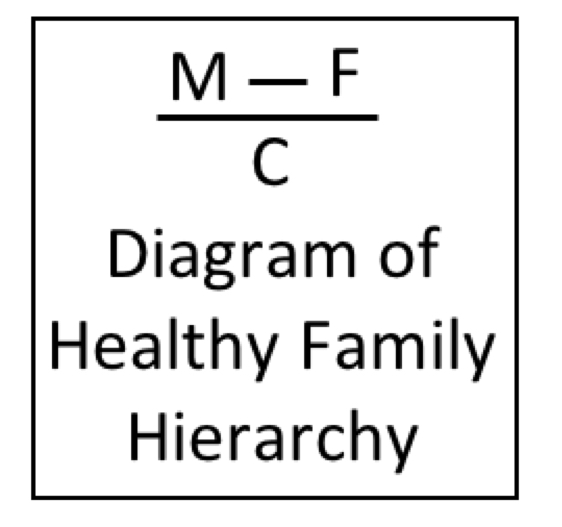
In a healthy and normal-range family, parents occupy positions of executive leadership within the family hierarchy. 

Parents have more knowledge than children.  Parents have more experience than children.  Parents have better judgement than children.  Parents therefore healthy-hierarchyoccupy positions of executive leadership within the family.  That is a healthy family hierarchy.

In a healthy and normal-range family, children cooperate with the executive leadership provided by parents.  Children express wants and desires, but children also cooperatively defer to the executive leadership of parents.  This represents a healthy family hierarchy.

In a healthy family hierarchy, parents judge children’s behavior as appropriate or inappropriate, and parents deliver consequences (rewards and punishments) based on parental judgements of children’s behavior.  This reflects a normal and healthy family hierarchy.

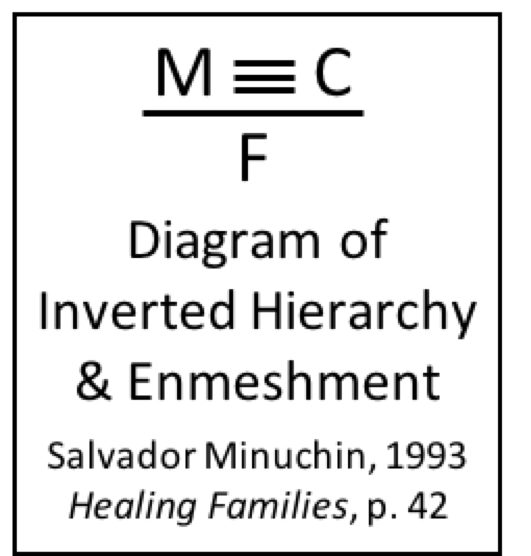
An inverted family hierarchy, however, flips the normal and healthy family hierarchy upside down, so that children become empowered into positions of executive judgement OVER parents.

In an inverted hierarchy, children are empowered to judge parents’ behavior as appropriate or inappropriate, and children are empowered to then deliver inverted-hierarchy“punishments” to parents based on child-judgments of the parent.  The normal and healthy family hierarchy is flipped upside down.

An inverted hierarchy is caused by either of two possibilities:

1.)  Parental Abdication of Power:  The judged parent is not exercising appropriate parental authority and executive leadership and the parent has instead abdicated parental authority and position in the hierarchy to the child.

2.)  Cross-Generational Coalition:  The child is drawing power to judge a parent from a hidden cross-generational coalition in the family that the child has formed with an allied parent against the other parent.  Through the covert and hidden alliance with the supposedly “favored” parent, the allied parent is empowering the child in the family hierarchy to an elevated position above the other parent, in which the child feels “entitled” to judge the adequacy of the parent.

A cross-generational coalition represents a child being “triangulated” into the inter-spousal conflict by the allied (and supposedly “favored” parent), thereby turning a two-person (spouse-spouse) marital conflict into a three-person (spouse-child-spouse) triangulated conflict in which the child is caught in the middle of the spousal conflict, a pawn in the inter-spousal conflict.

In the general popular culture, the construct of “triangulation” is called “putting the child in the middle” of the spousal conflict – which generally involves one parent (the allied and supposedly “favored” parent) manipulating the child into “choosing sides” in the inter-spousal conflict.

The function of the cross-generational coalition is to allow the allied and supposedly “favored” parent to divert spousal anger at the other spouse throughcutoff the child.  The child is being used by the allied parent to meet the allied parent’s own emotional and psychological needs in the inter-spousal conflict with the other spouse.

The renowned family systems therapist, Jay Haley, refers to a cross-generational coalition as a “perverse triangle” because the formation of a cross-generational coalition represents a “boundary violation” involving a “role-reversal relationship” in which the parent is using the child to meet the parent’s emotional and psychological needs.

Empowering the Child

In the psychologically incestuous relationship of a parent’s “boundary violation” of the child’s psychological integrity, the parent first manipulates the child into a “perverse” cross-generational coalition, and then empowers the child in the family hierarchy, creating the inverted family hierarchy in which the child is empowered to judge the adequacy of the other parent.

The tell-tale signs of the “perverse triangle” of the cross-generational coalition by an emotionally needy parent using the child to meet the parent’s needs, are:

1.)  A role-reversal relationship in which the child is being “triangulated” into the inter-spousal conflict in order to allow one parent to divert this parent’s spousal anger toward the other spouse through the child.

2.)  An inverted family hierarchy in which the child is empowered into an elevated position in the family of judging the adequacy of a parent.

3.)  The empowerment of the child by the allied and supposedly “favored parent” who is using the child in the “perverse” cross-generational coalition to meet the parent’s emotional and psychological needs.

The psychologically incestuous relationship created by the “boundary violation” of the cross-generational coalition is typically offered in the refrain:

“We need to listen to the child.”

In a normal and healthy family, parents occupy positions of executive leadership.  Parents are responsible for their children’s behavior.  If the child is disrespectful to a teacher at school, the teacher sends a note home to the parent who punishes the child because the parent takes responsibility for not teaching the child appropriate social behavior.

In a normal and healthy family, parents take responsibility.  Parents are in the role of executive leadership, parents accept the role of executive leadership, and parents exercise the role of executive leadership within the family.

In the perverse relationship of the cross-generational coalition, the allied parent is psychologically manipulating and controlling the child to meet the parent’s own emotional and psychological needs.

In the perverse relationship of a cross-generational coalition, the allied parent abdicates the role of parental executive leadership, elevating the child into this parental role, while the allied parent denies normal-range parental responsiblity and alleges parental incompetence in altering the child’s behavior, typically in the refrain of:

“What can I do?  I can’t force the child to…”

Normal-range and healthy parents exercise parental executive leadership and do not abdicate parental leadership to the child. 

Normal and healthy parents are expected to show parental guidance and leadership to teach their children not to disrespect teachers at school, not to bully other children, and to develop appropriate responsibility for homework and chores around the house.  This is is not called “forcing the child” to be respectful, to not bully other children, to do homework and chores – this is called “parenting.”  Normal-range and expected parenting.

The abdication of “parental responsibility” by pleading selective parental incompetence is disingenuous – and ALL healthy and normal parents see this clearly – because we are normal and healthy parents.

The ONLY people who do not see this are people who do not understand parenting – who have their own agenda in working through their own childhood family relationship issues.  Every single normal and healthy parent understands the expected role of normal and healthy parental executive leadership in the family.

It is our job as parents to teach our children to be respectful, kind, and cooperative with authority.  This is not called “forcing our children” – this is called “parenting” our children.

Every normal and healthy parent understands this.

Boundary Violations

A role-reversal relationship, in which the child is being used to meet the parent’s emotional and psychological needs, represents a psychological boundary violation of the child’s psychological integrity – and a boundary violation of the child’s psychological integrity is a form of psychologically incestuous parent-child relationship.  That’s why Jay Haley refers to the cross-generational coalition as a “perverse triangle.”

The pathology of incest festers and is allowed to grow in the dark recesses of hidden secrecy within the family.  No one sees into the darkness of the family secret to identify the extremely pathological and repulsive parental pathology that is dominating and damaging the child’s psychological core-self integrity.

The treatment of incest begins with exposing it from its secrecy; exposing it from its hiding.  This is true for the reprehensible pathology of physical incest, and this is true for the reprehensible pathology of psychological incest, the “perverse” role-reversal relationship of the cross-generational coalition in which the parent violates the child’s core psychological integrity in order to use the child to meet the parent’s own emotional and psychological needs.

Trans-Generational Transmission of Trauma

The attachment-related pathology of AB-PA represents the trans-generational transmission of attachment trauma from the childhood of the allied narcissistic/(borderline) parent to the current family relationships, mediated by the personality disorder pathology of the parent, that is itself a product of this parent’s childhood attachment trauma.

The current symptoms of a child rejecting a parent are the echo – a reflection from earlier times – of an attachment-related trauma that entered the inter-generational attachment system of the family a generation or two prior to its current manifestation in the “perverse” cross-generational coalition evidenced in “parental alienation.”

The pathology of “parental alienation” is a ripple of trauma from generations gone by, yet carrying the same trauma-themes of the original trauma experience a generation or two earlier – the role-reversal use of the child to meet the parent’s needs – the boundary violation – the betrayal and abuse of the child’s love for a parent.

Themes of childhood trauma echoing across the generations, twisted into the current themes of “listening to the child” and “forcing the child” to do things against the child’s will – that were once accurate, but are now simply twisted echos of the childhood trauma from generations ago.  An echo of inter-generational childhood trauma.

The trauma pathogen of damaged information structures that are locked into the inter-generational attachment networks seeks to remain hidden from view, so it can enact its vile malevolence – punish the parent – the parent deserves to be punished.

Echoes from the past, traveling across generations, damaging love and bonding.  Creating the pathology of the narcissistic and borderline personality, creating the pathology of “parental alienation” – lost bonds of love and affection.

The pathology of the cross-generational coalition seeks to remain a hidden family pathology – weaving a false story of the other parent’s supposed “badness” that justifies the child’s rejection.  A hidden psychological abuse of the child in a “perverse triangle.”

I see the pathogen.  I know what it is.  I’ve seen it before – when I worked in the foster care system.  Then, I looked into the abyss of the childhood trauma.  Now, I see its echo, a dark and malevolent echo of childhood trauma from generations past.

This type of trauma pathogen seeks to remain hidden.  It derives all of its malevolent power to inflict its terrible psychological damage onto the child by remaining a hidden family pathology – a family secret. 

No.  This stops.  It must remain hidden no more.  We are exposing it – so we can protect the current children from the “perverse” role-reversal relationship and psychological boundary violation of their manipulative use by parents to meet their parent’s own damaged emotional and psychological needs.

To the allies of the pathogen, to the flying monkeys who seek to prevent us from exposing this pathogen to the light – consider carefully what you are doing, because you’re furthering the echo transmission of a very malevolent and destructive child attachment pathogen.  Wake up.  You are NOT protecting children, you are collaborating in the continuing abuse of children in a ripple of childhood trauma across generations.  You are hearing the echo of trauma, and your own attachment trauma networks are responding in psychological resonance to the echo, thinking that the echo is real.  It’s not.  It is a ripple of trauma from generations past.

The source trauma that is creating the devastating family pathology of “parental alienation” – in which families are torn apart and loving parent-child relationships are destroyed – is from a generation or two earlier.  The current manifestation is not real, it is an echo of the earlier trauma.  It is time to heal the children.  It is time to heal the trauma that is traveling across time, embedded in the family’s inter-generational attachment networks, a trauma being passed across generations of love and bonding.

It is time to bring this nightmare family tragedy – this inter-generational nightmare – to an end.  The current manifestation of this inter-generational attachment trauma is a false story – a false drama.  An echo.

It is time to heal this inter-generational echo of trauma.  It is time return to the beautiful and wonderful children a normal and healthy childhood of loving and healthy attachment bonds to both parents.  It is time to heal.

Craig Childress, Psy.D.
Clinical Psychologist, PSY 18857

Citations:

Haley, J. (1977). Toward a theory of pathological systems. In P. Watzlawick & J. Weakland (Eds.), The interactional view (pp. 31-48). New York: Norton.

“The people responding to each other in the triangle are not peers, but one of them is of a different generation from the other two… In the process of their interaction together, the person of one generation forms a coalition with the person of the other generation against his peer.  By ‘coalition’ is meant a process of joint action which is against the third person… The coalition between the two persons is denied.  That is, there is certain behavior which indicates a coalition which, when it is queried, will be denied as a coalition… In essence, the perverse triangle is one in which the separation of generations is breached in a covert way.  When this occurs as a repetitive pattern, the system will be pathological.” (p. 37)

Kerig, P.K. (2005). Revisiting the construct of boundary dissolution: A multidimensional perspective. Journal of Emotional Abuse, 5, 5-42.

“The breakdown of appropriate generational boundaries between parents and children significantly increases the risk for emotional abuse.” (p. 6)

“In the throes of their own insecurity, troubled parents may rely on the child to meet the parent’s emotional needs, turning to the child to provide the parent with support, nurturance, or comforting (Zeanah & Klitzke, 1991). Ultimately, preoccupation with the parents’ needs threatens to interfere with the child’s ability to develop autonomy, initiative, self-reliance, and a secure internal working model of the self and others (Carlson & Sroufe, 1995; Leon & Rudy, this volume). (p. 6)

“When parent-child boundaries are violated, the implications for developmental psychopathology are significant (Cicchetti & Howes, 1991). Poor boundaries interfere with the child’s capacity to progress through development which, as Anna Freud (1965) suggested, is the defining feature of childhood psychopathology. (p. 7)

“A theme that appears to be central to the conceptualization of boundary dissolution is the failure to acknowledge the psychological distinctiveness of the child.” (p. 8)

“Examination of the theoretical and empirical literatures suggests that there are four distinguishable dimensions to the phenomenon of boundary dissolution: role reversal, intrusiveness, enmeshment, and spousification.” (p. 8)

“By binding the child in an overly close and dependent relationship, the enmeshed parent creates a psychological unhealthy childrearing environment that interferes with the child’s development of an autonomous self.” (p. 10)

“Barber (2002) defines psychological control as comprising ‘parental behaviors that are intrusive and manipulative of children’s thoughts, feelings, and attachments to parents, and are associated with disturbances in the boundaries between the child and the parent’ (p. 15) (see also Bradford & Barber, this issue).” (p. 12)

“As Ogden (1979) phrased it, ‘It is as if the parent says to the child, if you are not what I need you to be, you do not exist for me’ (p. 16).” (p. 12)

“Rather than telling the child directly what to do or think, as does the behaviorally controlling parent, the psychologically controlling parent uses indirect hints and responds with guilt induction or withdrawal of love if the child refuses to comply.  In short, an intrusive parent strives to manipulate the child’s thoughts and feelings in such a way that the child’s psyche will conform to the parent’s wishes. (p. 12)

“In order to carve out an island of safety and responsivity in an unpredictable, harsh, and depriving parent-child relationship, children of highly maladaptive parents may become precocious caretakers who are adept at reading the cues and meeting the needs of those around them.  The ensuing preoccupied attachment with the parent interferes with the child’s development of important ego functions, such as self organization, affect regulation, and emotional object constancy. (p. 14)

“There is evidence for the intergenerational transmission of boundary dissolution within the family.  Adults who experienced boundary dissolution in their relationships with their own parents are more likely to violate boundaries with their children (Hazen, Jacobvitz, & McFarland, this volume; Shaffer & Sroufe, this volume).” (p. 22)

Shaffer, A., & Sroufe, L. A. (2005). The Developmental and adaptational implications of generational boundary dissolution: Findings from a prospective, longitudinal study. Journal of Emotional Abuse. 5(2/3), 67-84.

“Role reversals observed among children with disorganized attachment histories, which may include both controlling/punitive and caregiving behavior patterns, may be attempts at fear mastery and self-protection.” (p. 72)

“In this study the dissolution of generational boundaries was child-specific within the identified families.” (p. 75)

“A maternal history of sexual exploitation has emerged as a significant predictor of boundary dissolution at 42 months.” (p. 75)

“Mothers who tend to disregard generational boundaries in interacting with their children are not simply more “warm” than other mothers, but in fact show more conflict or hostility.” (p. 78)

“Parent-initiated boundary dissolution in early childhood instantiates a pattern of relationship disturbance in the child. Role reversal is apparent by early adolescence and the available data suggest links to psychopathology in later adolescence, particularly as a result of sexualized behavior observed at age 13.” (p. 80)

Beck, A.T., Freeman, A., Davis, D.D., & Associates (2004). Cognitive therapy of personality disorders. (2nd edition). New York: Guilford.

“Various studies have found that patients with BPD are characterized by disorganized attachment representations (Fonagy et al., 1996; Patrick et al, 1994).  Such attachment representations appear to be typical for persons with unresolved childhood traumas, especially when parental figures were involved, with direct, frightening behavior by the parent.  Disorganized attachment is considered to result from an unresolvable situation for the child when ‘the parent is at the same time the source of fright as well as the potential haven of safety’ (van IJzendoorn, Schuengel, & Bakermans-Kranburg, 1999, p. 226).” (p. 191)